Frequently Answered Questions



Board and Executive Questions

What should a Board expect the bank to know about its clients, counterparties and business relationships?
A large bank should be able to form a reliable enterprise view of the organisations and people with which it does business, the roles they perform, the relationships and arrangements they participate in, the products and services they use, and the permissions under which that activity takes place.
That view should not depend on manually assembling information from individual businesses, jurisdictions or systems each time a question is asked. The more fragmented the underlying information is, the harder it becomes for management to understand the bank’s position quickly and with confidence.
For a Board, the important question is therefore not simply whether information exists somewhere in the bank, but whether it can be connected, interpreted and acted upon when needed.
Can the bank determine quickly what is affected when circumstances change?
It should be able to.
A geopolitical event, sanctions change, client failure, market disruption, regulatory intervention or major operational incident can require the bank to identify affected clients, entities, relationships, products, jurisdictions and activities at short notice.
The challenge is rarely the absence of all information. It is that the information may be distributed across businesses, systems and organisational boundaries and may use different identifiers or definitions.
A bank that understands how its clients and counterparties participate across the enterprise can move more quickly from an external event to an internal assessment of impact, exposure and required action.
If a major client or counterparty encounters difficulty, can management understand the bank’s complete relationship and exposure?
Management should be able to determine more than the exposure recorded within one product, business line or legal entity.
A major client may consist of many legal entities, operate across several jurisdictions, use different products and perform multiple roles within the financial system. The bank may have lending, markets, custody, payments, securities or other relationships with different parts of the same group.
Understanding the total position therefore requires information to be connected across organisational and system boundaries.
The objective is not necessarily to hold everything in one system. It is to ensure that the bank can reliably identify the participants involved and assemble an enterprise view quickly enough to support decision-making.
Why is an enterprise view of the client so difficult for a large bank to achieve?
Large banks have usually developed through many years of organisational change, geographic expansion, product development, acquisitions and technology implementation.
Different businesses may therefore maintain their own client records, identifiers, classifications and processes. The same organisation can appear differently across systems, while different entities within a corporate group may be treated as if they were unrelated.
The problem becomes more complex because the real-world client is not simply a legal entity. It may be a group containing companies, branches, funds and individuals participating in different roles and arrangements.
Creating an enterprise view therefore requires more than system integration. It requires common concepts, reliable identification, relationship structures, data governance and lifecycle management.
How does interconnectedness cause apparently isolated events to become enterprise risks?
Banks operate through networks of clients, counterparties, owners, intermediaries, markets, products and financial infrastructures.
A problem affecting one organisation can therefore propagate through ownership structures, contractual relationships, market activity, funding arrangements or other dependencies. What initially appears to be a local event may affect several businesses or jurisdictions simultaneously.
The ability to understand these connections becomes increasingly important as financial relationships become more complex.
This is why identifying an entity is only the starting point. The bank must also understand the roles it performs, the relationships it participates in and the business arrangements through which activity occurs.
What does effective Client Lifecycle Management allow a bank to do that fragmented KYC processes cannot?
KYC is essential, but it addresses only part of the problem.
Client Lifecycle Management maintains the validity, scope and permissions of client relationships over time. It connects the identity and status of entities with the roles they perform, the relationships they participate in and the business activities the bank permits.
This allows the bank to manage onboarding, maintenance, regulatory events, periodic reviews, changes in activity and eventual exit as parts of one continuing lifecycle.
A fragmented case-based approach can complete individual KYC processes successfully while still leaving the wider relationship difficult to understand or manage. Effective CLM provides the architecture that connects those individual control activities to the continuing business relationship.
Why should CLM matter to the Board rather than only to Operations or Compliance?
Because CLM supports the bank’s ability to conduct business safely and reliably.
It influences who the bank does business with, what activity is permitted, whether required controls remain valid, how quickly clients can be enabled and how effectively the bank can respond when circumstances change.
Weak CLM can therefore affect operational resilience, regulatory compliance, client service, data quality, risk management and revenue generation simultaneously.
For this reason, CLM should not be viewed simply as an operational process or technology platform. It is part of the core business and control infrastructure through which the bank manages its relationships with clients and other market participants.
How can the Board know whether CLM is actually working?
The Board should be able to see evidence that the capability is producing reliable outcomes, not merely that processes are being completed.
Useful measures include whether onboarding is completed when required, whether work enters and leaves the operating process in a controlled manner, whether information is correct first time, whether key risk data remains reliable, whether overdue or deficient populations are being controlled, and whether lifecycle controls operate effectively.
Cost and client enablement also matter. A control environment that is safe but unnecessarily slow or expensive may still indicate a weak operating model.
The objective is therefore balanced performance: control effectiveness, data integrity, operational stability, appropriate capacity and effective support for client business.
What happens when weaknesses in client information and lifecycle management accumulate over time?
Small weaknesses can compound.
Duplicate records, inconsistent identifiers, incomplete relationships, manual workarounds, unresolved defects and poorly designed processes may initially appear manageable. Over time they create operational debt.
The consequences can include growing backlogs, repeated remediation, higher operating costs, stale client information, control weaknesses and increasing difficulty responding to regulatory or business events.
Technology can mask some of these problems but cannot permanently compensate for weak foundations.
A mature CLM capability therefore requires continuing maintenance of its data, processes, controls and architecture rather than relying on periodic transformation programmes to repair accumulated problems.
Where should accountability for enterprise CLM capability sit?
Accountability should be clear enough that someone can answer for how the capability performs end to end.
CLM crosses organisational boundaries. Front Office, Operations, Financial Crime, Compliance, Risk, Data and Technology may all own important parts of the environment, but fragmented ownership can leave no one accountable for the overall outcome.
Enterprise accountability does not mean centralising every activity. It means establishing clear authority for the design, integrity and performance of the capability while retaining appropriate responsibilities within individual functions.
Without that end-to-end accountability, local optimisation can occur while the enterprise lifecycle remains fragmented.
What should management prioritise when CLM capability needs to improve?
The starting point should be the operating foundations rather than the technology alone.
Management first needs to understand how clients and entities are represented, how responsibilities are allocated, how work moves through the lifecycle, what information is authoritative, how decisions are governed and how downstream business activity is enabled.
Technology then supports that design.
Replacing a platform without addressing weaknesses in the operating model, data architecture or governance can reproduce the same problems in a newer system.
A sustainable improvement sequence therefore establishes conceptual and operational integrity first and then uses technology to automate, scale and strengthen the capability.
Can stronger CLM create commercial advantage as well as reduce risk?
Yes. The same capability that improves control can also make the bank easier to do business with.
Reliable client information can be reused rather than repeatedly requested. Existing entities and relationships can be recognised more quickly. New activity can be enabled with less unnecessary friction. Client groups can be understood more coherently, and resources can be concentrated on relationships that create appropriate value for the bank.
Over time, consistent execution can contribute to a reputation for reliability. Clients are more likely to deepen relationships with a bank that can respond quickly, understand their organisation and enable legitimate business without repeatedly rediscovering information it already holds.
CLM therefore has the potential to influence both the risk economics and the commercial economics of the bank.

Understanding CLM
What is Client Lifecycle Management?
Client Lifecycle Management, or CLM, is the capability through which a bank establishes, maintains and ultimately ends its business relationships with clients over time.
It brings together the entities involved, the roles they perform, the relationships between them, the business arrangements through which activity takes place, the controls that must be satisfied and the permissions that determine what business may be conducted.
CLM therefore extends from prospecting and onboarding through maintenance, regulatory events and periodic review to exit, archival and possible re-onboarding.
Its purpose is to maintain the validity, scope and permissions of client relationships over time, enabling core banking activities to operate safely, consistently and at scale.
Is CLM the same as KYC?
No. KYC is an important component of CLM, but it is not the whole capability.
KYC establishes and maintains the information and assessments required to understand an entity from a financial-crime perspective. CLM has a broader purpose. It manages how that entity participates in the bank, what roles it performs, the relationships and arrangements in which it participates and what business the bank permits.
A bank can therefore have a functioning KYC process while still having weak Client Lifecycle Management.
CLM provides the wider structure within which KYC and other regulatory, operational and commercial requirements come together.
Why use the term Entity Client Lifecycle Management?
Because much of the information and control activity within CLM applies to identifiable real-world entities.
A client may be a multinational group containing many companies, branches, funds and individuals. The bank cannot perform KYC, screening, regulatory classification or many other controls against an abstract client group. It must know which entity is involved.
Entity Client Lifecycle Management therefore recognises both realities: the bank conducts a broader relationship with a client, while many of the controls and permissions supporting that relationship operate at entity level.
The two views need to work together.
What is the difference between a client and an entity?
An entity is an identifiable legal person, branch, fund, individual or other recognised participant.
A client is the wider business relationship the bank has with a customer organisation and may encompass many such entities.
For example, a global corporate client may contain a parent company, numerous subsidiaries, branches, treasury entities and investment vehicles. Individual entities may enter different arrangements with different parts of the bank, but together they form part of the wider client relationship.
CLM therefore needs both an accurate entity model and the ability to understand how those entities come together as a client group.
Why are roles important in CLM?
An entity tells the bank who is participating. A role explains in what capacity it is participating.
The same entity might act as a borrower, counterparty, issuer, investment manager, broker, agent or arranger. Those roles can create different information requirements, controls and permissions.
This distinction is important because an entity should not have to be duplicated simply because it performs several roles.
A sound CLM architecture identifies the entity once and then represents the different roles through which it participates in the bank and the financial system.
What is the difference between a role and a relationship?
A role describes the capacity in which an entity participates. A relationship describes how participants are connected within a particular context.
For example, an organisation may have the role of investment manager. Its relationship to a particular fund explains which fund it manages. The same organisation could perform the same role for many different funds.
Separating entity, role and relationship allows the bank to represent the real world more accurately.
It also avoids embedding relationships inside entity records in ways that become increasingly difficult to maintain as clients and financial structures become more complex.
What is a Business Arrangement?
A Business Arrangement is the context through which the bank and one or more participants conduct a particular piece or class of business.
It provides the anchor between the participants involved and the activity the bank is permitting. Contracts may sit within that arrangement, while the arrangement itself sits within the wider business relationship.
This is important because the bank does not simply approve an entity in isolation. It permits entities to participate in particular activities under defined circumstances.
The Business Arrangement therefore provides a natural point around which participation, controls, permissions and downstream enablement can be organised.
What does CLM manage over the lifecycle?
CLM manages the continuing state of the client relationship rather than treating onboarding as a one-time event.
The lifecycle typically begins with a prospect and progresses through onboarding and business enablement. It then continues through maintenance, changes in ownership or activity, regulatory events, periodic reviews and other triggers.
Eventually a relationship or arrangement may be exited and information archived. If business resumes later, the client or entity may enter a re-onboarding process.
The important principle is that validity must be maintained throughout the life of the relationship. What was correct when the client was onboarded cannot simply be assumed to remain correct indefinitely.
What are permissions in CLM?
Permissions determine what an entity or client is currently allowed to do with the bank.
They are the result of several considerations coming together: who the participant is, the role being performed, the relevant Business Arrangement, required controls, regulatory classifications, product requirements and the bank's own risk appetite.
Permissions therefore provide a bridge between control activity and business activity.
Rather than treating completion of KYC or another control as the end objective, CLM uses those outcomes to determine whether particular business activities can begin, continue, change or must stop.
Why are identifiers so important to CLM?
Identifiers allow the bank to recognise the same participant consistently across processes and systems.
Without reliable identification, one entity can appear as several different records, or information relating to different entities can be incorrectly combined. This makes relationships harder to understand and enterprise information less reliable.
A strong entity model therefore establishes a unique enterprise identity for each entity and maps other internal and external identifiers to it.
Those identifiers can then connect CLM information to downstream platforms, transactions, accounts, venues and other business activity without changing the underlying identity of the participant.
Does all client information need to be held in the CLM platform?
No.
CLM needs authoritative access to the information required to understand and manage the lifecycle, but that does not mean every piece of client information must physically reside in one platform.
Some information may appropriately be mastered in specialist systems and consumed by CLM. Other information may be mastered within CLM and distributed elsewhere.
The more important architectural question is whether ownership is clear, authoritative sources are known, entities can be consistently identified and information can be connected when required.
A well-designed CLM capability is therefore an enterprise architecture, not simply a large database.
How does CLM connect to the rest of the bank?
CLM sits between the real-world client and much of the bank's operational and commercial infrastructure.
It receives information about entities, ownership, roles, relationships, regulatory status and business intentions. It applies lifecycle processes and controls and establishes what business may proceed.
Its outputs then enable downstream activities such as account creation, trading, settlement, payments, booking, reporting and other product or market activity.
This is why weaknesses in CLM can propagate well beyond the CLM function itself. Downstream platforms depend on the identities, statuses and permissions established upstream.
Why is CLM described as core business and control infrastructure?
Because it supports both sides of the bank's relationship with a client.
From a control perspective, CLM helps ensure that the bank knows who it is dealing with, that required assessments remain valid and that only permitted activity can take place.
From a business perspective, it enables clients to begin and expand legitimate activity, supports reuse of existing information and helps avoid unnecessary friction when circumstances change.
CLM is therefore not simply an administrative process surrounding KYC. It is part of the infrastructure through which the bank establishes and maintains its ability to do business.
What does good CLM look like?
Good CLM makes the complexity of the underlying bank manageable.
An entity is recognised once. Its roles and relationships can be understood. Client groups can be assembled from their constituent entities. Business arrangements make clear why participants are involved. Controls are associated with the appropriate objects, permissions reflect their current state, and changes propagate through the lifecycle.
Information can then be reused rather than repeatedly recreated, while downstream systems receive consistent identities and decisions.
The result is a capability that allows the bank to know its clients, control its relationships and enable business without those objectives competing unnecessarily with one another.
Why CLM Matters

Why does CLM matter to a bank?
Because a bank cannot safely conduct business unless it knows who it is dealing with, what relationship exists, what activity is permitted and whether the conditions supporting that activity remain valid.
Client Lifecycle Management provides the capability through which those questions are answered and maintained over time.
When CLM works well, clients can be enabled efficiently, controls remain reliable, information can be reused and the bank can respond more quickly when circumstances change.
When it works poorly, the effects extend well beyond the CLM function into operations, risk, compliance, client service, technology and revenue generation.
Why is CLM more than an onboarding process?
Onboarding is only the beginning of the relationship.
After a client begins doing business, entities may change ownership, directors may change, products may be added, regulatory classifications may change, risk may increase or decrease, and relationships may eventually be terminated.
CLM therefore has to maintain the validity of the relationship throughout its life.
A bank that focuses primarily on onboarding may successfully open a relationship but still struggle to keep its information, controls and permissions aligned with what is happening afterwards.
What happens when CLM does not work well?
Problems rarely remain contained within CLM.
Weak entity identification can create duplicates and inconsistent client views. Poor lifecycle management can allow information to become stale. Fragmented permissions can leave uncertainty over what business is authorised. Manual workarounds can increase operational risk and cost.
Over time, these weaknesses create backlogs, remediation programmes, control deficiencies and increasing complexity.
The result is often a bank that spends more effort maintaining the machinery of CLM while becoming less certain that the underlying client position is correct.
Why does CLM matter to risk management?
Risk decisions depend on understanding who the bank is dealing with and the context in which business is being conducted.
That requires more than an individual KYC record. Risk may depend on ownership, client group membership, roles, relationships, products, jurisdictions, business arrangements and changes that occur over time.
CLM connects these elements and helps maintain their current state.
This allows risk functions to work from a more complete and reliable representation of the client rather than interpreting fragmented information after an event has already occurred.
Why does CLM matter when circumstances change suddenly?
The bank may need to determine very quickly which clients, entities, relationships and activities are affected.
This can arise from sanctions changes, geopolitical events, a client failure, market disruption, regulatory intervention or another major event.
If client information is fragmented, the bank may first have to discover where its exposure lies before it can decide what to do.
Strong CLM shortens that path by providing recognised entities, connected relationships, current permissions and information that can be used across the enterprise.
Why does CLM matter to the Front Office?
Because the Front Office depends on CLM to turn a commercial opportunity into permitted business.
A relationship manager may know the client well, but the bank still needs to recognise the relevant entities, complete required controls and establish the permissions needed for products and activities.
Poor CLM creates friction between winning business and being able to execute it.
Good CLM reduces unnecessary repetition, allows existing information to be reused, enables recognised entities more quickly and gives the Front Office greater confidence about what can be done.
How can CLM affect the client experience?
Clients experience the consequences of the bank's internal architecture whether they can see it or not.
If different parts of the bank repeatedly ask for the same information, fail to recognise existing entities or take inconsistent positions on requirements, the client experiences the bank as fragmented.
A better CLM capability allows information to be reused appropriately, existing relationships to be recognised and requests to the client to be limited to what is genuinely needed.
This can make the bank easier to deal with without weakening control standards.
Why does CLM matter to data quality?
CLM depends on information that remains accurate enough to support continuing business decisions.
Data quality is therefore not only about whether individual fields have been completed
Client Entity and Relationship Structure
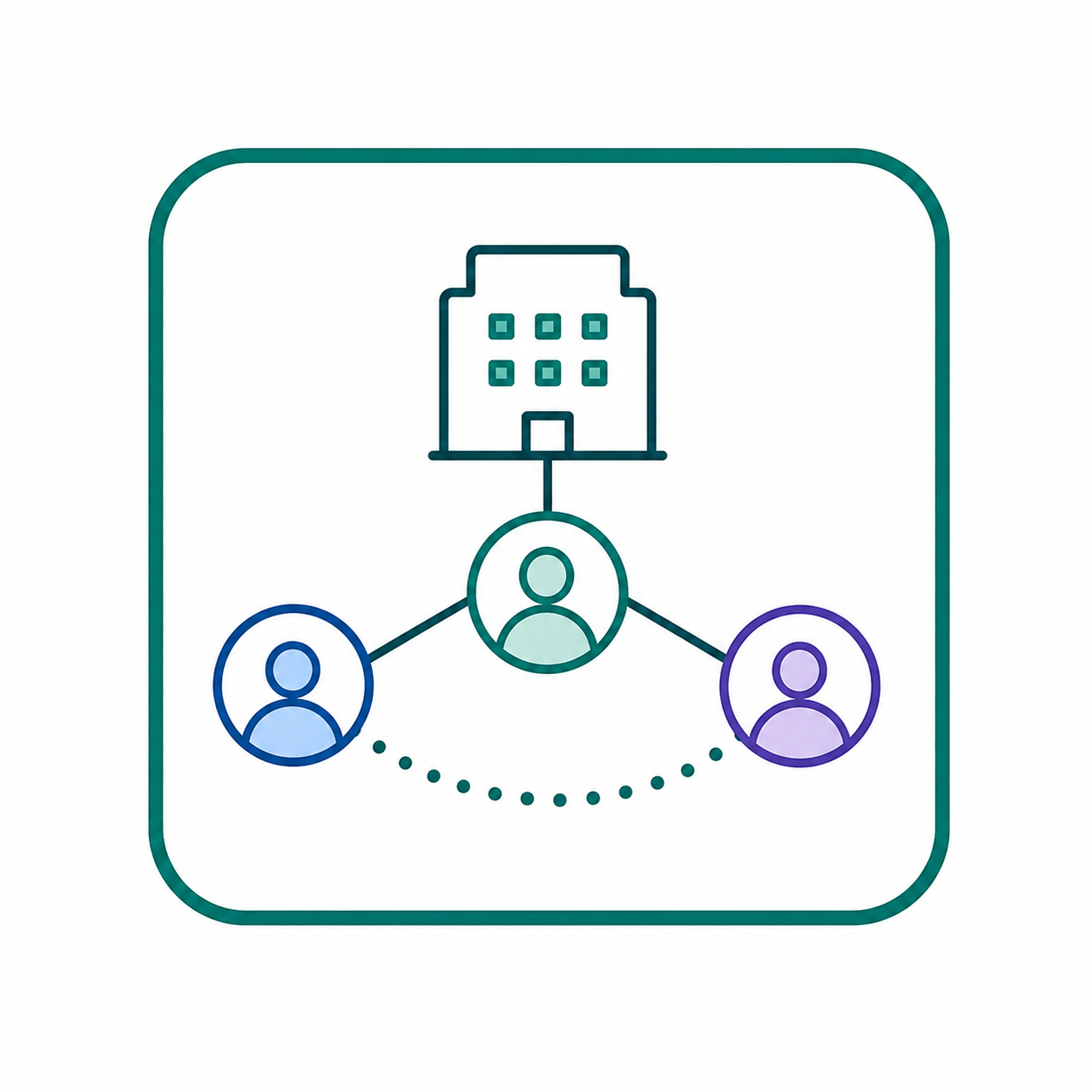
What is the difference between a client and an entity?
An entity is an identifiable legal person, branch, fund, individual or other recognised participant.
A client is the wider business relationship the bank has with a customer organisation and may contain many entities.
For example, a multinational client may consist of a parent company, subsidiaries, branches, funds and other vehicles. The bank may conduct different activities with different members of that group.
CLM therefore needs to identify entities precisely while still preserving the wider client relationship to which they belong.
Why can a client not simply be represented as one legal entity?
Because many real-world clients are more complex than that.
A large corporate or institutional client may operate through dozens or hundreds of legal entities across different jurisdictions. Different entities may borrow, trade, issue securities, receive payments or perform other roles.
Treating one legal entity as the client can therefore obscure the wider relationship.
The bank needs both views: the specific entity involved in a particular activity and the broader client group within which that entity operates.
What is a client group?
A client group is the collection of entities that together represent the wider client relationship.
The grouping may reflect ownership, control, management or another meaningful business connection, depending on the purpose for which the bank is using it.
Client groups allow information to be understood above individual entity level. They can support relationship management, risk assessment, information reuse and enterprise visibility.
They should not, however, replace the underlying entity records. The group and the individual entities perform different functions.
Why must each entity be uniquely identified?
Because every subsequent relationship, control and permission depends on knowing which real-world participant the bank is dealing with.
If the same entity is represented several times, information can become fragmented and work may be repeated. If different entities are incorrectly combined, controls and business activity can be applied to the wrong participant.
A strong entity model therefore establishes one unique enterprise instance for each recognised entity and maps other identifiers to it.
Uniqueness is one of the foundations on which reliable CLM depends.
Why should an entity be represented only once?
Because the entity itself does not change simply because it performs several roles or participates in several relationships.
Duplicating an entity for each product, business line or role creates multiple versions of the same real-world participant.
Those records can then diverge over time, creating inconsistent information and unnecessary maintenance.
A better design identifies the entity once and attaches roles, relationships, arrangements and identifiers to that recognised instance.
Are branches separate entities?
For CLM purposes, branches may need to be represented as identifiable entities even though they are not separate legal persons from the legal entity to which they belong.
A branch can operate under a particular regulatory licence, location and jurisdiction and may participate directly in banking relationships and arrangements.
That makes the branch operationally significant.
The important point is to preserve both facts: the branch has its own identifiable participation in the bank while remaining legally connected to its parent entity.
Are individuals also entities?
Yes.
Individuals can be important participants in the client structure. They may be beneficial owners, directors, authorised signatories, controllers, trustees or perform other relevant roles.
Representing people as identifiable entities allows the bank to connect them consistently to multiple organisations and relationships without recreating the same individual repeatedly.
As with organisations, identity should be separated from the roles and relationships in which the person participates.
Are all entities in CLM clients?
No.
A bank may need to identify many entities with which it does not have a conventional client relationship.
Examples can include issuers, agents, arrangers, investment managers, intermediaries and other market participants.
These entities may still be essential to understanding a transaction, arrangement or financial structure.
An enterprise entity model therefore needs to recognise relevant participants without forcing every entity into the category of client.
What is a role?
A role describes the capacity in which an entity participates.
An entity might act as a borrower, issuer, broker, investment manager, counterparty, agent or arranger. The same entity can perform several roles simultaneously.
Roles matter because requirements may depend not only on who the entity is but on what it is doing.
Separating entity from role prevents unnecessary duplication and allows the bank to apply requirements more precisely.
Can one entity have multiple roles?
Yes, and that is common.
For example, the same organisation might be a client in one context, an issuer in another and an agent in a third.
Those different capacities should not normally require separate copies of the entity.
The entity remains the recognised participant, while the roles explain the different ways in which it participates across the bank.
What is a relationship?
A relationship describes how two or more participants are connected in a particular context.
Examples could include ownership, control, management, agency or another recognised association.
Relationships allow the bank to move beyond a collection of isolated entity records and understand how participants fit together.
This is particularly important for complex corporate groups, funds and financial structures where the connections between entities may be as important as the entities themselves.
Why should relationships be modelled separately from entities?
Because relationships can change independently of the entities they connect.
An entity may remain the same while its parent company changes, an investment manager is replaced or a contractual relationship ends.
If relationships are embedded permanently inside entity records, these changes become harder to represent accurately.
Treating relationships as distinct objects allows them to be created, changed or ended without changing the identity of the underlying participants.
What is the difference between a role and a relationship?
A role describes what an entity is doing. A relationship describes how participants are connected.
For example, an entity might perform the role of investment manager. The relationship specifies which fund or funds it manages.
The distinction is important because the same role can be performed in many different relationships.
Separating the two provides a more accurate and reusable representation of the real world.
What is a Business Arrangement?
A Business Arrangement represents the context in which participants come together to conduct a defined piece or class of business with the bank.
It connects the relevant entities, roles and relationships to the activity being undertaken.
The arrangement provides an important anchor for determining why participants are involved and what permissions are required.
Contracts can sit within an arrangement, while the arrangement itself forms part of the wider business relationship.
Why is the Business Arrangement important?
Because banking activity does not occur simply because an entity exists or has passed KYC.
The bank needs to understand the purpose for which the entity is participating, the other participants involved and the activity being permitted.
The Business Arrangement provides that context.
It therefore helps connect client structure to control requirements, product permissions and downstream business enablement.
How do contracts relate to Business Arrangements?
A contract records legal obligations associated with particular business activity.
A Business Arrangement provides the wider context within which one or more contracts may operate.
This distinction matters because a business relationship can continue even when individual contracts are created, amended or terminated.
Keeping the arrangement separate from its contracts allows the bank to manage the continuing business context without treating every contractual change as a new client relationship.
Why are ownership structures important?
Ownership helps the bank understand how entities are connected, who ultimately controls them and how risk may propagate through a corporate structure.
It can also support beneficial ownership requirements, client grouping and enterprise risk analysis.
Ownership should therefore be represented as a relationship between identified participants rather than being treated only as descriptive information attached to an entity record.
This makes the structure easier to maintain and analyse as ownership changes.
How should a newly created entity within an existing client group be treated?
The new entity should be identified and assessed in its own right, but that does not mean everything about the wider client relationship must be rediscovered.
Much of the surrounding information may already be known at client-group level or through existing relationships.
The bank should therefore determine what is genuinely unique to the new entity, such as its identity, legal form, purpose and particular control requirements, while reusing reliable information that remains valid elsewhere.
This is one of the practical benefits of a well-structured entity and client-group model.
Can existing information be reused across entities?
Yes, where the information genuinely applies at a common level and remains valid.
Some information belongs specifically to an entity and should not be assumed to apply to another. Other information may relate to the wider client group, a shared ownership structure or a common relationship.
The architecture therefore needs to distinguish where information belongs.
Good reuse reduces unnecessary client outreach and repeated work without weakening the requirement to establish facts at the correct level.
Why does this structure matter to lifecycle management?
Because entities, roles, relationships and arrangements do not all change at the same time.
An entity may continue to exist while a role ends. A relationship may change while the entities remain the same. A Business Arrangement may terminate while the wider client relationship continues.
If these concepts are collapsed into a single record, lifecycle events become difficult to manage correctly.
Separating them allows the bank to change only the part of the structure that has actually changed.
Why does this matter when a client exits?
Because the end of one relationship does not necessarily mean that every associated entity, role, identifier or arrangement is no longer required.
An entity may continue to participate elsewhere in the bank. A market participant may never have been a client at all. An identifier may support other active business.
Exit therefore has to be managed against the correct object and context.
A sound relationship model reduces the risk of removing something simply because one part of the wider structure has ended.
Why does this structure matter to downstream systems?
Downstream platforms need to know not only which participant is involved but often in what capacity and for what purpose.
Entity identity provides the recognised participant. Roles and relationships provide context. Business Arrangements provide the business anchor. Permissions determine what activity may proceed.
When those elements are connected properly, downstream platforms can consume clearer and more reliable information.
When they are not, downstream systems often compensate through local identifiers, duplicate records and manual interpretation.
What does a good client and entity structure achieve?
It allows the bank to represent the real world without unnecessarily duplicating it.
Each participant can be uniquely recognised. Multiple roles can be represented without creating multiple entities. Relationships can change independently. Client groups can be understood across their constituent parts, and Business Arrangements can explain why participants are involved.
The result is a structure that supports clearer controls, better information reuse, more reliable lifecycle management and a stronger enterprise view of the client.
KYC, CDD, and Financial Crime Controls

What is KYC?
Know Your Customer, or KYC, is the framework through which a bank establishes and maintains sufficient knowledge about the entities with which it conducts business.
It typically involves identifying the entity, verifying relevant information, understanding ownership and control, determining the nature and purpose of the relationship, assessing financial-crime risk and completing the controls required for that risk.
KYC is fundamental to banking, but it is not the same as Client Lifecycle Management.
CLM provides the wider lifecycle within which KYC and other controls are initiated, maintained and connected to permitted business activity.
What is Customer Due Diligence?
Customer Due Diligence, or CDD, is the process of gathering, validating and assessing information about a customer or other relevant entity so that the bank can understand the financial-crime risks associated with the relationship.
CDD may include identity verification, ownership and control, business activities, expected activity, geographic exposure and other factors relevant to the risk assessment.
The depth of due diligence required should reflect the circumstances and applicable requirements.
CDD therefore provides much of the evidence on which the bank's KYC assessment is based.
Are KYC and CDD the same thing?
The terms are often used interchangeably, but they can usefully be distinguished.
CDD describes the due-diligence activities through which information is obtained, verified and assessed. KYC describes the wider process of establishing and maintaining the bank's knowledge of the entity and its financial-crime risk.
In practice, different organisations use the terminology differently.
What matters architecturally is that neither should be confused with the entire client lifecycle. They are important control components within a broader CLM capability.
Is KYC performed on a client group or on an entity?
KYC fundamentally needs to identify and assess the relevant entity.
A client group may contain many companies, branches, funds and individuals, each of which can have different ownership, jurisdictions, activities and risk characteristics.
Information about the wider group can be highly relevant and may be reusable, but it does not remove the need to understand which particular entity is entering or maintaining the relationship.
CLM therefore needs to connect entity-level KYC with the wider client-group structure.
Why is legal entity identity so important to KYC?
Because controls cannot be applied reliably unless the bank knows precisely which real-world participant is being assessed.
If one entity exists several times in the bank's systems, KYC work may be duplicated and different records may reach different conclusions. If two entities are incorrectly treated as one, information and risk assessments may be applied to the wrong party.
Reliable entity identity is therefore a prerequisite for reliable KYC.
KYC should attach to a recognised entity rather than creating the entity's identity afresh each time a case is opened.
What role does beneficial ownership play in CDD?
Understanding beneficial ownership helps the bank determine the individuals who ultimately own or control relevant legal entities.
This can be important both for understanding the structure of the customer and for applying financial-crime controls to the people behind it.
Ownership should not simply be treated as static text within a KYC record. It is a relationship between identified participants and may change over time.
Representing ownership structurally allows changes to be recognised and their effect on existing KYC assessments to be evaluated more effectively.
What is Enhanced Due Diligence?
Enhanced Due Diligence, or EDD, involves additional investigation or control where the circumstances present heightened financial-crime risk.
The additional work will depend on why the risk is elevated. It may involve obtaining more information, corroborating existing information, understanding sources of wealth or funds, performing additional approvals or applying more intensive monitoring.
EDD should therefore respond to identified risk rather than simply becoming a larger standard checklist.
A well-designed KYC framework makes clear what additional evidence or decisions are required for different risk circumstances.
What are financial-crime controls?
Financial-crime controls are the measures a bank uses to identify, assess, prevent, detect and respond to risks such as money laundering, terrorist financing, sanctions breaches, bribery, corruption and other forms of financial crime.
They can operate at different points in the relationship.
Some controls are performed when an entity is onboarded. Others operate continuously, when circumstances change or when transactions take place.
KYC and CDD are therefore part of the financial-crime control environment, but they are not the whole of it.
Where does sanctions screening fit?
Sanctions screening helps determine whether an entity, individual or other relevant participant may be subject to sanctions restrictions or requires further investigation.
Screening may occur during onboarding, periodically, when information changes and on an ongoing basis as sanctions lists are updated.
It therefore illustrates why financial-crime controls cannot be treated simply as one-time onboarding activities.
The identity of the participant needs to remain connected to the screening capability throughout the lifecycle.
Where does transaction monitoring fit?
Transaction monitoring operates primarily on activity rather than on the static characteristics of the client.
It looks for patterns or behaviour that may indicate potential financial crime and therefore provides information that can affect the bank's continuing assessment of a relationship.
KYC information helps provide context for that monitoring, while monitoring outcomes may in turn create triggers for KYC review or investigation.
The relationship should therefore be two-way rather than treating KYC and transaction monitoring as completely separate control processes.
What is a periodic review?
A periodic review is a scheduled reassessment intended to confirm that the information and financial-crime assessment associated with an entity remain sufficiently current.
The frequency may vary according to risk and applicable requirements.
A periodic review should not be viewed as recreating the entire customer file from the beginning. The objective is to determine what has changed, whether existing information remains valid and whether the risk assessment and associated controls remain appropriate.
Good lifecycle design therefore supports reuse of information that remains current while identifying what genuinely requires reassessment.
Why should KYC not rely only on periodic reviews?
Because important changes do not necessarily occur according to the review calendar.
Ownership can change, sanctions can be imposed, business activities can alter, adverse information can emerge or the nature of the relationship can change between scheduled reviews.
A mature control environment therefore combines periodic review with event-driven or trigger-based maintenance.
The objective is to keep the KYC position valid over time rather than allowing it to become stale until the next scheduled review date.
What is a KYC trigger?
A KYC trigger is an event or new piece of information that indicates the existing assessment may need to be reconsidered.
Examples can include changes in ownership, control, legal form, jurisdiction, business activity, risk indicators or other material characteristics.
Not every trigger needs to result in a complete new KYC review.
A well-designed framework first determines what has changed, what existing conclusions may be affected and what proportionate action is required.
Why is information reuse important in KYC?
Because repeatedly requesting information the bank already holds creates cost for both the bank and the client.
If information remains valid, is authoritative and applies to the relevant entity or group, it should be capable of being reused where policy and regulation permit.
That does not mean simply copying information from one case to another. The bank needs to know where the information originated, what object it applies to and whether it is still current.
Effective reuse depends on sound data architecture as much as on process efficiency.
Why does the level at which information is held matter?
Because not every piece of information belongs to the same object.
Some information belongs specifically to an entity. Other information may relate to an individual, an ownership relationship, a client group, a Business Arrangement or another structure.
If information is stored at the wrong level, the bank may repeatedly collect it or incorrectly assume it applies elsewhere.
Good KYC architecture therefore asks not only what information is required, but what does this information describe and where should it be maintained?
Does completing KYC mean the client can conduct any business with the bank?
No.
KYC completion establishes that relevant financial-crime requirements have been satisfied for the entity and circumstances assessed. It does not automatically authorise every product or activity.
Other regulatory, credit, legal, product, jurisdictional and commercial requirements may still apply.
CLM brings these different requirements together so that completion of controls contributes to an explicit business permission rather than being mistaken for the permission itself.
Why should KYC be connected to the Business Arrangement?
Because the requirements may depend on the context in which the entity is participating.
Knowing that an entity exists and has completed KYC does not by itself explain why it is involved, what role it performs or what business the bank intends to undertake with it.
The Business Arrangement provides that context.
Connecting KYC to the relevant entity, role and arrangement helps ensure that controls are applied because of actual participation rather than simply because an entity appears somewhere in the client structure.
Should every participant in a structure receive the same KYC treatment?
Not necessarily.
Different participants may perform different roles and create different financial-crime risks or regulatory obligations.
A beneficial owner, borrower, investment manager, issuer, guarantor and agent do not necessarily require identical treatment simply because they are connected to the same arrangement.
The control framework should therefore determine what requirements arise from the type of participant, the role being performed, the relationship involved and the applicable risk.
This is another reason why entity, role and relationship should be represented separately.
What happens when KYC expires or becomes deficient?
The bank needs to determine what the deficiency means for the continuing relationship and permitted activity.
The response should reflect the nature and seriousness of the issue. Some deficiencies may require remediation while existing activity continues under controlled conditions. Others may require restrictions, escalation or cessation of particular activity.
The important architectural principle is that KYC status should be connected to the permissions that depend upon it.
A status change can then drive the appropriate lifecycle response rather than remaining isolated inside a KYC case.
What is the difference between a control and a permission?
A control establishes whether a particular requirement has been satisfied.
A permission determines whether a particular business activity may take place.
Several controls may contribute to one permission. KYC may be one of them, alongside regulatory classification, product eligibility, legal documentation, credit approval or other requirements.
Keeping these concepts separate makes it possible to understand why business is permitted, what conditions support that permission and what should happen if one of those conditions changes.
How should exceptions to KYC requirements be managed?
An exception should relate to a clearly identified requirement that cannot or should not be completed in the normal way.
The reason should be documented, the associated risk considered, any necessary mitigation identified, the appropriate authority obtained and the duration or review point made explicit.
An exception should not make the underlying requirement disappear.
Good governance makes it possible to distinguish between a requirement that has been satisfied, one that is genuinely not applicable and one that remains outstanding under an approved exception.
Why does KYC data quality matter beyond the KYC team?
Because KYC information is increasingly reused across the bank.
Entity identity, ownership, risk classifications, jurisdictions, regulatory information and other attributes may support screening, transaction monitoring, reporting, product controls and enterprise risk analysis.
Poor-quality KYC information can therefore propagate into other processes and systems.
This makes data quality an ongoing operational responsibility rather than something that should only be addressed during transformation or remediation programmes.
What does good KYC and CDD look like within CLM?
Good KYC is proportionate, current and connected to the business relationship it supports.
The correct entity is identified once. Information is obtained from authoritative sources where possible and reused appropriately. Requirements reflect the participant's role and risk. Changes trigger proportionate reassessment rather than unnecessary recreation of the entire file.
Controls produce clear outcomes that feed into business permissions, and those outcomes remain connected to the entity throughout the lifecycle.
The objective is not simply to complete a KYC case. It is to maintain reliable knowledge of the entities with which the bank conducts business and to use that knowledge to support safe, legitimate activity.
Lifecycle and Business Control
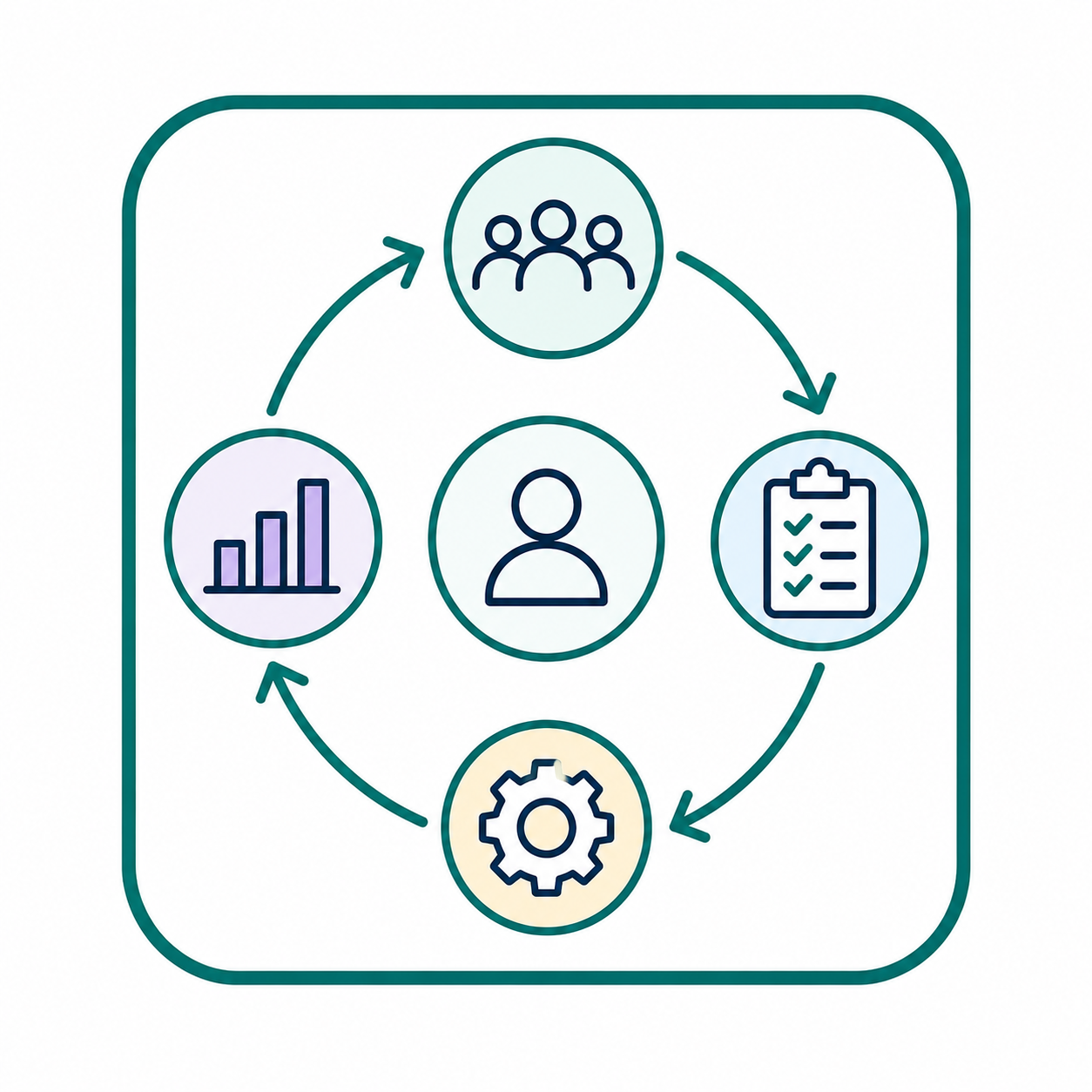
What is the client lifecycle?
The client lifecycle is the sequence through which a business relationship develops, operates, changes and eventually ends.
It typically begins with prospecting and onboarding, continues through maintenance, regulatory events, periodic reviews and changes in business activity, and may ultimately lead to exit, archival and possible re-onboarding.
The important point is that the relationship does not become static once onboarding is complete.
CLM must continue to maintain the information, controls and permissions that allow the relationship to remain valid over time.
Why is onboarding only one stage of the lifecycle?
Because most of the life of a client relationship occurs after onboarding.
Ownership can change, products can be added, entities can be created, regulatory classifications can change, risk can increase, information can become outdated and parts of the relationship can end.
If the operating model is designed mainly around onboarding, these subsequent changes tend to be handled as exceptions or separate processes.
A lifecycle model treats them as normal events within a continuing relationship.
What does CLM need to maintain throughout the lifecycle?
CLM needs to maintain the continuing validity of the entities, relationships, arrangements, controls and permissions on which business activity depends.
That includes knowing whether the relevant participants remain correctly identified, whether required information remains current, whether controls remain satisfied and whether the activity originally approved is still appropriate.
The objective is not simply to maintain records.
It is to maintain a reliable connection between the real-world relationship and what the bank currently permits.
What is a lifecycle event?
A lifecycle event is a change that may affect some part of the existing client relationship.
Examples include changes in ownership, legal form, address, directors, business activity, risk, products, jurisdictions, relationships or regulatory status.
Some events may have little effect. Others may require new controls, revised approvals or changes to existing permissions.
A mature CLM capability therefore evaluates the impact of the event rather than automatically recreating the entire relationship.
What is the difference between a scheduled review and an event-driven review?
A scheduled review occurs because a defined period has elapsed.
An event-driven review occurs because something material has changed.
Both are mechanisms for ensuring that the bank's understanding of the relationship remains valid, but they start from different triggers.
A strong lifecycle model uses both. Periodic review provides a regular reassessment point, while event-driven maintenance prevents the bank from waiting until the next review date when important changes occur earlier.
Should every change trigger a full KYC review?
No.
The response should be proportionate to what has changed and which existing conclusions depend on that information.
A change of address may require one set of actions. A change of beneficial ownership may require another. A new product may create additional requirements without invalidating all existing information.
Good lifecycle design identifies the affected components and updates those components.
Reperforming the entire process for every change creates unnecessary work and can obscure the actual risk created by the event.
What is business control in CLM?
Business control is the mechanism through which the bank determines whether particular activity may begin, continue, change or must stop.
It brings together the relevant participant, role, Business Arrangement, required controls and applicable permissions.
This provides a bridge between compliance with individual requirements and actual business activity.
The objective is to ensure that permitted activity remains aligned with the conditions on which it was approved.
What is a business permission?
A business permission represents the bank's current authority for a particular participant to undertake defined activity.
That permission may depend on several conditions, such as valid KYC, regulatory classification, product eligibility, legal documentation, credit approval or other controls.
A permission should therefore be explainable.
The bank should be able to determine what is permitted, for whom, in what context and which conditions support that decision.
Is completing KYC the same as receiving business permission?
No.
KYC may be a prerequisite for business, but it is normally only one of several conditions.
An entity may have valid KYC but still lack the regulatory classification, product approval, documentation, credit approval or other requirements needed for a particular activity.
This distinction is important.
Controls establish that individual requirements have been satisfied. Permissions determine whether the resulting business activity can proceed.
Why should permissions be linked to Business Arrangements?
Because permissions need context.
An entity may be permitted to participate in one type of business while not being permitted to participate in another.
The Business Arrangement establishes why the participant is involved, what role it performs and what business is being undertaken.
Anchoring permissions to that context helps prevent an approval obtained for one purpose from being interpreted as a general approval for unrelated activity.
Can one entity have several different permissions?
Yes.
The same entity may participate in several products, roles or arrangements, each with different conditions.
Some activities may be permitted while others are restricted or unavailable.
This is why a simple entity status such as "approved" or "not approved" is often insufficient for complex banking relationships.
CLM needs to distinguish the validity of the entity from the permissions associated with particular activities.
What happens when a control supporting a permission changes?
The bank needs to determine whether the permission remains valid.
If an underlying KYC assessment expires, a regulatory classification changes or required documentation becomes invalid, the affected permission may need to be reviewed, restricted or withdrawn.
The response should depend on which activity relied on that control and the significance of the change.
This linkage is fundamental to effective lifecycle management: changes in control state should lead to appropriate changes in business state.
Does every control failure mean all business must stop?
Not necessarily.
The response should reflect the nature of the deficiency, its risk and the activities affected.
Some issues may require immediate restriction. Others may allow existing activity to continue while remediation takes place, subject to defined conditions and approvals.
A well-designed framework therefore avoids both extremes: allowing deficiencies to have no consequence, or automatically stopping all business regardless of context.
Business control should be proportionate and traceable to the requirement involved.
What is the difference between relationship status and permission status?
Relationship status describes the state of the broader client or business relationship.
Permission status describes whether a particular activity is currently allowed.
A relationship can remain active even though one product permission has been withdrawn. Equally, an entity may remain known to the bank after a particular Business Arrangement has ended.
Separating these states avoids the assumption that one lifecycle event must affect every part of the relationship in the same way.
Why is effective dating important in lifecycle control?
Because information, controls and permissions are valid during particular periods.
The bank may need to know not only what the current state is, but when that state began, what preceded it and when a permission ceased to apply.
Effective dating supports auditability, historical reconstruction and correct downstream behaviour.
It also helps prevent future or expired information from being treated as if it were currently valid.
How should a new product or activity be handled for an existing client?
The bank should first determine what existing information and controls remain valid and what additional requirements arise from the new activity.
The entity should not normally need to be treated as entirely new simply because another product is being added.
Existing identity, ownership and other valid information may be reused, while product-specific, regulatory or contractual requirements are completed for the new arrangement.
This is one of the key advantages of treating CLM as a lifecycle rather than a sequence of independent onboarding cases.
What happens when a client creates a new entity?
The new entity must be identified and assessed in its own right, but the bank should not necessarily recreate everything it already knows about the wider client group.
Group information, existing relationships and previously validated participants may remain relevant.
The lifecycle process should determine what is genuinely new, what can be reused and what additional controls are required.
A structured entity and relationship model makes this substantially easier.
What is lifecycle anchoring?
Lifecycle anchoring determines what object a piece of information, control, identifier or permission depends upon.
An item may belong to an entity, a role, a relationship, a Business Arrangement or another recognised object.
Correct anchoring matters because the lifecycle of the item should follow the object to which it genuinely belongs.
If something is anchored incorrectly, it may survive when it should end or be removed while it is still required elsewhere.
Why is lifecycle anchoring especially important for identifiers?
Because not every identifier has the same purpose or lifecycle.
Some identifiers identify the entity itself. Others enable particular business activity in downstream platforms, markets or arrangements.
If a business-enablement identifier is attached to the wrong lifecycle object, closing one client relationship could inadvertently remove an identifier still needed for another activity.
Correct anchoring allows identifiers to be maintained for as long as their underlying business purpose continues.
What happens when part of a relationship ends?
Only the affected component should normally end.
A product may cease while the client relationship continues. A Business Arrangement may terminate while the entity remains active elsewhere. A particular role may end even though the entity continues to perform another role.
A well-structured lifecycle model allows these components to change independently.
This prevents unnecessary re-onboarding and reduces the risk of removing information or permissions still required elsewhere.
What does client exit mean?
Client exit is the controlled termination of some or all of the bank's business relationship with a client.
It may involve ending products, arrangements, permissions and contractual relationships, completing required controls and retaining information in accordance with legal and regulatory obligations.
Exit should not automatically mean deleting the underlying entity.
The entity may still be relevant to historical records, other parts of the bank or future relationships.
What is re-onboarding?
Re-onboarding occurs when an entity or client that previously exited seeks to conduct business again.
The bank should not necessarily start from zero.
Existing identity and historical information can provide a foundation, but the bank must determine what remains valid, what has changed and which controls must be refreshed before new permissions are established.
A well-designed lifecycle retains enough structure to make that reassessment efficient and reliable.
How should lifecycle changes affect downstream systems?
Relevant lifecycle decisions should propagate to the systems that depend on them.
If a permission is granted, changed, suspended or withdrawn, downstream platforms need to receive the appropriate instruction or status.
Similarly, changes to entity identity or business-enablement information may need to be distributed consistently.
Without this connection, the CLM platform can show one state while downstream systems continue operating on another.
Why is publication and distribution part of lifecycle control?
Because a lifecycle decision has limited value if the rest of the bank does not receive it.
CLM may determine that an entity is valid, a permission has been granted or an activity must stop, but downstream systems need timely and reliable access to that decision.
Publication and distribution therefore form part of the control architecture.
They connect lifecycle decisions to operational execution across the bank.
What should happen when information cannot be updated immediately?
The bank should understand what information is affected, why it cannot be updated, what risk this creates and whether any temporary restrictions or controls are required.
The issue should have a defined owner and resolution path.
The important principle is that uncertainty should be visible and managed.
Allowing unresolved information simply to remain within the lifecycle without understanding its effect can create false confidence in the validity of the relationship.
Why does lifecycle design matter to operational efficiency?
Because poorly designed lifecycles generate unnecessary work.
If every change creates a new case, every product requires repeated data collection or every periodic review recreates information that remains valid, the operating model consumes capacity without adding equivalent control value.
Good lifecycle design focuses effort on what has actually changed and what genuinely requires reassessment.
That improves both control effectiveness and operating efficiency.
What does good lifecycle and business control look like?
Good lifecycle control keeps the bank's view of the relationship aligned with the real world.
Changes are detected, assessed and applied to the correct entities, roles, relationships and arrangements. Existing information is reused where appropriate. Controls remain current, and permissions change when their supporting conditions change.
Those decisions are then propagated reliably to the systems through which business is conducted.
The result is a continuously managed relationship rather than a collection of disconnected cases and periodic interventions.
Data, Identity and Architecture
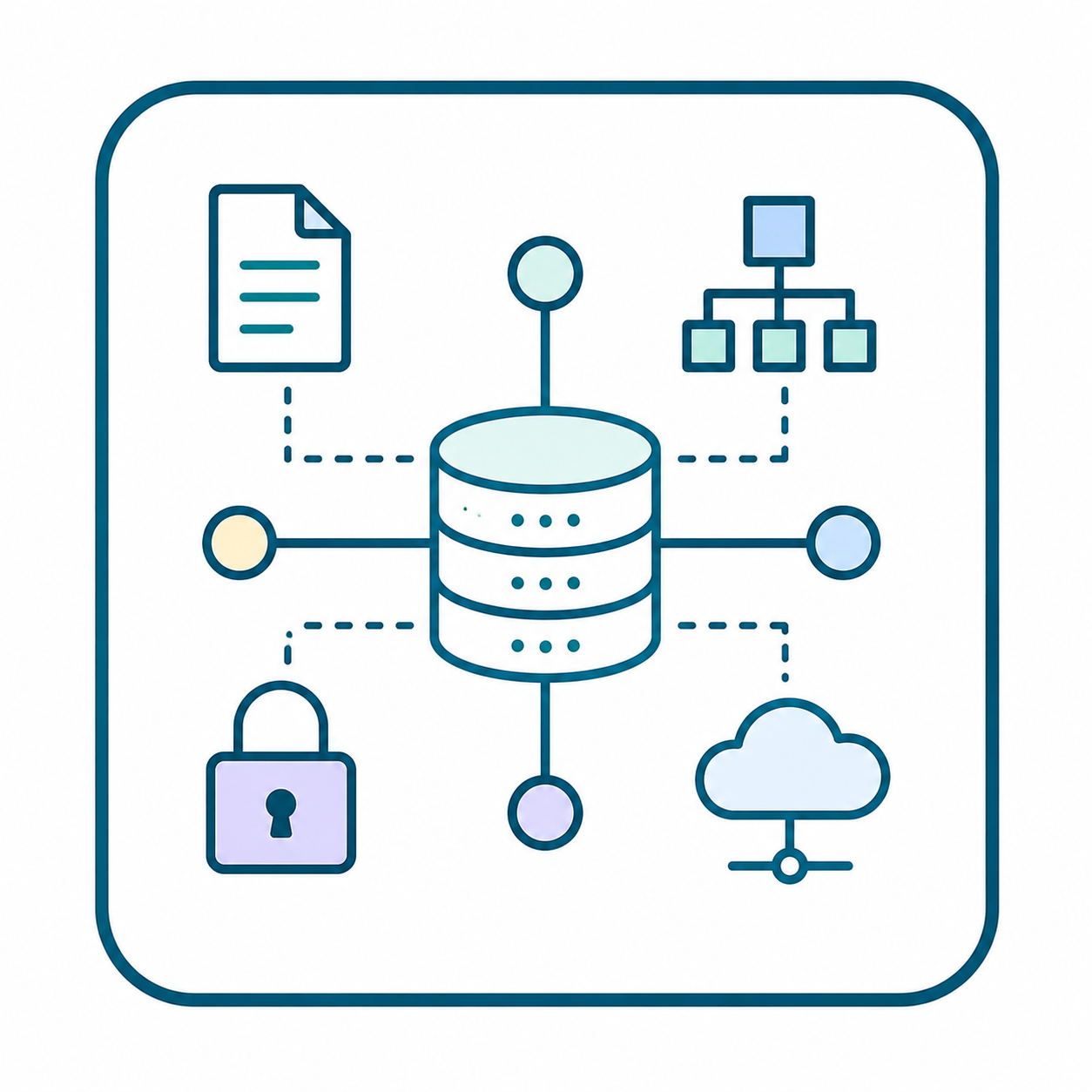
Why does data matter so much in CLM?
Because CLM decisions are only as reliable as the information on which they depend.
Entity identity, ownership, relationships, regulatory classifications, risk attributes, permissions and downstream enablement all rely on data that must be accurate, current and associated with the correct object.
Poor data does not remain a local problem. It can affect KYC, screening, product enablement, reporting, operational processes and enterprise risk analysis.
Data quality is therefore part of the operating capability of CLM, not a separate technical concern.
What is the difference between data and information in CLM?
Data is the individual recorded content: names, identifiers, dates, classifications, addresses, ownership percentages and other attributes.
Information emerges when that data is placed in context.
Knowing an identifier is useful. Knowing which entity it identifies, what role that entity performs, which relationship it belongs to and which business activity it enables is considerably more useful.
Good CLM architecture therefore does more than collect data. It gives data structure and meaning.
Why is entity identity foundational to CLM?
Because almost every other CLM concept depends on knowing which real-world participant is involved.
If the same entity appears several times, information becomes fragmented and work can be repeated. If different entities are incorrectly combined, controls and permissions may be applied to the wrong participant.
Reliable identity allows the bank to connect information from different systems and processes to one recognised participant.
Entity identity is therefore not merely another data field. It is part of the structural foundation of the capability.
What does a single unique entity instance mean?
It means the bank maintains one authoritative enterprise representation of a real-world entity within the relevant identity architecture.
That entity may have many names, external identifiers, internal identifiers, roles and relationships, but these should connect back to the same recognised entity instance.
This does not mean every system must use the same identifier internally.
It means the bank needs a reliable way of determining that records in different systems refer to the same real-world participant.
What is a Unique Entity Identifier?
A Unique Entity Identifier, or UEI, is the enterprise identifier assigned to the recognised entity instance.
Its purpose is to provide a stable identity around which other information can be organised.
Legacy identifiers, external identifiers and downstream platform identifiers can then be mapped to the UEI rather than being treated as competing definitions of the entity.
The value of the UEI lies less in the code itself than in the identity discipline that sits behind it.
Is an LEI the same as an enterprise entity identifier?
No.
A Legal Entity Identifier, or LEI, is an external identifier used for particular regulatory and market purposes. It can be extremely useful where one exists and applies.
An enterprise identifier serves a different purpose. It identifies the bank's recognised entity instance across its internal architecture.
Not every relevant entity will necessarily have an LEI, and the bank may need to identify branches, individuals, funds or other participants according to its own enterprise requirements.
External identifiers should therefore support enterprise identity rather than replace it.
Why should different identifiers be mapped rather than treated as separate entities?
Because identifiers describe or enable use of an entity; they do not normally create a new entity.
The same organisation may have an LEI, company registration number, tax identifier, internal client number, market identifier and several downstream platform identifiers.
Creating a separate entity record for each of these fragments the bank's understanding of the participant.
Mapping them to the recognised entity allows different systems and processes to refer to the same underlying real-world participant.
Are all identifiers entity identifiers?
No.
Some identifiers establish or help establish the identity of the entity itself.
Others exist because the entity participates in a particular business activity, system, venue, account structure or arrangement.
These can be thought of as business-enablement identifiers.
The distinction matters because their lifecycles may be different. An entity can continue to exist even when one particular enablement identifier is no longer required.
What is a business-enablement identifier?
A business-enablement identifier is an identifier used to allow a recognised participant to operate within a particular business context.
Examples can include identifiers used by trading, settlement, payment, account, venue or other downstream platforms.
Such identifiers may be essential to business activity without defining the underlying identity of the entity.
They therefore need to be connected to the correct entity while also being anchored to the business purpose that gives them meaning.
Why does identifier anchoring matter?
Because an identifier should follow the lifecycle of the object or activity to which it actually belongs.
An enterprise entity identifier may remain valid for as long as the entity remains recognised.
A business-enablement identifier may depend on a particular Business Arrangement, role, platform or other operational context.
If an identifier is anchored incorrectly, it can be removed while still required or retained after the activity it supported has ended.
Correct anchoring is therefore both a data and lifecycle design issue.
What is an identifier registry?
An identifier registry is the controlled mechanism through which identifiers and their relationships to recognised entities are maintained.
It can record which identifiers exist, which entity they refer to, what type they are, where they originate, where they are used and whether they remain active.
The registry should not create competing versions of entity identity.
Its purpose is to provide controlled mapping between the enterprise identity and the many identifiers required across the bank and external market infrastructure.
Why is an identifier registry important?
Without a controlled registry, mappings between identifiers tend to become dispersed across spreadsheets, local systems, interfaces and institutional knowledge.
That makes it difficult to determine whether two identifiers refer to the same entity, whether an identifier is still required or which systems depend upon it.
A registry creates visibility and governance around those mappings.
It can therefore become an important part of both entity identity management and downstream business enablement.
Does all data need to be mastered in the CLM platform?
No.
Different data domains may appropriately be mastered in different systems.
The important questions are: who owns the data, which source is authoritative, what object the data describes, how it is kept current and how other systems obtain it.
CLM may master some information and consume other information from authoritative external or internal sources.
A sound architecture distinguishes system of record, system of entry, system of use and distribution mechanisms rather than assuming everything must reside in one platform.
What is a system of record?
A system of record is the authoritative source for a defined set of information or decisions.
That does not mean it must contain every item of information used by the process.
For CLM, different systems may be authoritative for entity identity, KYC outcomes, credit decisions, reference data or particular downstream identifiers.
Good architecture makes those responsibilities explicit so that the same information is not independently mastered in several places without clear authority.
Can CLM be a system of record without holding everything?
Yes.
A CLM platform can be authoritative for selected lifecycle objects and decisions while relying on other authoritative sources for supporting data.
For example, it might master the enterprise entity instance, lifecycle status or product permissions while consuming company reference data or screening outcomes from elsewhere.
What matters is that ownership and authority are unambiguous.
A system of record is defined by responsibility for the information, not by the ambition to store every possible data element.
Why does data ownership matter?
Because someone needs to be accountable for the continuing quality and meaning of the data.
Data ownership should include responsibility for defining what the data represents, approving relevant standards and ensuring that the data remains fit for business and control purposes.
Technology teams may impose system constraints, and downstream consumers may have important requirements, but those constraints do not replace business ownership.
Data quality becomes difficult to sustain when nobody is clearly accountable for the data domain itself.
What is the role of a data steward?
A data steward performs the practical governance and management activities needed to maintain a data domain.
This can include documenting definitions, standards, permissible values, lineage, quality rules and issue resolution.
The steward may coordinate decisions across business owners, system owners and downstream consumers.
Stewardship therefore does not necessarily mean that the steward alone decides every data standard. Some decisions require agreement across the wider architecture.
Who should decide the format of a data field?
The business owner should determine what the information needs to mean and the business requirements it must satisfy.
Data and technology teams should identify relevant architectural and system constraints, including the requirements of consuming platforms.
The final standard should balance these considerations and be formally documented through data governance.
A field format is therefore not simply a local system configuration decision where it has enterprise consequences.
Why does downstream consumption need to influence data design?
Because information is only useful if the systems that need it can consume it reliably.
A source system may be technically capable of storing a particular structure or format while downstream platforms have more restrictive limits.
Those dependencies need to be understood before the enterprise standard is finalised.
The answer is not necessarily to design everything to the limitations of the oldest system, but the architecture needs an explicit strategy for translation, remediation or eventual change.
What is data lineage?
Data lineage describes where information originated, how it has been transformed and where it is subsequently distributed or used.
For CLM, lineage helps answer questions such as whether a value was supplied by the client, obtained from an external source, derived by a rule or manually amended.
It also helps identify which downstream processes could be affected by a change or quality issue.
Strong lineage makes information easier to trust, govern and remediate.
Why is data provenance important?
Provenance explains the origin and evidential basis of information.
This is particularly important where the bank is relying on external sources, client-provided information or data reused from previous processes.
Knowing the source allows the bank to assess whether the information is authoritative, sufficiently current and suitable for the purpose for which it is being used.
Provenance therefore supports both data quality and control assurance.
Why should data be attached to the correct object?
Because the object determines the meaning and lifecycle of the information.
An address might belong to an entity. An ownership percentage belongs to a relationship. A product permission may belong to a Business Arrangement. An identifier may belong to the entity or to a particular business-enablement context.
If information is attached at the wrong level, it becomes difficult to know when it should change, whether it can be reused and what other activity depends upon it.
Good data architecture begins by asking what the information describes.
Why is relationship data different from entity data?
Entity data describes the participant itself.
Relationship data describes how that participant is connected to another participant or object.
For example, an organisation's legal name belongs to the entity. A statement that another entity owns 60 percent of it describes a relationship between two entities.
Keeping these concepts separate allows relationships to change without changing the identities of the underlying entities.
Why is temporal data important?
Because CLM data changes over time.
Ownership changes, addresses change, classifications change, roles begin and end, permissions are granted and withdrawn.
The bank therefore needs to know not only what is true now but, where relevant, when it became true and what was true previously.
Effective dating and history support auditability, lifecycle control and reconstruction of past decisions.
Why is duplicate entity data so dangerous?
Duplicates divide the bank's knowledge of the same real-world participant.
One record may contain current ownership information while another contains the active business relationship. Different records may be screened, reviewed or risk-rated separately.
This can lead to repeated client outreach, inconsistent controls and an incomplete enterprise view.
Duplicate prevention and controlled resolution are therefore core identity-management capabilities rather than simple data-cleansing exercises.
Why can migration expose weaknesses in entity architecture?
Migration forces the bank to decide whether records in different systems represent the same entity, different entities or different business contexts around the same entity.
Legacy systems may have embedded products, roles or local identifiers within what appears to be a client record.
Moving that data into a more structured architecture can therefore reveal assumptions that were previously hidden.
Migration is not simply a technical transfer of records. It is often an exercise in resolving the bank's underlying information model.
Why should migration not create new duplicate entities?
Because migration should preserve or improve identity integrity, not reproduce historical fragmentation.
Source records need to be matched against the target entity population before new entities are created.
Where uncertainty remains, it should be resolved through controlled matching and exception processes rather than defaulting to another new record.
Otherwise the target platform begins its life carrying forward the same identity problems it was intended to solve.
What is reference data in CLM?
Reference data provides controlled values used to classify and interpret other information.
Examples can include country codes, legal forms, industry classifications, product taxonomies, entity types and regulatory classifications.
Reference data may appear simple, but inconsistent values can make enterprise reporting, rules and downstream integration unreliable.
It therefore needs clear ownership, standard definitions and controlled distribution.
Why does product taxonomy matter to CLM architecture?
Because products connect business activity to permissions, controls and risk.
If different locations or platforms use incompatible product definitions, it becomes difficult to apply common rules or risk models consistently.
A global product taxonomy provides a common reference structure through which local and platform products can be mapped.
This enables more consistent permissioning, reporting and risk treatment across the enterprise.
Why is architecture more than technology design?
Because architecture defines how the concepts of the business fit together.
In CLM this includes entities, roles, relationships, Business Arrangements, controls, permissions, identifiers, data ownership, lifecycle events and downstream consumption.
Technology implements those structures, but it does not determine them by itself.
A technically functional platform can still embody a poor conceptual architecture.
What is conceptual architecture?
Conceptual architecture describes the major business objects and the relationships between them without being tied to a particular system implementation.
For CLM, this might include entity, role, relationship, Business Arrangement, control, permission and lifecycle state.
Getting these concepts right creates a stable foundation on which processes, data models and technology can be designed.
If the conceptual model is weak, later layers tend to compensate through exceptions and workarounds.
Why does CLM need an enterprise architecture rather than just a platform architecture?
Because CLM does not begin and end inside one system.
Information arrives from external sources and other internal platforms. Controls may be performed elsewhere. Decisions are distributed to downstream systems. Identifiers connect CLM to operational activity across the bank.
The architecture therefore has to describe the complete flow of identity, data, controls and permissions across the enterprise.
Optimising the CLM platform while ignoring those interfaces can leave the overall capability fragmented.
Why are interfaces and publication mechanisms important?
Because authoritative information has limited value if it cannot reach the systems that depend on it.
Interfaces and publication services distribute entity identity, status, permissions and other relevant information to downstream consumers.
They also need to manage timing, failures, reconciliation and changes.
Reliable publication and distribution are therefore part of the CLM control environment, not merely technical integration.
Why is reconciliation necessary?
Because sending information does not prove that the receiving system has processed it correctly.
Reconciliation helps confirm that authoritative changes in CLM are reflected in downstream systems and that unexpected differences are identified.
This is particularly important where downstream activity depends on permissions, identifiers or lifecycle status.
Without reconciliation, discrepancies can persist unnoticed between the bank's intended state and its operational state.
Should downstream systems create their own versions of client identity?
Ideally, they should consume or map to the enterprise identity rather than independently redefining the participant.
A downstream platform may still require its own technical identifier, but that identifier should remain linked to the recognised enterprise entity.
Otherwise each platform becomes another independent source of client identity.
Over time, this recreates the fragmentation that enterprise entity management is intended to solve.
How does good architecture support data reuse?
Good architecture makes clear what information exists, what it describes, where it is mastered and whether it remains valid.
That allows processes to reference existing authoritative information instead of recreating it.
Reuse therefore depends on identity, provenance, ownership and lifecycle state.
Without those foundations, copying data may look like reuse but simply creates another unmanaged version of the same information.
Why should data quality be managed in BAU?
Because data deteriorates through normal business activity.
Entities change, relationships change, users make errors, interfaces fail and new information becomes available.
If data quality is treated primarily as a project responsibility, problems accumulate until another remediation programme is required.
The teams that create, maintain and own CLM data therefore need ongoing responsibility for identifying and resolving quality issues as part of normal operations.
What is the role of projects in data quality?
Projects should deliver changes without leaving the data environment worse than they found it.
They may need to cleanse or transform data required for a migration or implementation, particularly where this is necessary to achieve the project's objectives.
But projects should not become the permanent owner of underlying BAU data quality.
Sustainable quality depends on clear operational ownership, controls and remediation processes that continue after the project ends.
Why can architecture reduce operational cost?
Good architecture removes unnecessary ambiguity and duplication.
If an entity is recognised once, information can be reused. If roles and relationships are modelled correctly, the same participant does not need to be recreated for each context. If authoritative data is distributed reliably, downstream teams do not need to reconstruct it manually.
Architecture therefore affects operating economics.
Poor architecture creates work. Good architecture prevents work from being created unnecessarily.
What does good data, identity and architecture look like?
Each real-world participant is recognised consistently. Information is attached to the correct entity, relationship, arrangement or lifecycle object. Authoritative sources and ownership are clear. Identifiers are mapped rather than confused with identity, and data can move reliably between the systems that need it.
Changes are effective-dated, lineage is understood and downstream use can be reconciled.
The result is not simply cleaner data or better technology. It is an enterprise information structure that allows the bank to understand its clients and other participants consistently, control their lifecycle and enable business with confidence.
Risk and Exposure
Why is client and counterparty risk becoming harder for banks to understand?
Because risk increasingly develops across networks rather than within a single legal entity, product or jurisdiction.
A geopolitical event, sanctions action, market disruption, supply-chain shock, funding problem or failure of a major institution can affect several connected organisations and activities at once.
The bank therefore needs to understand not only individual clients and counterparties, but how entities, groups, relationships, arrangements, products and markets connect.
The challenge is increasingly one of understanding interconnected exposure quickly enough to act.
What does exposure mean in this context?
Exposure is broader than a single credit balance or trading position.
A bank may be exposed through lending, derivatives, securities, payments, settlement, custody, guarantees, deposits, operational dependencies or other business relationships.
There may also be indirect exposure through related entities, ownership structures, counterparties, issuers or market infrastructure.
Understanding exposure therefore requires both financial measures and an understanding of how participants connect to the bank.
Why is legal-entity exposure not always enough?
Because the economic relationship may extend across many entities within the same client group.
A bank may lend to one entity, trade with another, provide payments services to a third and hold securities issued by another member of the same group.
Looking at each legal entity independently can therefore hide the wider relationship.
The bank needs to be able to move between entity-level precision and group-level aggregation depending on the question being asked.
Why is client-group structure important to risk?
Client groups allow the bank to understand how individual entities form part of a wider economic organisation.
This can reveal concentrations, common ownership, shared dependencies and relationships that would not be obvious from individual entity records.
However, group aggregation should not replace entity-level analysis.
Risk may arise at group level while legal obligations, controls and individual exposures remain attached to specific entities.
How can an external event become a risk inside the bank?
An external event becomes relevant when it affects something to which the bank is connected.
That connection may be a client, counterparty, issuer, beneficial owner, jurisdiction, product, market, supply chain, infrastructure provider or other relationship.
The first challenge is therefore to locate where the event intersects with the bank.
The second is to understand the resulting exposure and decide what action is required.
Why does interconnectedness make risk harder to manage?
Because one participant can be connected to many others through ownership, contracts, funding, securities, agency relationships and market activity.
A problem affecting one entity may therefore propagate through a network rather than remain isolated.
The bank needs to understand these connections well enough to distinguish direct exposure from second-order or indirect effects.
Without that structure, risk analysis often begins with manual investigation after the event has already occurred.
Why does time matter so much in risk and exposure management?
Because the value of information declines if it arrives after decisions need to be made.
During a fast-moving event, management may need to identify affected clients and counterparties, quantify exposure, restrict activity, protect the bank and communicate with regulators or clients within hours rather than weeks.
A technically correct answer delivered too late may have limited value.
Risk capability therefore depends not only on accuracy but also on the speed with which the bank can locate, interpret and act on relevant information.
What should the bank be able to determine when a major client or counterparty is distressed?
It should be able to identify the relevant entities and client group, the relationships the bank has with them, the products and arrangements involved, and the nature and scale of the bank's exposure.
It should also be able to identify which parts of the bank are affected, which permissions or activities may need to change and which obligations must continue to be honoured.
The objective is to move rapidly from who is affected? to what is our position? and then to what must we do?
Why can exposure be difficult to aggregate across a global bank?
Because information is often organised around products, businesses, booking entities, jurisdictions and individual platforms.
Each system may provide an accurate local view while no single view explains the complete enterprise relationship.
Different identifiers can make aggregation harder if the same participant is represented differently across systems.
Enterprise exposure therefore depends on strong identity, consistent relationship structures and the ability to connect distributed information.
Does all exposure information need to be held in CLM?
No.
Financial exposure will usually be calculated or maintained in specialist risk, finance, trading or product systems.
CLM's role is different.
It can provide the identity and relationship architecture needed to determine which real-world participants those exposures relate to and how they connect across the enterprise.
The objective is not to turn CLM into an exposure engine, but to make exposure information easier to locate, connect and interpret.
What role does entity identity play in exposure management?
Reliable identity allows exposures from different parts of the bank to be associated with the same real-world participant.
If the same entity exists under several identifiers or records, its exposures can appear fragmented.
If different entities are incorrectly combined, exposure can be overstated or misunderstood.
A consistent enterprise identity therefore provides one of the foundations for reliable aggregation.
Why do roles matter when assessing risk and exposure?
Because the nature of the bank's exposure can depend on the capacity in which an entity participates.
An entity might be a borrower, counterparty, issuer, guarantor, investment manager, agent or another type of participant.
The same organisation can perform several roles, and those roles can create different forms of risk.
Knowing the identity of the entity is therefore necessary but not always sufficient. The bank also needs to understand why the entity is relevant.
Why do Business Arrangements matter to exposure?
Business Arrangements provide the context connecting participants to particular banking activity.
They help explain which entities are involved, what roles they perform and what activity the bank has agreed to undertake.
This can be particularly important when a participant appears in several unrelated arrangements.
The arrangement helps the bank understand which exposure belongs to which business context rather than assuming every connection has the same significance.
Why do non-client entities matter to risk analysis?
Because significant risk can arise from entities that are not conventional clients.
Issuers, agents, intermediaries, market infrastructures, investment managers and other participants may still be important to understanding an event or exposure.
A client-only view of the world can therefore leave important connections outside the bank's risk picture.
Enterprise entity management needs to recognise relevant participants whether or not they have a traditional client relationship.
How does geopolitical risk affect CLM?
Geopolitical developments can change the significance of information already held about clients and counterparties.
A jurisdiction, ownership structure, product, route to market or business relationship that was previously unremarkable may suddenly become important.
The bank therefore needs to be able to identify affected populations rapidly.
CLM contributes by providing structured information about entities, relationships, jurisdictions and permitted business that can be used to locate where the external event intersects with the bank.
How does sanctions risk differ from ordinary periodic risk assessment?
Sanctions risk can change abruptly.
An entity, owner, jurisdiction or activity can become restricted between scheduled reviews, requiring immediate identification and action.
This makes sanctions a clear example of why lifecycle management cannot depend solely on periodic review.
The bank needs ongoing screening and the ability to connect screening results quickly to the affected relationships, arrangements and business activity.
What is concentration risk from a CLM perspective?
Concentration can arise when many apparently separate relationships depend on the same underlying group, participant, geography, market or other common factor.
CLM does not calculate financial concentration by itself, but its entity and relationship structures can help reveal where common dependencies exist.
Without those connections, individually acceptable exposures can appear unrelated even when they form part of the same underlying risk.
What is the difference between identifying exposure and managing exposure?
Identifying exposure establishes what the bank may be affected by.
Managing exposure determines what the bank should do about it.
The second step may involve credit decisions, trading restrictions, collateral actions, liquidity management, client engagement, operational controls or other responses.
CLM helps connect the affected participant to the relevant business relationships and permissions, but the response will usually involve several functions across the bank.
How should the bank respond when a risk event occurs?
The response should move rapidly from detection to enterprise assessment.
The bank needs to locate affected participants, quantify relevant exposure, decide what action is required, contain inappropriate activity, continue obligations that must be honoured and propagate decisions across the organisation.
The situation then needs continuing monitoring as information changes.
A strong response is coordinated across the bank rather than being recreated independently by each business or jurisdiction.
Why can fragmented client data increase risk during a crisis?
Because time is lost establishing basic facts.
Teams may need to reconcile names, identifiers, client groups and local records before they can determine whether they are looking at the same participant.
Different businesses may then reach different conclusions or take different actions.
Fragmentation therefore creates both delay and uncertainty at precisely the point when management needs a rapid enterprise view.
Why should risk decisions propagate to downstream systems?
Because a decision only becomes operational when the relevant activity changes.
If management decides that a particular activity must be restricted, the downstream systems through which that activity occurs need to receive and implement that decision.
A restriction that exists only within a risk assessment or CLM record does not control the business.
Risk response therefore requires both decision-making and reliable execution across the operational environment.
How can permissions support risk management?
Permissions provide a controlled link between the conditions surrounding a relationship and the activity the bank allows.
If an important risk condition changes, the affected permissions can be reviewed, restricted or withdrawn.
This is more precise than treating the entire client as simply active or inactive.
It allows the bank to control the particular activity affected by the risk while maintaining other legitimate relationships where appropriate.
Why is historical information important when assessing exposure?
Because management may need to reconstruct what the bank knew and what activity was permitted at a particular point in time.
Exposure and relationships change. Entities join or leave groups, permissions change, ownership structures move and positions are created or closed.
Effective dating and historical records help explain the circumstances under which previous decisions were made.
This supports risk analysis, regulatory enquiries, audit and post-event review.
What does good enterprise exposure capability look like?
The bank can start with an external event or an identified participant and rapidly determine where it intersects with the enterprise.
Entities are consistently recognised. Client groups and relationships can be traversed. Relevant products and Business Arrangements can be located. Financial exposure from specialist systems can be brought together against the same participants.
Management can then distinguish direct from indirect exposure, understand where action is required and propagate decisions to the parts of the bank that need to act.
The result is not one enormous exposure database. It is an enterprise capability for connecting information quickly enough to support effective decisions.
What role should CLM play in enterprise risk response?
CLM should provide part of the connective infrastructure.
It knows or can connect the bank's recognised participants, client groups, roles, relationships, arrangements, lifecycle states and permissions.
Risk and finance systems provide other essential information, particularly quantitative exposure.
When these capabilities work together, the bank can move more quickly from an external event to an enterprise understanding of who is affected, what the bank's exposure is and what action is required.
Why is enterprise risk response a test of CLM capability?
Because a crisis exposes whether the bank can actually connect the information it claims to manage.
Under normal conditions, fragmented processes can often be compensated for through manual effort and local knowledge.
During a fast-moving event, there may not be enough time.
The bank's ability to identify affected participants, understand their relationships, assemble exposure and control resulting activity is therefore a practical test of whether its client and entity architecture works at enterprise scale.
Operating Model and Governance
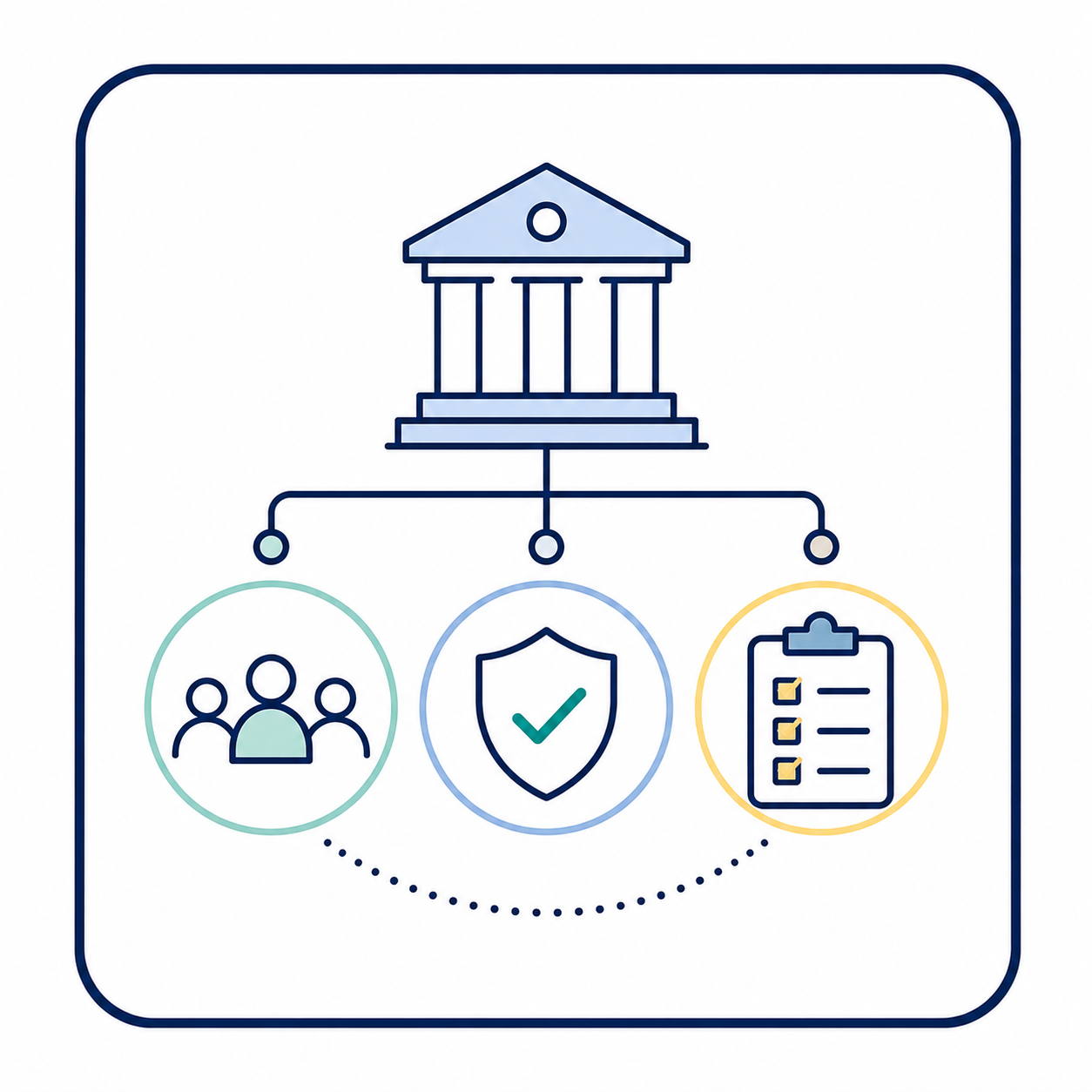
What is a CLM operating model?
A CLM operating model defines how the capability works across the bank.
It sets out who owns the capability, which activities are performed by which functions, how decisions are made, how work moves through the lifecycle, how data is governed, how technology is supported and how performance is managed.
The operating model therefore sits above individual procedures.
It provides the structure through which Front Office, Operations, Compliance, Financial Crime, Risk, Data and Technology work together to produce a consistent client lifecycle outcome.
Why does CLM need an enterprise operating model?
Because CLM crosses organisational boundaries.
No single function controls every part of the lifecycle. Front Office initiates and manages relationships. Operations executes lifecycle activity. Financial Crime and Compliance define and oversee controls. Data and Technology provide critical infrastructure.
Without an enterprise model, each function can optimise its own part while the end-to-end lifecycle remains fragmented.
An enterprise operating model aligns those responsibilities around one capability rather than a collection of local processes.
Who should own CLM?
There should be clear end-to-end accountability for the capability.
That does not mean one function performs every activity. It means one accountable leadership structure is responsible for the integrity, design, performance and evolution of CLM across the enterprise.
Individual functions can retain ownership of specific controls, processes, data domains and technologies.
The key principle is that distributed responsibility should not result in fragmented accountability.
Why is end-to-end accountability important?
Because many CLM failures occur between organisational boundaries rather than within them.
A process may work correctly within Operations but fail because data from another function is incomplete. A technology change may meet its technical requirements but disrupt the client lifecycle. A control may be well designed but poorly embedded in business execution.
End-to-end accountability focuses attention on the overall outcome rather than whether each function completed its own part.
Does enterprise ownership mean centralising CLM?
No.
Enterprise ownership and centralisation are different concepts.
A bank can have common standards, architecture, governance and accountability while still allowing activities to be performed regionally or within individual businesses.
The appropriate balance depends on regulation, geography, business model and scale.
The objective is consistency where consistency matters and controlled variation where local requirements genuinely differ.
What should be globally standardised?
The strongest candidates for standardisation are the concepts and structures on which the enterprise depends.
These can include entity identity, core data definitions, product taxonomy, lifecycle states, role and relationship concepts, control principles, permissioning logic, governance standards and performance measures.
Local processes may vary where regulation or business requirements demand it.
A common foundation makes those differences visible and manageable rather than allowing every location to develop an independent model.
What should be allowed to vary locally?
Local variation may be required because of law, regulation, market practice, products or operating constraints.
The important point is that variation should be explicit.
The bank should be able to explain what differs, why it differs, who approved the variation and how it interacts with the global model.
Uncontrolled local variation gradually creates multiple versions of CLM. Governed variation preserves enterprise coherence.
What role should the Front Office play in the operating model?
The Front Office is not merely a requester of CLM services.
It is responsible for the commercial relationship and is often the first to know when the client's circumstances, needs or intended activity change.
The operating model should therefore give the Front Office clear responsibilities for initiating lifecycle events, providing business context, supporting client engagement and maintaining the commercial accuracy of the relationship.
Those responsibilities should be designed into the lifecycle rather than treated as informal cooperation with Operations.
What role should Operations play?
Operations should execute and maintain the lifecycle reliably.
This includes processing lifecycle events, maintaining information, resolving exceptions, monitoring work queues, supporting controls and ensuring the operating environment remains stable.
Operations also has an important role in identifying recurring problems in process design, data and technology.
It should not be expected simply to absorb structural weaknesses through additional manual effort.
What role should Financial Crime and Compliance play?
Financial Crime and Compliance should define and oversee the requirements within their areas of responsibility.
They should be clear about the outcome required, the policy basis for the requirement, acceptable evidence, escalation routes and circumstances in which exceptions may be considered.
They should also participate in the design of processes and controls through which those requirements are implemented.
Effective governance separates ownership of the regulatory requirement from ownership of the entire CLM capability.
What role should Data play?
Data functions should help define and govern how critical information is represented, mastered, distributed and maintained.
This includes data definitions, standards, lineage, ownership, quality rules and remediation.
Data governance should work with business and technology stakeholders because data decisions often have consequences across several systems and processes.
The objective is to ensure that CLM information remains usable and authoritative across the enterprise.
What role should Technology play?
Technology should provide resilient platforms, interfaces and services that support the operating model.
It should also advise on technical constraints, integration, architecture, scalability, security and operational resilience.
Technology should not be expected to decide the business meaning of CLM concepts.
The operating model and conceptual architecture should define what the capability needs to do; technology determines how those requirements are implemented reliably.
What is the role of a CLM Design Authority?
A CLM Design Authority protects the integrity of the overall capability.
It reviews changes that affect process, data, architecture, controls, lifecycle design, roles, relationships, permissions or downstream integration.
Its purpose is not simply to approve documents.
It ensures that local changes do not undermine the enterprise model and that important design decisions remain consistent over time.
Why is design governance necessary after implementation?
Because CLM continues to evolve.
Regulations change, products are introduced, data requirements develop, platforms are upgraded and operating teams identify new needs.
Without ongoing design governance, small changes gradually alter the architecture and operating model.
A strong Design Authority therefore remains part of BAU governance rather than disappearing when a transformation programme ends.
What is the difference between governance and management?
Management runs the capability.
Governance determines how important decisions are made, who has authority, what standards apply, how performance is challenged and how significant risks or changes are escalated.
The two need to work together.
Too little governance creates inconsistency. Too much governance can make routine decisions unnecessarily slow. Good governance focuses attention on decisions that genuinely affect enterprise outcomes.
What governance forums does CLM need?
The exact structure will vary, but different types of decisions usually require different forums.
A senior governance forum may oversee capability performance, strategy, major risks and investment. A Design Authority can protect architecture and operating-model integrity. Change and release governance can prioritise and control implementation. Operational forums can monitor production health, defects and recurring issues.
The principle is to align governance with the type and level of decision being made.
Why should operational health have its own governance?
Because a capability can appear successful at programme level while deteriorating in production.
Backlogs, defects, workarounds, interface failures, data issues and capacity constraints often emerge gradually.
Regular operational health governance makes these issues visible before they become major failures.
It also creates a mechanism for distinguishing isolated incidents from structural problems requiring design or investment changes.
How should change be governed?
Change should be governed according to its impact, not simply its size.
A seemingly small change to an identifier, lifecycle rule or data field can have significant downstream consequences.
Change governance should therefore consider business impact, control impact, data implications, architecture, testing, operational readiness and downstream dependencies.
The objective is controlled evolution of the capability rather than accumulation of disconnected fixes.
What is the difference between Run the Bank and Change the Bank?
Run the Bank, or RTB, keeps the existing capability operating.
This includes production support, defects, resilience, minor improvements, routine releases and operational maintenance.
Change the Bank, or CTB, delivers more substantial enhancements, transformations and strategic changes.
The distinction is useful for funding and governance, but the two must remain connected because recurring RTB problems often reveal where CTB investment is needed.
Why should defects and small changes be governed separately from major transformation?
Because they move at different speeds and carry different risks.
Operational defects may require frequent prioritisation and release decisions, while strategic changes need deeper design, business case and governance.
If every small change is forced through major programme governance, the capability becomes slow to maintain.
If significant design changes are treated as routine fixes, architectural integrity can be lost.
A mature operating model provides proportionate governance for both.
How should priorities be decided?
Priorities should reflect more than who is asking most loudly.
They should consider client impact, control risk, operational resilience, regulatory obligations, business value, dependency, effort and the consequences of delay.
The prioritisation process should also distinguish between treating symptoms and addressing root causes.
A recurring high-volume manual workaround may deserve more attention than a visible but low-impact enhancement.
Why is backlog governance important?
Because an unmanaged backlog can hide the real condition of the capability.
A large number of unresolved defects, change requests, data issues and manual workarounds can indicate that production is operating below its intended design.
The backlog should therefore be classified, prioritised and monitored for both volume and underlying themes.
Governance should ask not only how many items are being closed, but why new items continue to arise.
Who should own data-quality remediation?
The teams accountable for the relevant data and BAU process should normally own continuing data quality.
Projects may need to correct data required for a migration or implementation, but they should not become the permanent solution for underlying operational data problems.
If ownership returns to nobody when the project ends, the same problems will reappear.
Data quality therefore needs explicit BAU ownership within the operating model.
How should exceptions be governed?
Exceptions should be visible, authorised, time-bound where appropriate and linked to the requirement being varied.
The bank should know why the exception exists, what risk it creates, what mitigation applies, who approved it and when it must be reconsidered.
Exceptions should not become an alternative operating model.
Patterns of repeated exceptions should be reviewed because they may indicate that a policy, process or system design no longer works effectively.
Why is clear decision authority important?
Because ambiguity creates delay and escalation.
If several functions believe another function owns a decision, work can stop while responsibility is debated.
The operating model should therefore define who decides, who contributes, who executes and who needs to be informed for important types of decisions.
Clear authority does not eliminate collaboration. It makes collaboration more effective because responsibility for the final decision is understood.
What is the role of escalation?
Escalation provides a controlled route for issues that cannot be resolved within normal operating authority.
It may be required because of material risk, policy interpretation, competing priorities, client impact or cross-functional disagreement.
A good operating model defines escalation thresholds and decision forums in advance.
This reduces the likelihood that important issues remain unresolved because nobody knows where they should go.
Why does governance need good management information?
Because governance cannot challenge what it cannot see.
Management information should show whether the capability is delivering its intended outcomes, where risk is accumulating and where the operating model is under stress.
That can include flow stability, timeliness, first-pass quality, data integrity, overdue populations, control effectiveness, cost and client enablement.
The purpose is not to maximise reporting. It is to provide enough evidence for informed decisions.
Why are volume measures alone insufficient?
Because high throughput can coexist with poor outcomes.
A team may close large numbers of cases while backlogs continue to grow, quality deteriorates or downstream corrections increase.
Management therefore needs to understand flow, quality, control, capacity and demand together.
The objective is a stable system rather than simply high activity.
Why does capacity matter to governance?
Because an operating model running continuously at or above full utilisation has little ability to absorb variation or improve itself.
Unexpected demand creates backlogs, while improvement work is repeatedly deferred because all resources are consumed by current production.
Capacity should therefore include sufficient resilience for normal variation, defects and improvement.
A system at 100% utilisation cannot improve itself.
How should CLM performance be governed?
Performance should be assessed across several dimensions rather than one headline measure.
The bank needs to understand timeliness, flow stability, first-pass quality, risk-data integrity, overdue or deficient populations, control effectiveness, cost per lifecycle event and the effectiveness with which clients are enabled.
Together, these measures provide a more balanced view of whether the capability is safe, stable, efficient and commercially effective.
Why is first-pass quality important?
Because rework consumes capacity without creating additional client value.
Low first-pass quality can indicate unclear requirements, poor data, weak training, inadequate systems or badly designed hand-offs.
It also increases elapsed time and can create inconsistent control outcomes.
Tracking first-pass quality helps governance distinguish genuine workload from workload generated by failure within the operating model itself.
Why does CLM need governance across business and control functions?
Because CLM must achieve both business enablement and effective control.
If governance is dominated by only one perspective, the operating model can become unbalanced.
A purely operational view may optimise throughput without resolving risk. A purely control-driven view may introduce requirements without understanding operational or client consequences.
Cross-functional governance allows these considerations to be resolved within one capability model.
Why should senior management care about CLM governance?
Because fragmentation in CLM can create enterprise consequences.
Weak governance can lead to inconsistent client treatment, uncontrolled local processes, poor data, growing operational debt, delayed revenue and repeated remediation programmes.
Senior management therefore needs confidence that the capability has clear accountability, effective decision-making and a mechanism for identifying deterioration before it becomes a major problem.
Good governance provides that assurance.
How should the operating model respond to a major incident or crisis?
Normal organisational boundaries may need to be compressed.
The bank should be able to establish a coordinated response, identify affected clients and counterparties, assess exposure, make decisions, propagate actions and monitor the evolving situation.
Roles and decision rights should be sufficiently clear that the response does not have to invent a governance model during the crisis.
Crisis response is therefore an important test of whether the normal operating model has established genuine enterprise capability.
Why should operating-model design come before technology implementation?
Because technology needs a coherent model to implement.
If roles, ownership, data responsibilities, lifecycle processes and decision authority are unclear, a new platform cannot resolve those ambiguities by itself.
Instead, the system often embeds them and makes later change more difficult.
Operating-model design establishes how the capability should work; technology then supports and scales that design.
What does a strong CLM operating model look like?
Accountability is clear. Responsibilities are distributed deliberately rather than accidentally. Common concepts and standards are maintained across the enterprise. Local variation is controlled. Data and technology ownership are understood. Changes pass through proportionate governance, and production health is continuously monitored.
Business, control and technology functions work within one lifecycle model rather than operating as separate chains of activity.
The result is a capability that can run reliably today while continuing to improve over time.
Performance and Improvement

What does good CLM performance mean?
Good CLM performance means that the capability delivers reliable outcomes across control, client enablement, operational stability, data quality and cost.
It is not enough for teams to complete cases or meet isolated service targets.
A well-performing capability should enable business when required, maintain valid controls and data, manage demand without persistent backlog and avoid generating unnecessary rework.
Performance should therefore be assessed across the whole lifecycle rather than through one operational measure.
Why is throughput alone not a good measure of performance?
Because a high number of completed cases does not necessarily mean the system is healthy.
A team may process large volumes while incoming demand grows faster, quality deteriorates, rework increases or overdue populations continue to accumulate.
Throughput describes activity.
Performance describes whether the capability is producing the required outcomes sustainably.
What are the most important measures of CLM performance?
A balanced view should include at least:
onboarding completed by the required date;
flow stability;
first-pass quality;
risk-data integrity;
the proportion of the population that is overdue or deficient;
control effectiveness;
cost per lifecycle event; and
client enablement effectiveness.
Together, these measures show whether CLM is timely, controlled, accurate, stable, efficient and supportive of the business.
Why is onboarding by required date more useful than average turnaround time?
Because the business need is normally linked to when the client must be ready.
An average can look acceptable even if a significant proportion of important cases miss their required dates.
Measuring delivery against the required date connects operational performance directly to business enablement.
It also makes variation visible rather than allowing good outcomes on simple cases to mask poor outcomes elsewhere.
What is flow stability?
Flow stability describes whether work enters, moves through and leaves the lifecycle at a sustainable rate.
A stable system does not continually accumulate backlog or depend on periodic surges of additional resource to recover.
If incoming demand consistently exceeds completed work, the problem is not simply productivity. The operating system is out of balance.
Flow stability is therefore one of the strongest indicators of whether CLM is under control.
Why does backlog matter?
Backlog represents unfinished demand.
Some backlog is normal, because work takes time to complete. The problem arises when the backlog grows, ages or contains work beyond required completion dates.
A persistent backlog can indicate insufficient capacity, poor prioritisation, excessive rework, badly designed processes or demand that has not been smoothed.
The size of the backlog matters, but its age, composition and direction of travel are often more informative.
Is all backlog equally important?
No.
A new case within its expected processing window is very different from a periodic review that is already overdue or a control deficiency that has remained unresolved for months.
Backlog should therefore be segmented by age, risk, lifecycle event, client importance and required completion date.
This allows management to distinguish normal work in progress from accumulated operational or control debt.
What is first-pass quality?
First-pass quality measures how often work is completed correctly without being returned, corrected or reworked.
It is important because rework consumes capacity while adding little or no value to the client or the control environment.
Low first-pass quality can indicate unclear requirements, poor source data, weak process design, inadequate training or system limitations.
Improving first-pass quality can therefore increase effective capacity without adding more people.
Why does rework matter so much in CLM?
Because rework creates hidden demand.
A case may appear once in volume reporting but pass repeatedly between Front Office, Operations and control functions before completion.
That consumes capacity, extends elapsed time and increases the opportunity for error.
A high-performing CLM capability seeks to remove the causes of rework rather than simply processing it faster.
What is risk-data integrity?
Risk-data integrity measures whether the information used to support control and risk decisions is reliable.
This includes whether the correct entity has been identified, whether key attributes are accurate, whether relationships and ownership remain current and whether downstream systems receive consistent information.
A process can appear operationally efficient while still producing poor-quality risk data.
Performance measurement therefore needs to assess the quality of the outcome as well as the speed of the process.
Why should overdue and deficient populations be measured separately from throughput?
Because completed workload does not show what remains unresolved.
A capability may report strong productivity while a significant population of clients remains overdue, incomplete or operating under deficiencies.
The health of the control environment therefore depends partly on the condition of the total population, not just activity during the reporting period.
Management needs visibility of both flow and stock.
What is control effectiveness?
Control effectiveness measures whether controls are actually achieving the outcomes for which they were designed.
Completion of a control step is not sufficient evidence on its own.
A control may be performed consistently but still fail to identify the intended risk, rely on poor data or produce outcomes that are not acted upon.
Effective performance measurement therefore considers whether the control works in practice, not simply whether the procedure was followed.
Why should cost per lifecycle event be measured?
Because cost reveals how efficiently the operating model converts demand into completed outcomes.
Two banks can complete the same lifecycle event with very different amounts of manual effort, rework and management intervention.
Cost per event also helps identify where complexity is being created by the operating model itself.
The objective is not simply to reduce cost, but to remove cost that does not add equivalent business or control value.
What is client enablement effectiveness?
Client enablement effectiveness measures how successfully CLM allows legitimate business to begin or continue when required.
It can include whether clients are ready for intended business dates, whether unnecessary delays occur and whether existing information is reused appropriately.
This provides an important counterbalance to purely control or operational metrics.
A CLM capability should protect the bank while also enabling business effectively.
Why should performance measures be balanced?
Because improving one measure in isolation can make another worse.
Increasing throughput by reducing control effort may damage quality. Increasing control activity without regard to process design may create delay and cost. Driving utilisation too high may reduce resilience and improvement capacity.
Balanced measures make these trade-offs visible.
The objective is not to maximise one number but to optimise the capability as a whole.
Why does capacity matter to performance?
Because every operating system has a finite ability to absorb demand.
If capacity is consistently below incoming workload, backlog grows. If the capability is run continuously at maximum utilisation, small variations in demand can create large delays.
Capacity must therefore be considered alongside demand, productivity, quality and flow.
The question is not simply how many people are available, but how much effective capacity the operating model creates.
Why is 100% utilisation undesirable?
Because a system operating continuously at full utilisation has no room to absorb normal variation, incidents, training or improvement activity.
Even small increases in demand can generate queues.
The capability also loses its ability to fix underlying problems because all available effort is devoted to current production.
A system at 100% utilisation cannot improve itself.
What is demand smoothing?
Demand smoothing reduces avoidable peaks and troughs in workload.
For example, large populations of periodic reviews may be concentrated around historical onboarding dates. If left unchanged, this can create predictable capacity crises every year.
Redistributing review dates across quarters, months or appropriate risk cycles can create a more stable workload.
Smoothing does not reduce the control obligation. It makes the obligation more manageable.
Why do periodic-review populations often become unstable?
Because review dates frequently reflect when clients were originally onboarded or previously remediated rather than a deliberately designed operating rhythm.
Large onboarding or remediation programmes can therefore create future workload peaks.
As those peaks repeat over one-, three- or five-year review cycles, they become embedded in BAU.
Performance improvement should therefore consider the shape of future demand, not just the current backlog.
Why is elapsed time different from processing time?
Processing time is the effort actively spent working on a lifecycle event.
Elapsed time is the total time from initiation to completion, including waiting, hand-offs, queues and client responses.
A case may require only a few hours of actual processing while taking several weeks to complete.
Improvement efforts that focus only on staff productivity can therefore miss the largest sources of delay.
Why are hand-offs important?
Every hand-off introduces the possibility of delay, misunderstanding and rework.
CLM processes often cross Front Office, Operations, Financial Crime, Compliance and Technology, sometimes several times within one case.
Some hand-offs are necessary, but many can be simplified through better information, clearer decision rights or process redesign.
Reducing unnecessary hand-offs can improve both speed and quality.
How can management tell whether a performance problem is a capacity problem or a design problem?
A genuine capacity problem occurs when a well-designed process receives more valid demand than available resources can reasonably handle.
A design problem creates unnecessary demand, rework, waiting or manual effort.
Adding people can temporarily compensate for poor design, which can make the distinction difficult to see.
Management should therefore examine demand, first-pass quality, rework, queue time, process steps and recurring exceptions before concluding that headcount is the primary solution.
Why can adding more people fail to improve performance?
Because additional capacity does not remove structural causes of poor performance.
If the process repeatedly generates errors, requires duplicated data collection or contains unnecessary hand-offs, more people may simply process more inefficiency.
The additional resource can also become permanent as the operating model expands to absorb it.
Sustainable improvement therefore addresses the causes of workload as well as the volume.
What is operational debt?
Operational debt is the accumulation of unresolved weaknesses that make the capability increasingly difficult or expensive to operate.
It can include manual workarounds, duplicate records, unresolved defects, inconsistent data, aged backlog, local processes and temporary solutions that become permanent.
Each item may appear manageable individually.
Together, they reduce capacity, increase risk and make future change more difficult.
How should operational debt be measured?
There is rarely one single measure.
Useful indicators include the number and age of defects, manual workarounds, recurring exceptions, data deficiencies, backlog, rework and unresolved change requests.
The direction of travel is particularly important.
If these populations continue to grow despite high levels of operational activity, the capability may be consuming its capacity maintaining its weaknesses rather than improving them.
Why do remediation programmes keep recurring?
Because remediation often corrects the accumulated population without correcting the operating model that created it.
Once the project ends, the same weaknesses begin generating new deficiencies.
The organisation may therefore move through repeated cycles of deterioration, remediation and deterioration.
Sustainable improvement requires the underlying process, data, control or architectural cause to be removed.
What is continuous improvement in CLM?
Continuous improvement is the systematic process of identifying and removing causes of poor performance while the capability continues to operate.
It uses operational evidence such as defects, rework, delays, data issues, client feedback and control outcomes to identify where the system can be improved.
It is different from periodic transformation.
The objective is to make improvement part of BAU rather than something that only happens when performance has already become unacceptable.
Where should CLM improvement begin?
Improvement should normally begin by stabilising the operating environment.
It is difficult to optimise a system whose demand, backlog, defects or processes are not understood.
Once the system is stable, attention can move to whether it is effective, works for the business, operates efficiently and is positioned for future needs.
Trying to optimise an unstable capability can simply make instability move faster.
Why should stabilisation come before optimisation?
Because unstable systems produce unreliable evidence.
If workload is constantly being reprioritised, backlogs are growing and temporary workarounds are common, management cannot easily determine normal performance.
Stabilisation establishes basic control over demand, flow, quality and ownership.
Only then can improvement efforts distinguish structural opportunities from symptoms of instability.
What does it mean for CLM to be effective?
Effectiveness means that the capability reliably achieves its required business and control outcomes.
Entities are correctly identified, controls are completed to the required standard, lifecycle events are managed and business permissions are supported by valid information.
An effective process does the right things.
Efficiency comes later and concerns how much effort is required to achieve those outcomes.
What does it mean for CLM to work for the business?
It means the capability supports legitimate client activity without avoidable friction.
Commercial requirements are understood, information is reused appropriately, required dates can be met and clients are not repeatedly asked for information the bank already holds.
The Front Office can understand what is required and what is preventing business from proceeding.
A technically compliant capability that consistently obstructs legitimate business still has a performance problem.
What does CLM efficiency mean?
Efficiency means achieving the required outcomes with the least unnecessary use of time, effort and cost.
It comes from removing duplication, reducing rework, improving information reuse, automating appropriate activity and designing processes around actual lifecycle events.
Efficiency should not be achieved by weakening control.
The strongest improvements make the capability both easier to operate and more reliable.
What should be improved before automation?
The underlying process should first be understood and simplified.
Automating unnecessary steps makes them faster but does not make them necessary.
Similarly, automating poor-quality data or unclear decision rules can scale errors.
Good automation follows sound process, data and control design.
How should improvement priorities be selected?
Priorities should be based on impact and root cause.
High-volume sources of rework, material control weaknesses, major client delays, growing backlogs and recurring defects are strong candidates.
Management should also consider whether solving one structural issue will remove multiple downstream problems.
The most visible problem is not always the most valuable one to fix.
Why is root-cause analysis important?
Because symptoms often occur far from their cause.
A backlog in Operations may originate in unclear Front Office requirements. Repeated KYC rework may arise from poor data architecture. Downstream errors may originate in identifier design.
Treating only the point where the problem becomes visible can therefore leave the underlying cause untouched.
Root-cause analysis helps direct improvement effort to where it will have lasting effect.
Why should defects be treated as performance information?
Because defects reveal where the designed capability and the real operating environment differ.
A single defect may be isolated.
Repeated defects around the same process, rule, interface or data field indicate a structural weakness.
Defect patterns should therefore feed into continuous improvement and design governance rather than being treated solely as production support items.
Why should client feedback be part of performance measurement?
Because internal measures do not always reveal where the bank is creating unnecessary friction.
A process may meet internal service levels while repeatedly requesting duplicate information or making it difficult for the client to understand what is required.
Client feedback provides evidence about the external effect of the operating model.
It should complement, rather than replace, operational and control measures.
How should improvement benefits be demonstrated?
Benefits should be visible in measurable outcomes.
A process change intended to reduce rework should improve first-pass quality. A capacity intervention should improve flow and backlog. Better information reuse should reduce client outreach or elapsed time.
Improvement should therefore begin with a clear statement of the problem and the performance measures expected to change.
Otherwise activity can be completed without knowing whether the capability actually improved.
Why do some transformation programmes fail to improve CLM performance?
Because they focus on delivering the change rather than changing the performance of the operating system.
A new platform can be implemented while poor data, fragmented ownership, excessive demand and inefficient processes remain.
The programme may therefore meet its delivery milestones without materially improving the client lifecycle.
Successful transformation needs to define the operating outcomes it is intended to improve and measure whether those outcomes are achieved after implementation.
When is technology the right improvement lever?
Technology is valuable when the underlying process and information requirements are sufficiently clear.
It can reduce manual effort, automate rules, improve orchestration, strengthen data distribution and provide better visibility.
But it is only one improvement lever.
Changes to policy, process, data, organisation, demand management or governance may produce greater benefits in some situations.
Why does technology stabilise only after the foundations?
Because technology inherits the structures it is asked to automate.
If entity identity is inconsistent, data ownership is unclear or lifecycle rules are unresolved, the platform must compensate through customisation, manual workarounds or exceptions.
That makes the technology itself appear unstable.
Strong foundations reduce the number of ambiguities the system is expected to absorb.
What is the relationship between performance and resilience?
A resilient capability can maintain acceptable outcomes when demand or circumstances change.
That requires spare capacity, clear priorities, reliable data, controlled processes and the ability to adapt.
A capability may appear highly efficient during normal conditions while being unable to absorb disruption.
Performance should therefore include resilience rather than optimising solely for steady-state productivity.
What does mature CLM performance look like?
Demand is understood and sufficiently smooth. Work flows through the lifecycle without persistent backlog. First-pass quality is high. Data and controls remain reliable. Clients are enabled when required, and operating costs are understood.
Defects and weaknesses are used as evidence for improvement rather than allowed to accumulate.
The capability can absorb normal variation, respond to significant events and continue improving without depending on repeated remediation programmes.

Technology and Platforms
What role does technology play in CLM?
Technology provides the platforms, workflow, data services, interfaces and controls through which CLM operates at scale.
It can orchestrate lifecycle activity, maintain records, automate rules, support case management, distribute information and provide visibility of status and performance.
But technology is only one component of CLM.
A platform cannot by itself resolve unclear ownership, poor data, weak lifecycle design or inconsistent business concepts.
Is a CLM platform the same as the CLM capability?
No.
The CLM capability includes the operating model, people, data, architecture, policies, controls, governance and technology required to manage client relationships over time.
The platform supports that capability.
Confusing the two can lead transformation programmes to focus on replacing software while leaving the underlying operating problems unchanged.
Can a bank have good technology but poor CLM?
Yes.
A technically capable platform can still operate within a fragmented operating model, consume poor-quality data or implement unclear business rules.
Users may then compensate through spreadsheets, manual processes, local workarounds and repeated intervention.
Technology quality matters, but it does not compensate indefinitely for weak foundations.
Why do CLM technology programmes often become very complex?
Because they sit at the intersection of many parts of the bank.
A CLM platform may need to connect with entity data, external data providers, screening, transaction monitoring, regulatory classification, product systems, workflow, client portals, document management and numerous downstream platforms.
It also has to support multiple lifecycle events, jurisdictions, control requirements and business models.
The complexity is therefore not simply technical. Much of it reflects the complexity of the underlying bank.
Why should operating-model design come before platform design?
Because the platform needs to know what it is being asked to support.
The bank first needs clarity on entities, roles, relationships, Business Arrangements, lifecycle events, controls, permissions, data ownership and responsibilities.
Only then can technology be configured around a coherent model.
Otherwise the system ends up absorbing unresolved business questions through customisation and workarounds.
Why should conceptual architecture come before system configuration?
Because system configuration turns concepts into operating rules.
If the underlying concepts are unclear, different teams may use the same terms to mean different things or implement different structures for the same business reality.
A clear conceptual architecture gives the platform a stable model to implement.
This reduces later redesign and makes integration with other systems more consistent.
Should all CLM functionality sit in one platform?
Not necessarily.
Some capabilities may sit naturally within the CLM platform, while others may be provided by specialist systems.
Screening, external data, document extraction, transaction monitoring, reference data, credit or regulatory services may all operate elsewhere.
The important question is not whether everything sits in one application, but whether the architecture produces a coherent end-to-end capability.
What should a CLM platform normally do well?
A CLM platform should support the core lifecycle reliably.
That can include entity management, workflow and orchestration, CDD and KYC processes, lifecycle events, regulatory classification, product permissions, trigger management, exit processes, audit history and distribution of relevant outcomes.
The exact scope will differ between banks.
The important point is that the platform should support the intended operating model rather than forcing the operating model to conform to unnecessary platform constraints.
What is workflow orchestration?
Workflow orchestration controls how work moves through the lifecycle.
It determines what activity is initiated, what tasks are required, who performs them, what dependencies exist and what happens when particular outcomes are reached.
Good orchestration reduces unnecessary hand-offs and makes responsibility clear.
Poor orchestration can create queues, duplicate activity and complex case structures even when the individual tasks themselves are simple.
Why is case management not enough for CLM?
Case management is useful for organising work, but the client relationship continues after an individual case closes.
An entity, relationship, permission or Business Arrangement can exist across many cases and many years.
If the technology model centres primarily on the case, important lifecycle information can become trapped inside completed cases.
CLM therefore needs persistent business objects as well as workflow.
What is the risk of designing CLM around cases?
A case-centred design can cause each lifecycle event to recreate information that already exists.
Identity, ownership, relationships and control outcomes may be repeatedly copied into new cases rather than maintained as continuing enterprise information.
That can create duplication and make it difficult to determine the current state of the relationship.
Cases should support lifecycle activity, not become the architecture of the client itself.
Why are persistent business objects important?
Because entities, roles, relationships, arrangements, identifiers and permissions usually outlive individual workflow events.
A persistent object can be maintained once and referenced across many processes.
This allows lifecycle changes to update the underlying object rather than repeatedly recreating it.
That improves both data integrity and information reuse.
What is the difference between a workflow state and a business state?
A workflow state describes where a piece of work is within a process.
A business state describes the actual condition of an entity, relationship, control or permission.
For example, a case might be "awaiting approval" while the entity's existing business permission remains active.
Keeping these concepts separate prevents temporary process states from being mistaken for the state of the underlying relationship.
Why does integration matter so much in CLM?
Because CLM both consumes and produces enterprise information.
It may receive entity data, screening results, regulatory information, documents or product information from other systems.
It then needs to distribute identities, statuses, permissions and other outcomes to downstream platforms.
A CLM platform that works well in isolation but integrates poorly with the rest of the bank cannot provide an effective enterprise capability.
What is the difference between an interface and an integration architecture?
An interface is a specific connection between systems.
An integration architecture defines how information moves across the wider environment, including ownership, message structures, timing, error handling, reconciliation and dependency management.
A bank can have many functioning interfaces while still having a weak integration architecture.
CLM benefits from treating information distribution as an enterprise capability rather than a collection of point-to-point connections.
Why are point-to-point integrations difficult to maintain?
Because each additional connection creates another dependency.
If many systems connect directly to one another, a change in one platform can require changes across numerous interfaces.
Over time, the environment becomes difficult to understand and expensive to modify.
More structured publication, distribution or integration services can reduce this dependency and make the architecture easier to evolve.
Why is publication important?
Publication allows authoritative CLM information to be distributed to systems that need it.
This may include entity identity, lifecycle status, permissions, regulatory classifications or other information.
The publication mechanism should make clear what has changed and which downstream consumers require the update.
Reliable publication helps prevent downstream platforms from creating their own competing versions of CLM information.
Why is reconciliation necessary between platforms?
Because successful transmission does not guarantee successful consumption.
Messages can fail, arrive late, be rejected or be interpreted incorrectly.
Reconciliation checks whether the intended state in the authoritative system matches the state in the receiving platform.
This is particularly important where permissions or identifiers directly enable business activity.
Why are downstream platforms part of CLM architecture?
Because CLM decisions ultimately need to affect real business activity.
Trading, settlement, payments, accounts and other banking activity occur on downstream systems.
If those platforms do not receive or correctly interpret CLM outcomes, the enterprise can operate differently from what CLM intends.
The boundary of CLM architecture therefore extends beyond the CLM platform itself.
Should downstream systems maintain their own client identifiers?
They may require their own technical identifiers, but those identifiers should map back to the recognised enterprise entity.
Local identifiers can be necessary for system operation.
The problem arises when the local identifier becomes an independent definition of the client or entity.
A strong architecture separates local technical identity from enterprise business identity.
Why are APIs important in modern CLM architecture?
APIs can allow systems to exchange information and services in a more structured and reusable way.
They can reduce the need for tightly coupled point-to-point integrations and allow multiple processes to consume the same authoritative capability.
However, APIs do not solve unclear data ownership or poor conceptual design.
A well-designed API exposes a clear business capability. It does not compensate for an unclear one.
What role can external data providers play?
External providers can supply corporate information, ownership data, documents, market data, regulatory information and other content useful to CLM.
This can reduce manual client outreach and improve speed.
The bank still needs to understand the source, quality, coverage, update frequency and licensing of that information.
External data should therefore be integrated into the bank's data governance rather than treated as automatically authoritative.
What role can client portals play?
Client portals can provide a structured way for clients to supply information, documents and responses.
They can improve transparency and reduce reliance on email.
Their value depends heavily on the underlying process.
A portal that repeatedly asks clients for information the bank already holds simply digitises a poor experience.
What makes a good CLM client portal?
A good portal asks only for information genuinely required from the client.
It should reuse information already available, clearly explain what is needed, allow appropriate delegation and provide visibility of outstanding actions.
The client experience should align with the underlying entity and relationship model.
The portal should not expose internal organisational fragmentation to the client.
What role can automation play in CLM?
Automation can reduce repetitive activity, apply rules consistently, route work, validate information and trigger lifecycle actions.
It is particularly valuable where tasks are high-volume, structured and governed by clear decision rules.
Automation should follow a sound process design.
Automating a poorly designed process usually makes the same weaknesses operate faster.
What is straight-through processing in CLM?
Straight-through processing allows a lifecycle event to move from initiation to completion with little or no manual intervention where the required conditions are satisfied.
This can be appropriate for predictable, low-complexity events supported by reliable data and clear rules.
It should not mean removing human judgment where judgment is required.
The objective is to reserve manual intervention for situations where it genuinely adds value.
Why is rules management important?
CLM contains many decisions that depend on jurisdiction, entity type, role, product, risk, regulation or other factors.
If these rules are buried in code or scattered across local procedures, change becomes slow and difficult to govern.
A controlled rules capability can make decision logic more transparent and easier to maintain.
The business meaning and ownership of the rule should remain clear even where execution is automated.
What role can AI play in CLM?
AI can support activities such as document interpretation, information extraction, classification, summarisation, anomaly identification, research and assistance with operational decision-making.
It can potentially reduce manual effort and improve the speed with which information is processed.
The use case still needs appropriate data, control, validation, auditability and human oversight.
AI should therefore be introduced as part of a governed operating model rather than as an isolated technology experiment.
Should AI make KYC or risk decisions automatically?
That depends on the decision, its materiality, applicable regulation and the degree to which the outcome can be validated and governed.
Some use cases may be suitable for automated assistance or recommendations, while others require accountable human judgment.
The important distinction is between using AI to improve the availability and interpretation of information and delegating a material control decision to the technology.
Governance should reflect that distinction.
Why does auditability matter in CLM technology?
Because the bank may need to demonstrate how a decision was reached.
It should be possible to determine what information was available, which rules were applied, who performed or approved relevant actions and what changed over time.
Audit history is especially important where automated rules or AI contribute to decisions.
Technology should make the decision process more traceable, not less.
What is configuration versus customisation?
Configuration uses capabilities already provided by the platform to support the bank's requirements.
Customisation introduces bespoke changes beyond the standard product.
Some customisation may be justified, but extensive customisation can make upgrades, maintenance and vendor support more difficult.
A bank should therefore distinguish genuine strategic requirements from local preferences before modifying the platform.
Why can excessive customisation become a problem?
Because every bespoke change creates something the bank must continue to maintain.
Customisation can increase testing effort, complicate upgrades and make the platform diverge from the vendor's standard product direction.
It may also preserve historical processes that should have been redesigned.
Customisation should therefore solve a clear business or control need rather than merely replicate the previous system.
Should the bank adapt its processes to the platform?
Sometimes, but not automatically.
A standard platform capability may represent a simpler or more mature way of working and should be considered seriously.
However, the bank should not abandon sound business or control architecture merely because the platform was designed differently.
The decision should be based on the importance of the requirement, the value of standardisation and the long-term cost of deviation.
Why are upgrades important?
Software vendors continually change their products for security, functionality, regulation and technical support.
Remaining too far behind can increase operational risk and eventually make change more expensive.
At the same time, upgrades require testing and operational capacity.
A sustainable platform strategy therefore includes a regular upgrade path rather than treating every upgrade as a major transformation programme.
Why can platform replacement become risky?
Because replacement affects more than the application itself.
Data must be migrated, integrations rebuilt, lifecycle states preserved, users retrained and downstream dependencies maintained.
Historical assumptions embedded in the old platform may also become visible only during migration.
Replacing a CLM platform is therefore an operating-model and data transformation as much as a technology project.
When should a bank replace a CLM platform?
Replacement is appropriate when the existing platform can no longer support the required capability economically, safely or sustainably.
Reasons can include end-of-life technology, inability to meet strategic requirements, excessive maintenance cost, poor scalability or architectural constraints.
The decision should consider whether the underlying problems actually originate in the platform.
Replacing technology does not resolve weaknesses that sit elsewhere in the operating model.
When is it reasonable to retain an existing platform longer?
It may be reasonable where the platform remains supportable, operationally stable and capable of sustaining the bank's near-term requirements.
This can create time to improve data, architecture, operating-model maturity and migration readiness before committing to replacement.
Extending a platform should therefore be an active strategic decision rather than simple delay.
A later migration can be safer if the foundations are stronger.
Why is migration so important in CLM technology change?
Because migration determines whether the new platform begins with reliable information and lifecycle state.
Entities need to be matched correctly, relationships preserved, active cases resolved or transferred, identifiers mapped and historical information retained appropriately.
Poor migration can undermine an otherwise successful platform implementation.
Migration design should therefore begin early rather than being treated as a final technical activity.
Why should duplicate and dummy records be resolved before migration?
Because migration should not knowingly reproduce avoidable data problems.
Duplicates fragment identity, while dummy records often represent temporary operational workarounds rather than genuine entities.
Moving them unchanged into the new architecture makes later remediation harder.
Data preparation before migration improves both the quality of the new platform and confidence in the migration itself.
Why should in-flight work be considered before migration?
Because active cases contain unresolved lifecycle activity.
The bank must decide whether each case should be completed before migration, transferred into the target platform or handled through another controlled approach.
Ignoring in-flight work can create duplicate activity, lost decisions or inconsistent states between systems.
Migration therefore needs an explicit strategy for both static data and active workflow.
Why does testing need business involvement?
Because technical testing alone cannot determine whether the capability works correctly from a business and control perspective.
Business users need to validate lifecycle behaviour, permissions, data outcomes, exceptions, downstream impacts and operational usability.
User acceptance testing should therefore test the intended operating model rather than simply confirm that screens and interfaces function.
Why is production health important after go-live?
Because a successful deployment does not prove that the capability is stable in real operation.
Production may reveal volume problems, data issues, interface failures, user workarounds or scenarios not adequately tested.
Post-implementation governance should therefore monitor defects, performance, data quality and operational impact.
The objective is to move from technical go-live to stable business operation.
What is technical debt in CLM?
Technical debt is the accumulated cost of temporary solutions, outdated components, bespoke code, fragile integrations and deferred maintenance.
Like operational debt, it can initially appear manageable.
Over time it increases the cost and risk of every subsequent change.
Technology governance should make technical debt visible and prevent short-term fixes from becoming permanent architecture without deliberate decision.
How should technology defects be prioritised?
Priority should reflect business and control impact, not simply technical severity.
A small defect affecting entity identity or permissions may be more significant than a visible user-interface problem.
Prioritisation should consider regulatory risk, client impact, data integrity, operational resilience, volume affected and availability of workarounds.
The technology backlog should therefore be connected to CLM capability priorities.
Why does resilience matter for CLM platforms?
Because interruptions to CLM can prevent clients from being onboarded, reviewed, changed or enabled for business.
A prolonged outage can also prevent the bank from responding to important lifecycle or risk events.
Technology resilience therefore includes recovery capability, data integrity, continuity procedures and the ability to operate safely during disruption.
CLM should be treated as important business infrastructure.
What happens if the CLM platform is unavailable for a prolonged period?
The bank needs a controlled continuity response.
Priority activity should be identified, temporary processes established, decisions documented and information retained so that it can later be reconciled with the platform.
The longer the outage continues, the more important prioritisation, governance and enterprise coordination become.
A prolonged outage is therefore both a technology incident and an operating-model event.
Should technology architecture allow the bank to change platforms later?
Yes.
A bank should avoid making every enterprise capability inseparable from one application where this can reasonably be avoided.
Clear data ownership, stable enterprise identifiers, controlled interfaces and modular services make future platform change easier.
The objective is not complete vendor independence, but reducing unnecessary dependence on application-specific structures.
What is modular CLM architecture?
A modular architecture separates major capabilities into components with clear responsibilities and interfaces.
Entity management, orchestration, KYC, permissions, screening, reference data, identifier management and publication can be treated as distinct capabilities even when several are implemented in the same platform.
This makes architectural responsibilities clearer and can make future change more manageable.
A platform should support the capability model rather than define it.
Why does technology stabilise only after the foundations?
Because unresolved data, operating-model and architectural issues surface as technology problems.
Users experience inconsistent data as system defects, unclear requirements as workflow problems and weak governance as endless configuration changes.
Technology can only become stable when the business concepts it implements are sufficiently stable.
The strongest technology environments are therefore built on strong conceptual and operational foundations.
What does a good CLM technology landscape look like?
The bank has clear enterprise identity, authoritative data sources and well-defined lifecycle objects. The CLM platform supports persistent business information as well as workflow. Specialist systems provide capabilities where appropriate, and integrations connect them through controlled interfaces.
Permissions and lifecycle decisions are distributed reliably to downstream platforms and reconciled. Technology changes are governed, upgrades are sustainable and operational health is visible.
The result is not necessarily one platform. It is a coherent technology ecosystem supporting one CLM capability.
Strategy and Future of CLM

What should the strategic objective of CLM be?
The strategic objective should be to create an enterprise capability that can maintain valid client relationships, support business activity and respond to change reliably over time.
That requires more than improving individual KYC processes.
The bank needs consistent entity identity, lifecycle management, relationship structures, data, permissions, governance and downstream integration.
The objective is therefore a durable operating capability rather than a succession of transformation projects.
Why should CLM strategy start with capability rather than technology?
Because technology is only one means of delivering the capability.
A bank first needs to determine how entities should be represented, how the lifecycle should work, what information is authoritative, how permissions are controlled, where accountability sits and how downstream business is enabled.
Only then can it determine which technology components are required.
Starting with the platform risks allowing the product architecture to define the bank's operating model.
What does the future of CLM look like?
The direction of travel is towards more persistent, connected and event-driven lifecycle management.
Entities will increasingly be recognised once and reused across relationships. Information will be sourced from authoritative internal and external sources. Controls will be triggered by changes rather than recreated unnecessarily, and permissions will be linked more directly to business activity.
Workflow will remain important, but the architecture will increasingly centre on persistent entities, relationships, arrangements, data and permissions rather than isolated cases.
Will KYC remain central to future CLM?
Yes, but it will increasingly be understood as one component of a wider capability.
KYC will continue to provide essential financial-crime controls, but future CLM needs to connect those controls to entity identity, relationships, business context and permissions.
The strategic shift is from treating KYC completion as the destination to treating it as one condition supporting the continuing validity of business activity.
Why is enterprise entity management strategically important?
Because reliable enterprise identity enables many other capabilities.
It allows information to be reused, exposures to be aggregated, relationships to be understood, downstream identifiers to be connected and lifecycle events to affect the correct participant.
Without strong entity identity, the bank continues to compensate for fragmentation through matching, reconciliation and manual investigation.
Entity management is therefore infrastructure for CLM and for wider enterprise information capability.
Why will relationship architecture become more important?
Because banks increasingly need to understand how participants connect, not simply who they are.
Ownership, control, agency, management, client-group membership and business participation can all affect risk and activity.
As external events become more interconnected, relationship structures also become important for enterprise risk response.
Future CLM will therefore need to move beyond collections of individual entity records towards connected networks of participants and relationships.
Why are Business Arrangements important to the future architecture?
Because they provide the context connecting participants, controls and business activity.
An entity can perform different roles in different circumstances, and the requirements applying to it can depend on why it is involved.
The Business Arrangement provides an anchor for that context.
This supports more precise lifecycle management and reduces the tendency to treat every entity as having one universal status across the bank.
Will CLM become more event-driven?
Yes.
Periodic reviews will remain important where required, but relying primarily on scheduled reassessment leaves gaps between review dates.
Increasingly, changes in ownership, sanctions, risk, corporate structure, products or other relevant information can be detected as they occur.
Future CLM should therefore combine periodic control with event-driven maintenance so that attention is directed to what has actually changed.
What would more continuous KYC mean?
Continuous KYC does not necessarily mean continuously repeating the entire KYC process.
It means maintaining the validity of the assessment through ongoing information, screening and event detection.
Where reliable information indicates that nothing material has changed, the bank may be able to focus effort on validation rather than recollection.
Where something has changed, the affected part of the assessment can be reconsidered more quickly.
Will periodic reviews disappear?
Not necessarily.
Some regulatory frameworks or internal risk policies may continue to require scheduled reviews.
However, their role can change.
A future review may increasingly confirm the validity of information continuously maintained through the lifecycle rather than reconstructing the client file from the beginning.
This can make scheduled review more focused and proportionate.
Why is information reuse strategically important?
Because repeated collection of information creates cost and client friction without necessarily improving control.
If the bank knows which entity information belongs to, where it came from and whether it remains valid, the same information can support multiple lifecycle events and relationships where appropriate.
Information reuse therefore improves both economics and client experience.
It depends on architecture and governance, not simply on copying data between cases.
Will client outreach reduce in future CLM?
It should reduce where information can be obtained reliably elsewhere.
Public registries, trusted external providers and information already held within the bank can increasingly provide evidence without asking the client repeatedly.
Client outreach should concentrate on information that genuinely requires client confirmation or cannot be obtained reliably elsewhere.
The strategic objective should be to minimise unnecessary outreach while maintaining appropriate evidential standards.
Why will data provenance become more important?
Because information will increasingly come from multiple sources and may be reused across processes.
The bank therefore needs to know where information originated, when it was obtained, how it was validated and whether it remains suitable for its current purpose.
Provenance allows information to be trusted and reused without losing control over its evidential basis.
This becomes increasingly important as automation and external data use expand.
What role will external data play?
External data will become increasingly important in reducing manual collection and improving responsiveness.
Corporate registries, market information, ownership data, regulatory sources and specialist providers can supply information that previously required direct client outreach.
The challenge shifts from collecting information to determining which sources can be trusted for which purposes.
Future CLM therefore requires stronger data-source governance as well as better connectivity.
What role will AI play in the future of CLM?
AI can reduce the manual effort involved in interpreting documents, researching entities, extracting information, identifying inconsistencies, summarising evidence and assisting operational decision-making.
It can also help users navigate increasingly complex information environments.
Its strategic value will depend on the quality of the underlying data, clear use cases, effective controls and appropriate validation.
AI can strengthen a well-designed CLM capability, but it does not replace the need for sound architecture and accountable decision-making.
Where is AI likely to add value first?
The strongest early opportunities are likely to be activities involving large amounts of information but bounded decision requirements.
Examples include document extraction, comparison of information across sources, research assistance, classification, summarisation and identification of potential discrepancies.
These use cases can reduce effort while keeping accountable decision-making visible.
More consequential automated decisions require correspondingly stronger evidence, controls and governance.
Will AI eliminate CLM operational teams?
It is more likely to change the nature of their work.
Routine information gathering, document handling and repetitive processing can increasingly be automated or assisted.
Human effort can then move toward exceptions, judgment, client interaction, complex structures and control decisions.
The future operating model should therefore be designed around the combination of automated capability and human expertise rather than simply replacing one with the other.
Why does process redesign need to accompany AI?
Because applying AI to an existing process can automate activities that should not exist in the first place.
The bank should first ask whether the information is necessary, whether it already exists, whether the workflow can be simplified and whether the decision can be structured more clearly.
AI should then be applied to the redesigned process.
Otherwise new technology can preserve old inefficiency.
Will CLM become more modular?
That is a likely and desirable direction.
CLM consists of many distinct capabilities: entity management, orchestration, KYC, screening, regulatory classification, product permissions, trigger management, identifier management and publication, among others.
A modular architecture makes those responsibilities clearer and allows components to evolve independently.
The modules may still be delivered by one platform, but the capability should not depend conceptually on one monolithic application.
Why is modularity strategically valuable?
Because technology changes faster than many underlying business concepts.
A stable enterprise entity model may need to survive several generations of workflow or KYC technology.
Separating capabilities reduces the cost of replacing one component and limits the number of dependencies affected by change.
Modularity therefore supports both resilience and long-term technology optionality.
Does a modular architecture mean using many vendors?
No.
Modularity describes the architecture of the capability, not the number of technology suppliers.
One vendor may provide several modules, while another bank may use specialist products for different functions.
The important point is that boundaries, responsibilities, data and interfaces are understood.
This prevents the architecture from becoming inseparable from one particular product implementation.
How should banks think about replacing legacy CLM platforms?
Replacement should be based on capability need rather than technology fashion.
An ageing platform may still be able to support the bank while data, operating model and architecture are improved.
Conversely, a platform that prevents essential strategic capability may need replacement even if it remains technically supported.
The question should be whether the current technology can support the target operating model safely and economically for the required period.
Can delaying platform replacement be strategic?
Yes.
If the existing platform remains supportable, delaying replacement can create time to resolve entity duplication, improve data quality, define architecture, simplify processes and prepare migration properly.
Those investments are useful regardless of which future platform is selected.
A premature replacement can simply transfer unresolved problems into a more expensive environment.
What should a bank improve before migrating to a new platform?
It should strengthen the foundations that will otherwise have to be migrated.
This includes resolving duplicate and dummy entities, clarifying client groups, improving identifier structures, reducing unresolved in-flight work, stabilising controls and determining authoritative data ownership.
The cleaner the conceptual and data architecture before migration, the less complexity the new platform inherits.
Why is migration a strategic capability rather than a technical task?
Because migration requires the bank to decide what its existing records actually mean.
It has to determine which records represent the same entity, which relationships remain active, which permissions should continue and which historical data needs to be retained.
These are business and architectural decisions.
Poor migration can compromise the target operating model before it begins.
Should banks converge onto one global CLM platform?
A single global platform can provide advantages, but platform convergence should not be confused with capability convergence.
The more important objective is common identity, architecture, standards, lifecycle concepts, data and governance.
Multiple platforms can operate coherently if they share those foundations.
One global platform can still produce fragmentation if businesses use it differently or retain incompatible operating models.
What should converge globally even if platforms do not?
The bank should aim to converge the concepts that allow information and decisions to be understood consistently.
These include entity identity, core relationship structures, product taxonomy, data standards, lifecycle states, control concepts, permissioning principles and management information.
Common foundations allow regional or platform differences to coexist without losing enterprise visibility.
Why is global product taxonomy strategically important?
Because product definitions connect commercial activity to permissions, risk and reporting.
If each platform or location describes products differently, common control and risk models become difficult to apply.
A global taxonomy provides a reference structure through which local products can be mapped.
This makes future automation, risk modelling and enterprise reporting significantly easier.
How will CLM become more connected to business activity?
The strategic direction is toward a stronger link between lifecycle controls and actual business enablement.
Rather than completing a KYC process and leaving downstream teams to interpret the result, CLM can increasingly produce explicit permissions that determine what activity can proceed.
These permissions can then be distributed directly to operational systems.
This makes the relationship between control and business execution clearer.
Why will permissioning become more important?
Because a binary view of whether a client is "approved" is often too crude.
An entity may be permitted for one product, jurisdiction or arrangement while another remains unavailable.
Permissioning allows the bank to express these differences explicitly.
It can therefore support more precise control while reducing unnecessary restrictions on legitimate activity.
Will CLM become more important to the Front Office?
Yes.
As CLM becomes more integrated with business enablement, it becomes increasingly relevant to relationship management and client strategy.
The Front Office can benefit from better visibility of what information already exists, which entities are recognised, what business is permitted and what action is needed to enable new activity.
This shifts CLM from being perceived primarily as a control obstacle toward becoming part of the bank's client infrastructure.
Can future CLM improve the client experience significantly?
Yes.
A bank that understands the client's wider organisation can reuse information, recognise existing entities, coordinate requests and avoid repeatedly asking the client to explain itself to different parts of the institution.
The client can experience the bank as one organisation rather than a collection of disconnected businesses.
That is difficult to achieve without strong underlying entity, relationship and data architecture.
Can CLM become a source of competitive advantage?
Potentially.
If one bank can enable legitimate business faster, reuse information more effectively, respond to client changes more reliably and reduce unnecessary outreach, those differences can become commercially meaningful.
Reliability can be particularly valuable for complex institutional clients whose organisations and business requirements change frequently.
The strategic opportunity is therefore not only lower control cost but a better-performing client relationship.
How can CLM change the economics of client relationships?
Better information and lifecycle management can reduce the cost of onboarding, maintenance, reviews and repeated data collection.
The bank can also better understand which clients consume disproportionate servicing effort and where existing information can support additional business.
This makes the economics of the relationship more visible.
CLM can therefore support decisions about both how to serve clients and which relationships the bank wishes to deepen.
Will banks increasingly manage clients at group level?
They will need stronger group-level understanding, but entity-level precision will remain essential.
The client group provides the commercial and enterprise context.
The entity remains necessary for legal obligations, KYC, contractual relationships and many risk decisions.
Future CLM needs to move easily between both views rather than choosing one over the other.
Why will non-client entities become more important?
Because banks interact with many relevant participants that do not fit a traditional customer model.
Issuers, agents, investment managers, intermediaries, venues and other market participants can affect risk and business activity.
Enterprise entity architecture therefore needs to extend beyond the population subject to conventional KYC.
This supports a wider understanding of how the bank participates in financial markets.
Could CLM evolve into broader participation management?
Yes.
As entity architecture expands beyond conventional clients, the bank can increasingly represent all relevant participants, the roles they perform, the relationships between them and the arrangements through which activity occurs.
CLM remains central because client relationships are a major part of that structure.
But the underlying architecture can support a broader model of enterprise participation across clients, counterparties and market participants.
Why is enterprise participation architecture a useful future concept?
Because it shifts the focus from individual systems and processes to how real-world participants interact with the bank.
The fundamental questions become: who is involved, what role are they performing, how are they connected, what arrangement are they participating in and what activity is permitted?
Those questions apply more broadly than KYC.
An enterprise participation architecture can therefore provide a common structural foundation for CLM, risk, markets and other banking capabilities.
How should CLM support future risk management?
CLM should increasingly provide the connective information required to understand the effect of external events.
Reliable entity identity, relationships, client groups, arrangements and permissions allow the bank to locate affected populations more quickly.
Those structures can then be combined with financial exposure data from risk and product systems.
Future risk capability therefore depends partly on the quality of the underlying client and entity architecture.
Why will speed become increasingly important?
External conditions can change faster than traditional review processes.
Sanctions, geopolitical events, market failures, regulatory interventions and client distress can require the bank to understand its position rapidly.
The strategic value of CLM is therefore increasingly linked to how quickly it can convert an external event into an enterprise understanding of affected relationships and required action.
Information that takes weeks to assemble may arrive too late to support the decision.
How should banks design CLM for uncertainty?
They should avoid architectures that assume today's products, regulations and organisational structures will remain fixed.
Stable concepts such as entity, role, relationship, arrangement and permission provide a better long-term foundation than highly specific process structures.
Modularity, clear data ownership and controlled interfaces also make change easier.
Future readiness comes less from predicting every future requirement than from building an architecture capable of adapting to them.
What capabilities are likely to remain important regardless of future technology?
Reliable entity identity, relationship modelling, authoritative data, lifecycle management, clear accountability, controlled permissions and effective information distribution are likely to remain fundamental.
The technology used to implement them will continue to change.
A strong strategy therefore separates durable business capabilities from temporary technology choices.
How should CLM strategy balance tactical and strategic change?
Both are necessary.
Operational weaknesses cannot always wait for a long-term transformation, so tactical fixes may be required to maintain safe and effective service.
However, tactical changes should be understood in the context of the target architecture.
The goal is to prevent short-term solutions from becoming permanent obstacles to strategic convergence.
What should be invested in even when the future platform is uncertain?
Investments in data quality, entity identity, architecture, taxonomy, governance, lifecycle design and operating-model clarity are rarely wasted.
These capabilities improve the current environment and make future migration easier.
They also reduce dependence on whichever application happens to be in use today.
This makes them useful strategic investments even when platform decisions have not yet been made.
How should the bank measure progress toward the future state?
Progress should be visible in capability outcomes rather than simply programme milestones.
Examples include reduced duplication, improved information reuse, better entity matching, fewer manual workarounds, greater lifecycle automation, clearer permissions, improved data quality and more reliable downstream distribution.
The strategic question is whether the bank is becoming easier to operate, safer to control and faster to respond.
Technology delivery is one contributor to that outcome, not the outcome itself.
What is the biggest risk in a long-term CLM strategy?
The biggest risk is treating transformation as a sequence of technology projects without maintaining conceptual continuity.
Platforms, vendors, organisational structures and programmes will change.
If the bank does not preserve a coherent entity model, lifecycle architecture and operating principles, each generation of change can create another layer of fragmentation.
Strategy therefore needs a stable architectural core that survives individual programmes.
What should the future CLM organisation be capable of doing?
It should be able to run the current capability reliably while continuously improving it.
That means managing BAU operations, maintaining architecture and data, governing changes, responding to regulatory requirements, adopting new technology and preparing for larger strategic transitions.
Future CLM leadership therefore needs responsibility for both operation and evolution.
Separating those completely can leave the bank with transformation programmes that design capabilities nobody ultimately owns.
What does a mature future CLM capability look like?
The bank recognises participants consistently across the enterprise. Relationships and client groups can be understood. Reliable information is reused from authoritative sources. Lifecycle changes are detected early and trigger proportionate action. Controls support explicit business permissions, which are distributed to the systems where activity occurs.
Technology is modular enough to evolve without rebuilding the entire capability. AI and automation reduce unnecessary manual activity while accountable decisions remain governed. Risk events can be traced rapidly through entities and relationships to affected business.
CLM becomes less visible as a sequence of administrative processes and more visible as part of the infrastructure through which the bank understands, controls and enables its participation with clients and other market participants.