Front Office


How Business Lines turn capability into client growth and returns
Competitive advantage only creates economic value when the business can use it.
Business Lines decide where to compete and which clients and opportunities to pursue. The Front Office turns those choices into action — developing relationships, identifying opportunities and bringing business to the bank.

The bank must then be able to act: understand the client, reuse what is already known, make the required decisions and enable the products, entities and markets needed to transact.
When that works well, opportunities move more quickly from discussion to execution, relationships become easier to expand and more business can follow.
The Front Office is where client opportunity meets the capabilities of the bank — and where competitive advantage becomes commercial value.
Different Businesses Make Money Differently
Different businesses create value in different ways.
A bank is not a single economic model. Transaction Banking, Markets, Lending, Investment Banking and other businesses generate returns in different ways and depend on different combinations of scale, capital, expertise, client access and execution.
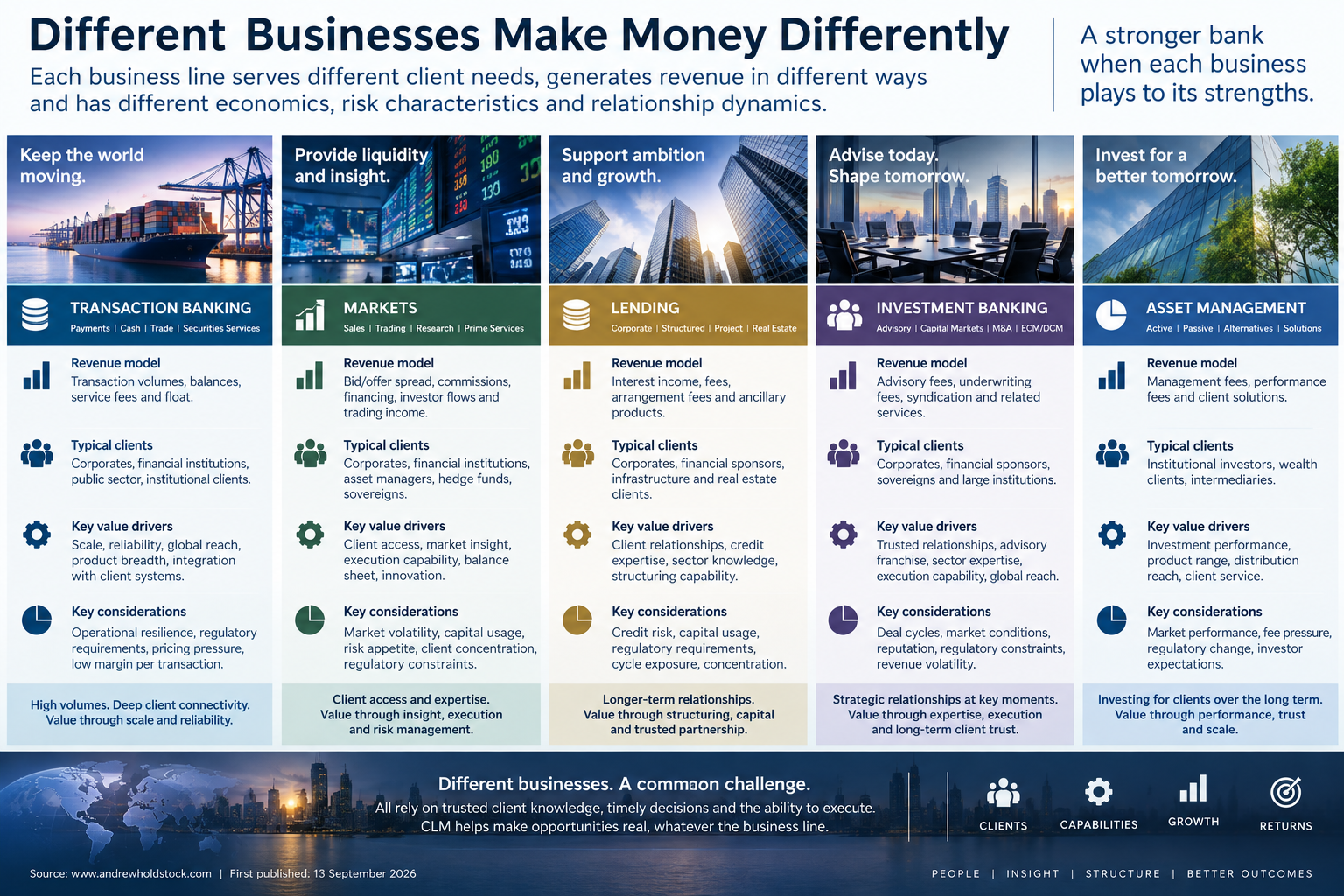
That means the value of a client relationship, and the capabilities required to support it, will vary by Business Line.
What remains common is the need to understand the client, make timely decisions and turn opportunities into executable business.
CLM must support the economics of the business, not assume every Business Line works the same way.
Choosing Where to Deploy the Bank
Scarce resources should be directed towards the opportunities that create the greatest sustainable value.
Banks cannot pursue every client and every opportunity equally. Capital, expertise, operational capacity, risk appetite and technology are all finite.
Business Lines therefore need to look beyond headline revenue. Strategic fit, relationship potential, capital usage, complexity, cost-to-serve and the ability to execute all effect whether an opportunity is attractive.
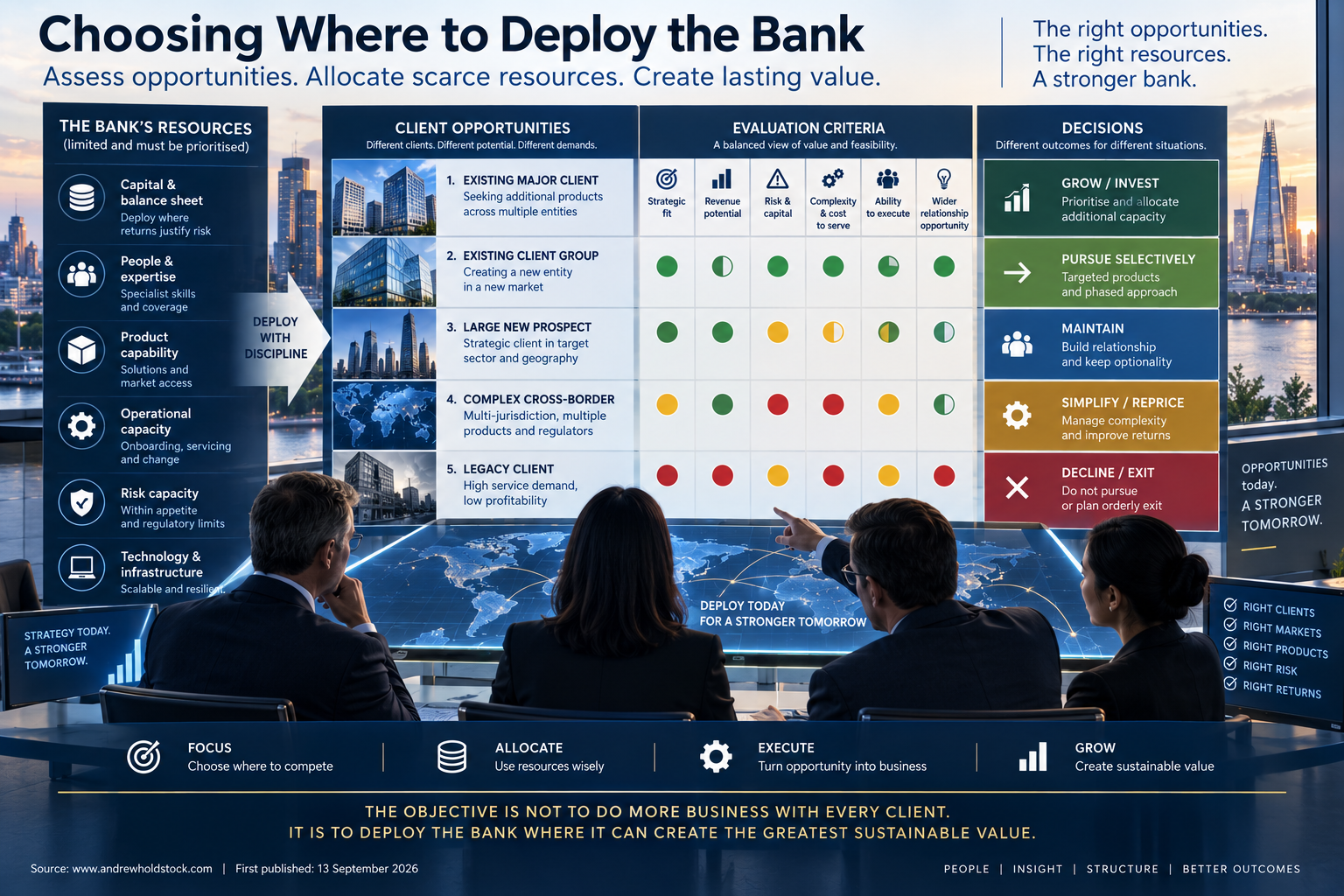
The result may be to grow, pursue selectively, maintain, simplify, reprice or exit a relationship.
The objective is not to do more business with every client. It is to deploy the bank where it can create the greatest sustainable value.

Winning More Business from Existing Relationships
Growth can come from deepening relationships the bank already has.
Winning a new client is only one route to growth. Existing relationships can contain opportunities across additional products, entities, markets and geographies.
The advantage is that the bank already knows something about the client, has an established relationship and has experience of executing business together. Reliable delivery builds confidence, and confidence can make the client more willing to place additional business with the bank.

As the relationship deepens, the bank also learns more about the client and where further opportunities may exist.
Growth does not always require another client. The next opportunity may already exist within a relationship the bank has.
The Economics of Knowing the Client Already
Reuse what remains valid. Focus effort on what is genuinely new.
The economics of an existing relationship should improve as the bank learns more about the client.
Where entity, ownership, connected-person and due diligence information remains current, it should be reused rather than repeatedly recreated. New requirements can then focus on what has actually changed — such as a new entity, product, geography or role.
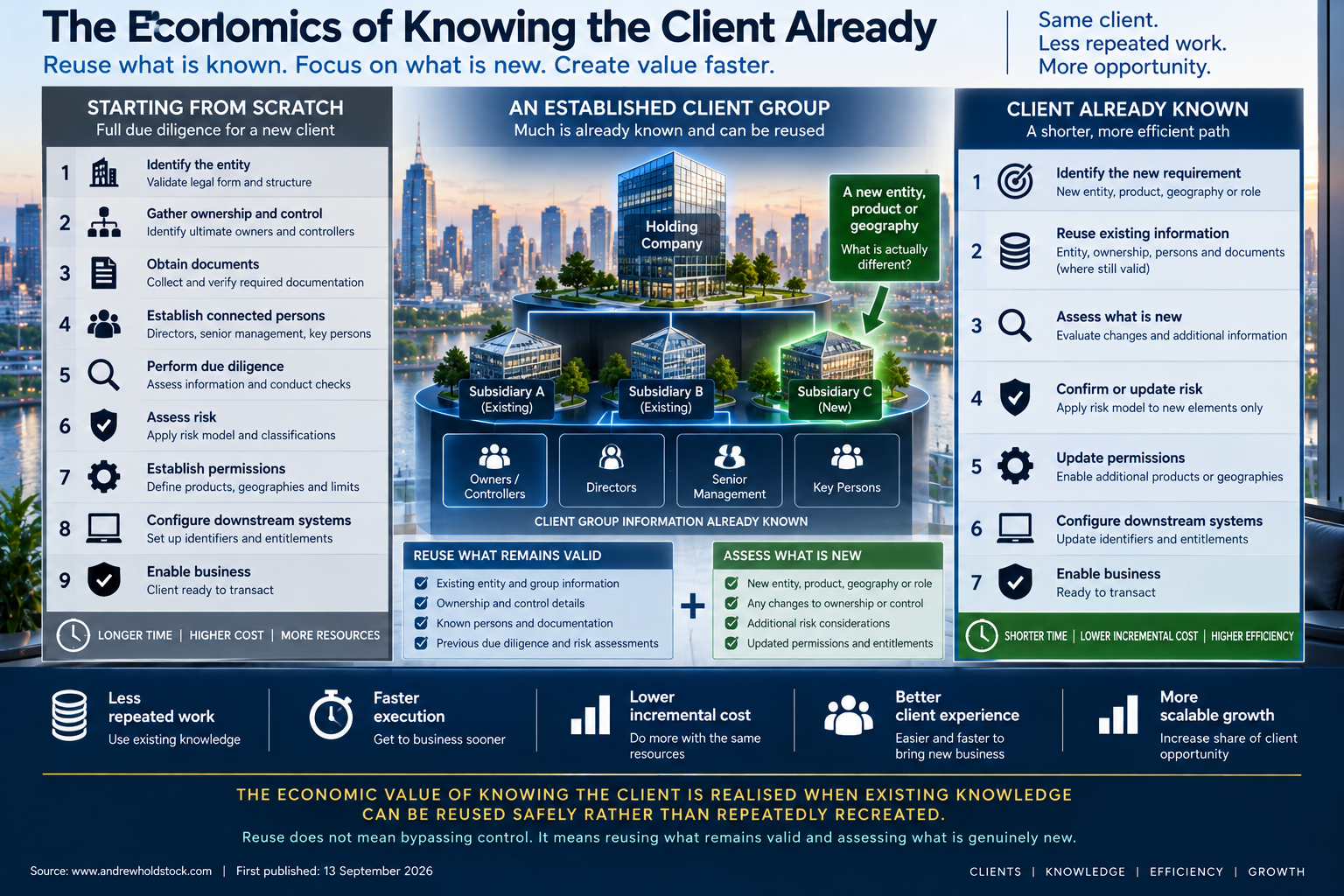
That reduces repeated work, lowers the incremental cost of expanding the relationship and can move attractive opportunities into execution more quickly.
Reuse does not mean weakening control. It means applying control intelligently to what is new or has changed.
The value of knowing the client is realised when existing knowledge can be reused safely to make the next opportunity easier to execute.
From Opportunity to Executable Business
Turning client opportunities into real business, safely and efficiently.
Identifying an opportunity is only the beginning. The bank must still decide whether to pursue it, understand what is required and determine what can be reused from the existing client relationship.
Any new information, risk or regulatory requirements must then be completed, the necessary permissions established and downstream systems made ready to transact.
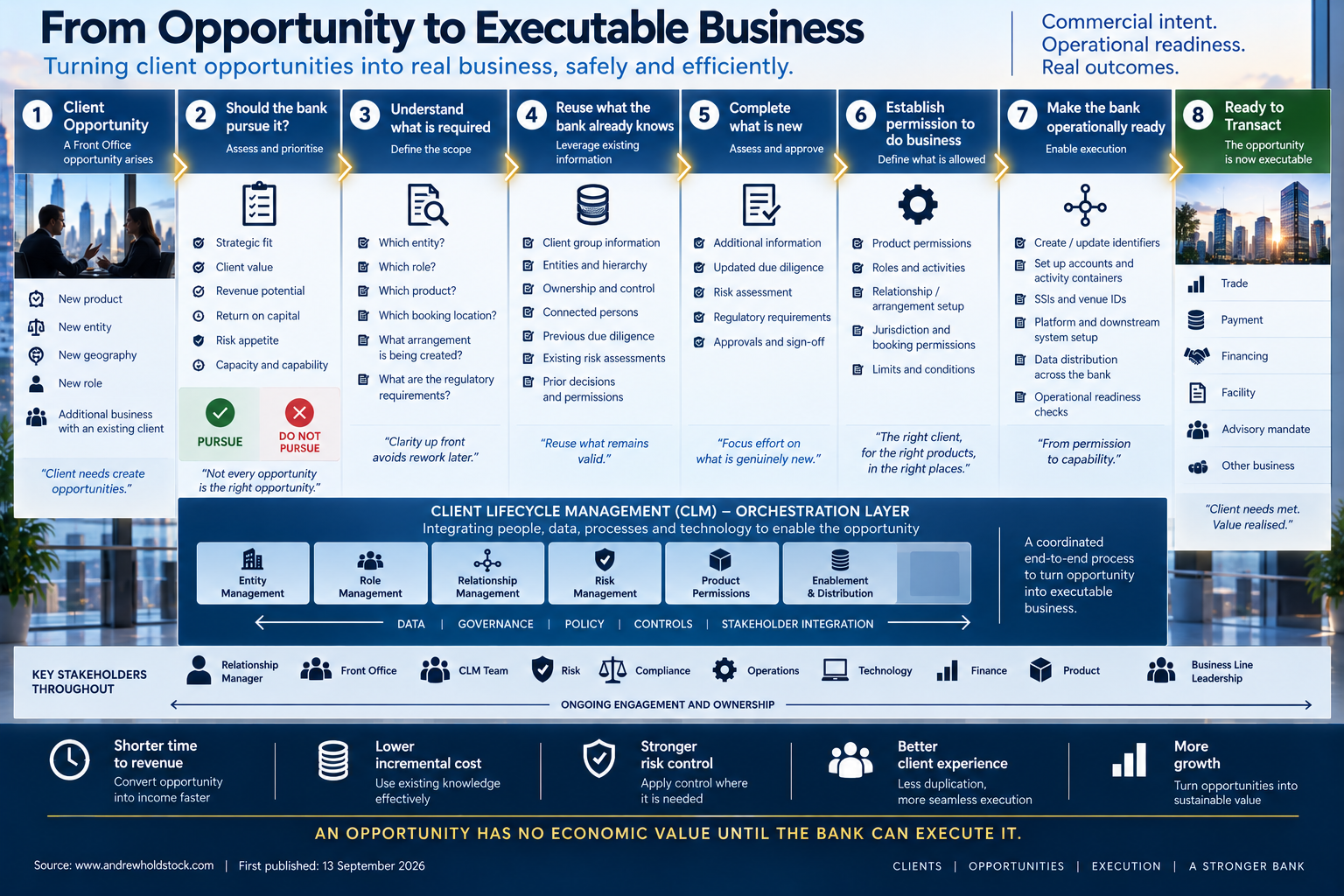
CLM helps orchestrate these steps across the Front Office, Risk, Compliance, Operations, Technology and other stakeholders so that commercial intent becomes operational capability.
An opportunity has no economic value until the bank can execute it.
Front Office as Lifecycle Steward
The Front Office helps steward the value of the relationship throughout its lifecycle.
The Front Office role does not end when onboarding is complete. Client relationships continue to change through new products, entities, geographies, ownership changes, restructuring and shifts in client strategy.
Because the Front Office remains close to the client, it is often best placed to identify these changes early, raise new opportunities and initiate the maintenance needed to keep the relationship current.
It also has an important commercial role in deciding whether a relationship should be grown, maintained, simplified, repriced or exited.
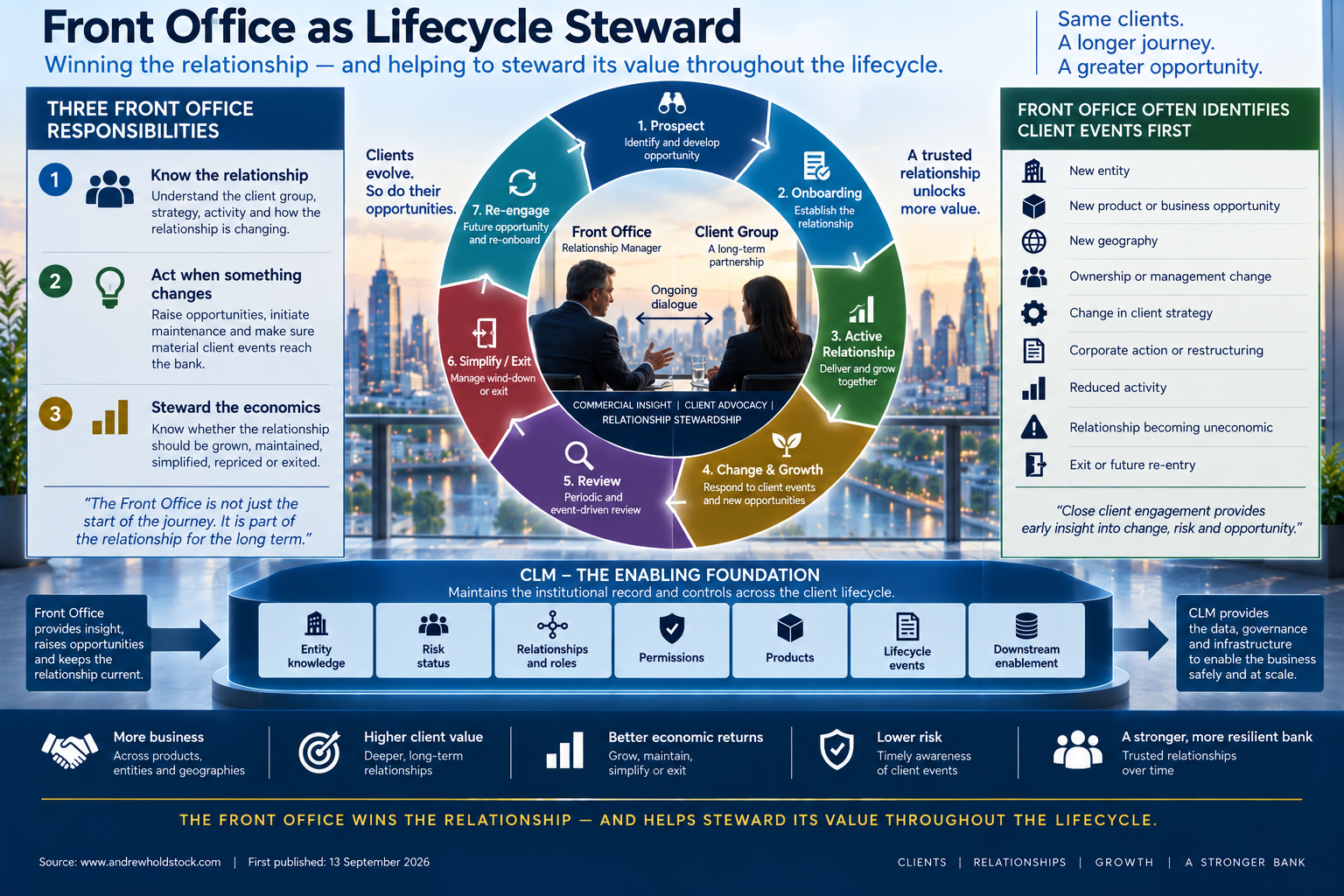
CLM provides the institutional record, controls and enablement across the lifecycle. The Front Office provides the commercial insight and client engagement that help keep that relationship valuable.
The Front Office wins the relationship — and helps steward its value throughout the lifecycle.
Knowing When Not to Grow
More business only creates value when the relationship remains economically attractive.
Growth is not the right objective for every client relationship. As relationships expand, additional entities, products, jurisdictions and exceptions can increase complexity, servicing effort, risk and cost.
Business Lines therefore need to look beyond revenue and consider the whole relationship: its strategic value, future potential, cost-to-serve, capital usage, complexity and risk.
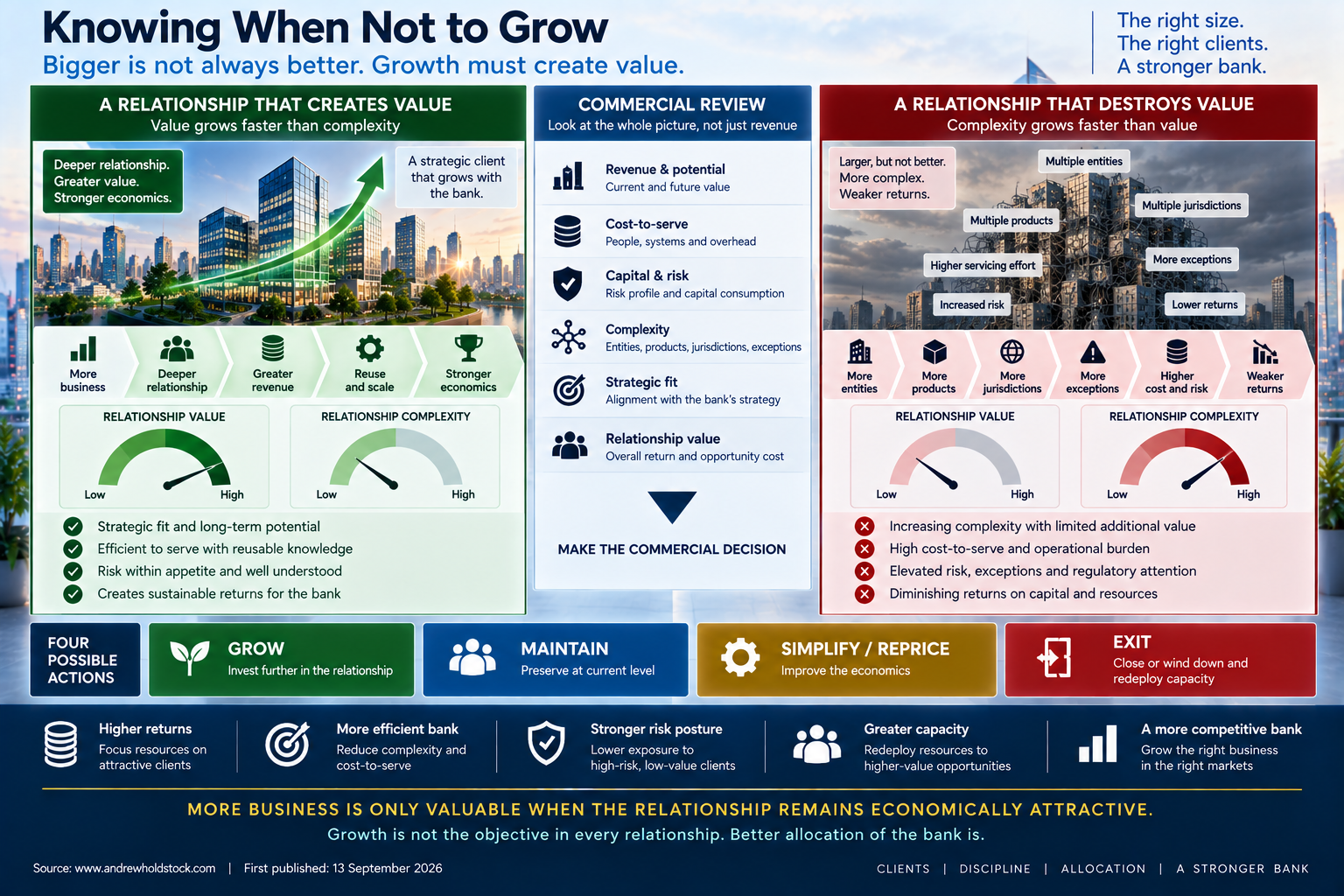
The right decision may be to grow the relationship, maintain it at its current level, simplify or reprice it, or ultimately exit and redeploy capacity elsewhere.
A larger relationship is not necessarily a better relationship. The objective is sustainable value for both the client and the bank.
The Commercial Flywheel
Better execution builds confidence, deepens relationships and creates the conditions for further growth.
Strong client relationships can become self-reinforcing.
Reliable execution builds confidence. Greater confidence can lead to more business, deeper relationships and better knowledge of the client. That knowledge can then be reused to reduce friction, lower incremental cost and make the next opportunity easier to execute.
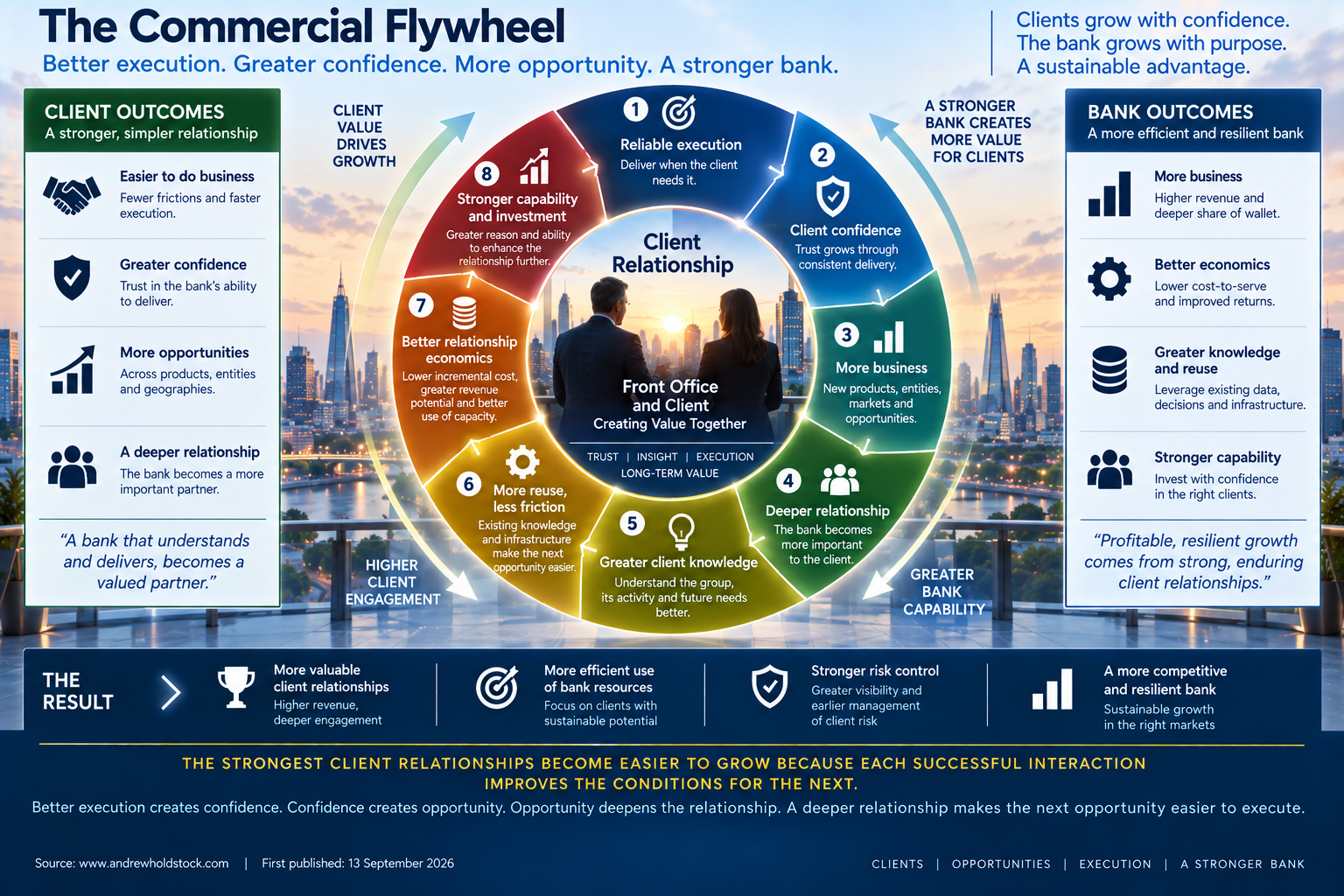
As the relationship becomes more valuable, the bank has greater reason to invest in the capabilities that support it — further improving execution and strengthening the relationship again.
The strongest client relationships become easier to grow because each successful interaction improves the conditions for the next.
Commercial Ownership Includes Risk Responsibility
Owning the client relationship also means understanding and managing the risks that come with it.
The Front Office does not only own the commercial opportunity. It also carries first-line responsibility for understanding the client, recognising change and operating within the bank’s risk appetite and permissions.
That means staying alert to changes in ownership, activity, strategy, adverse information or other events that may alter the risk of the relationship — and escalating or acting when they do.
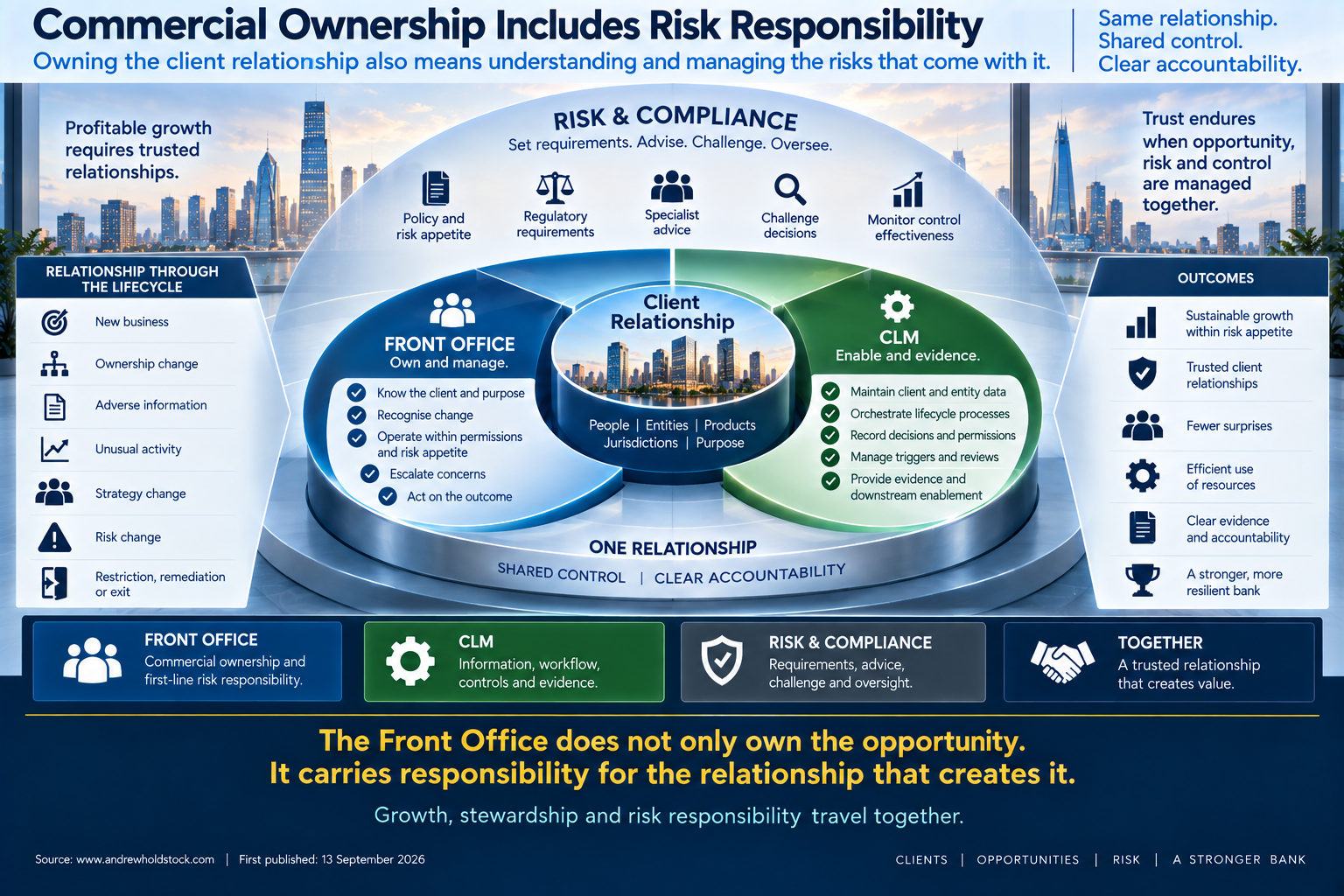
CLM supports this through information, workflow, controls and evidence. Risk and Compliance set requirements, provide specialist advice, challenge decisions and oversee the effectiveness of the control environment.
Growth, stewardship and risk responsibility travel together.