Engineering to Operation

Engineering Confidence in Delivery
Connecting enterprise architecture, operational engineering and established delivery disciplines to create lasting business value.
Major investments in enterprise change require more than confidence that a project can be completed. Leaders need confidence that the proposed solution is right, that the necessary organisational and operational changes can be delivered, and that the resulting enterprise ability will achieve its intended outcomes.
Engineering provides a disciplined foundation for that confidence. Connected with established transformation and delivery practices, it creates a continuous line of evidence from the original business need through to sustained operational performance.
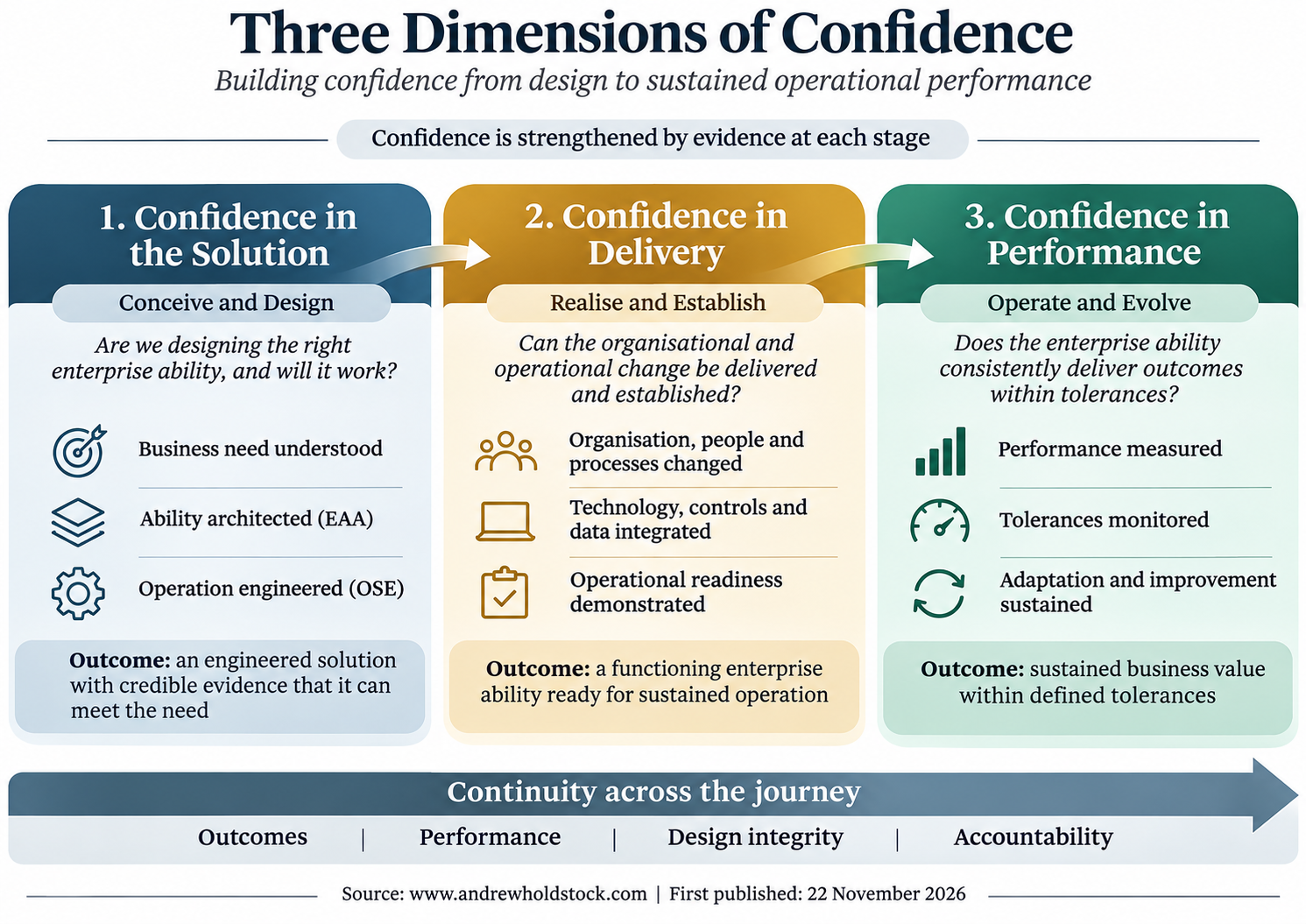
The Engineering-to-Operation Reference Model connects EAA and OSE with established disciplines for technology delivery, organisational transformation, operational transition and ongoing management.
It does not replace these disciplines. It establishes how their contributions remain aligned to the intended business outcomes, how confidence is progressively supported by evidence, and how responsibility continues beyond project completion into sustained operation.
The Complete Ability
Successful delivery requires more than implementing individual components. The complete organisational and operational arrangements must work together.
A new platform, process or organisational structure may be successfully implemented without establishing the enterprise ability it was intended to create. The outcome also depends on clear accountabilities, agreed policies, competent people, effective controls, operational support and management arrangements.
Established engineering, transformation and organisational change disciplines recognise these dependencies. The challenge is to identify everything the intended ability requires, ensure the necessary changes are delivered and demonstrate that they work together as a functioning operation.
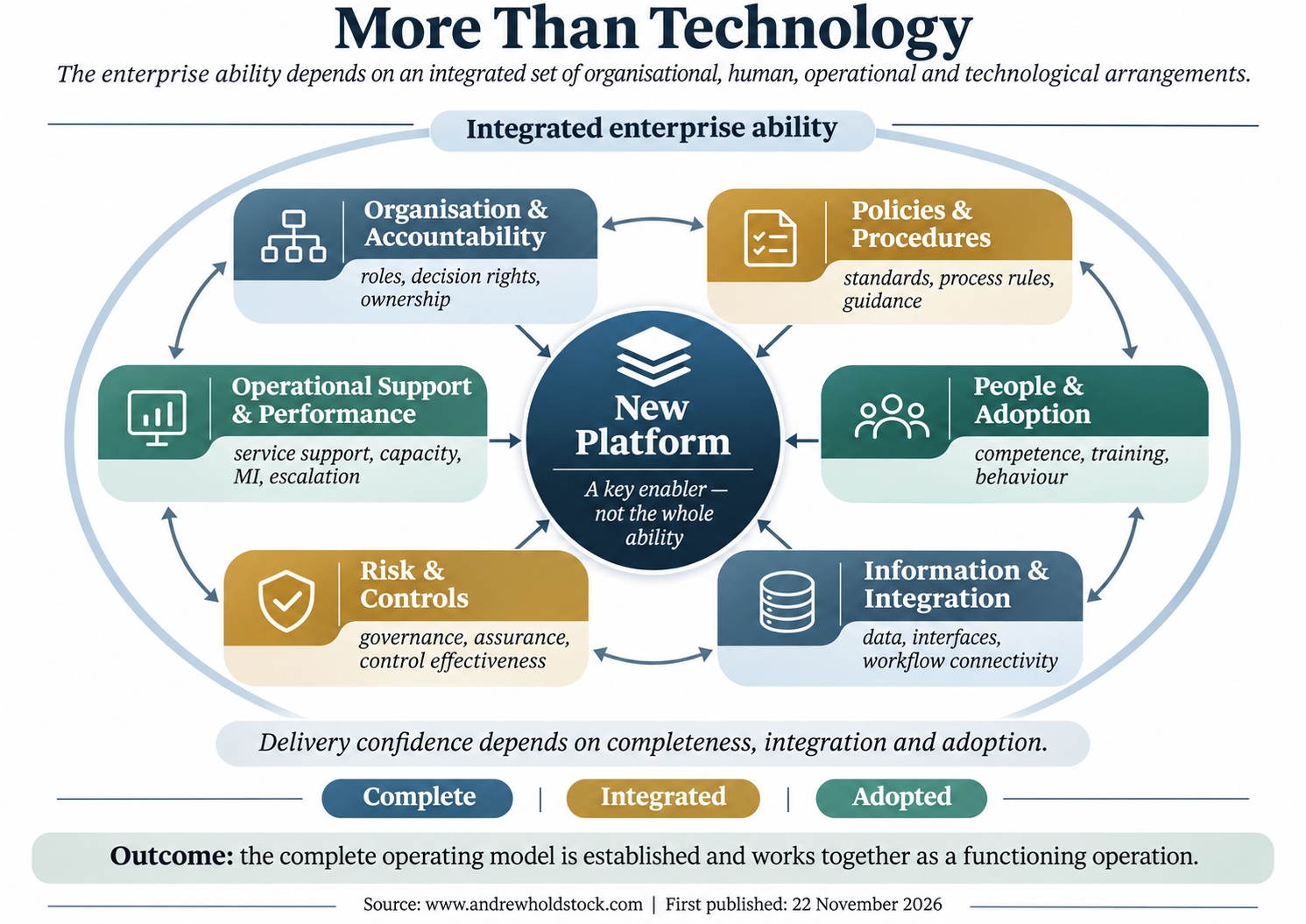
Delivery confidence requires evidence that the complete operating model has been established, not merely that its constituent changes have been implemented. Each element must be ready, integrated and adopted sufficiently to support the intended operation.
The Engineering-to-Operation Reference Model connects these requirements throughout design, delivery and operational establishment, ensuring that the ability defined through EAA and engineered through OSE remains the focus of transformation.
Delivery Integrity
Preserving the engineered intent throughout transformation, so that individual changes combine to deliver the required enterprise ability.
Major enterprise change draws upon established disciplines, including programme management, software development, organisational change, process engineering and risk management. Each contributes specialist expertise, methods and assurance.
Delivery integrity requires more than coordinating these activities. Their combined outcomes must remain aligned with the engineered operating design, including its intended performance, controls and organisational requirements. Dependencies, design changes and implementation compromises must be assessed against the complete enterprise ability, ensuring that delivery decisions do not undermine the outcomes the investment was intended to achieve.
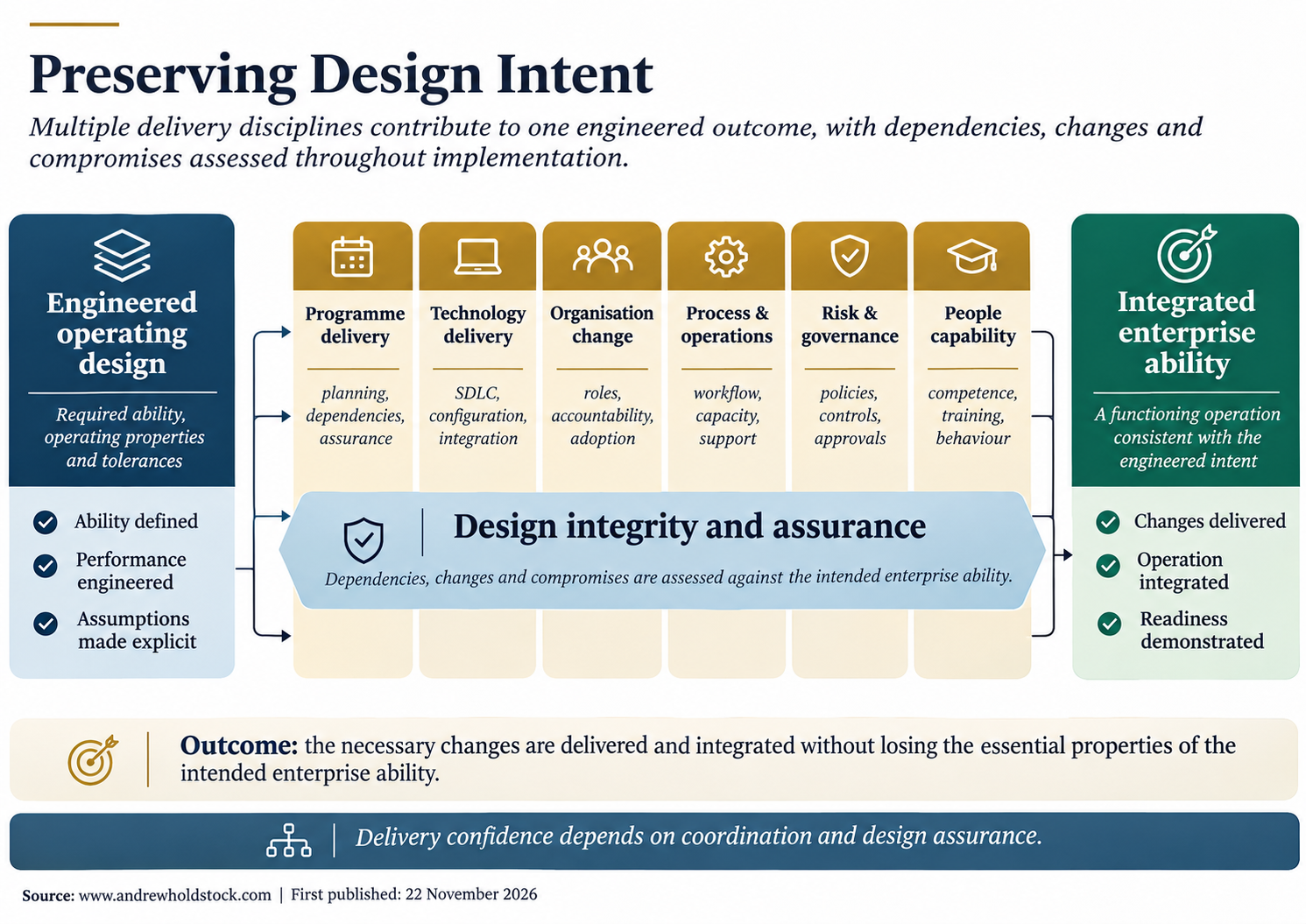
Delivery confidence grows through evidence that the necessary changes are being implemented, integrated and validated against the intended operating model. Programme governance manages delivery commitments and dependencies, while design assurance protects the essential properties of the enterprise ability.
The Engineering-to-Operation Reference Model connects these responsibilities, helping ensure that what is ultimately established remains consistent with what was intended—and that any necessary departures are understood, assessed and authorised.
Operational Readiness
Demonstrating that the delivered operating model is integrated, supportable and capable of performing as intended.
Operational readiness requires more than completed testing, approved procedures and trained staff. The organisation must demonstrate that people, processes, technology, controls and management arrangements work together under realistic operating conditions.
Readiness assurance brings together evidence from established testing, organisational change, risk management and service transition disciplines. It examines whether the operation can handle expected workloads, manage exceptions, respond to disruption and maintain the required controls before responsibility moves fully into business-as-usual operation.
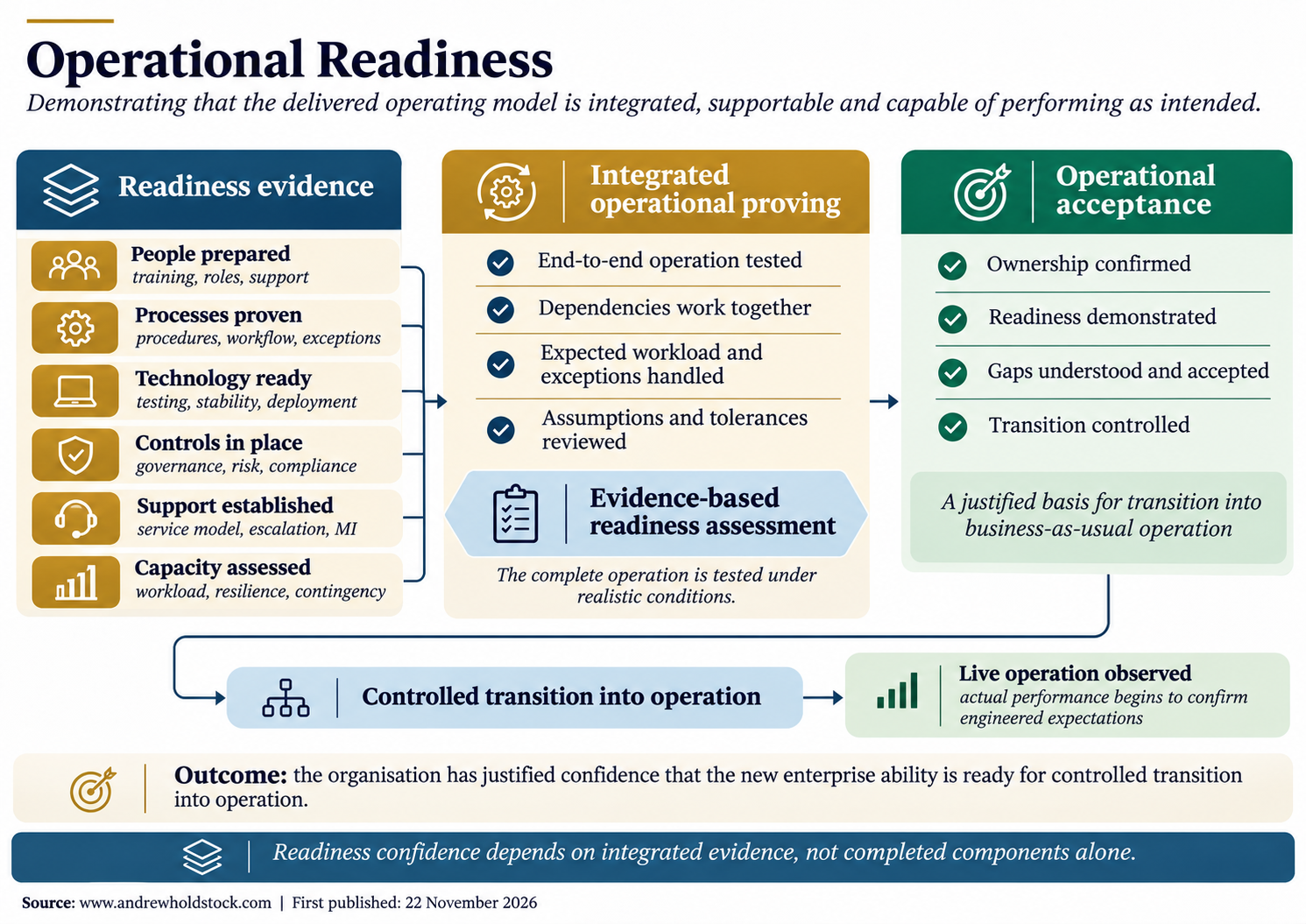
Operational acceptance should be based on demonstrated capability, supported by clear ownership, agreed tolerances and effective monitoring and support arrangements. Where readiness gaps remain, their implications must be understood and explicitly accepted.
The transition into operation provides the first opportunity to compare actual behaviour with engineered expectations. This evidence establishes the foundation for ongoing performance management, improvement and adaptation throughout the life of the enterprise ability.
Sustained Performance
Maintaining confidence through evidence that the enterprise ability delivers its intended outcomes within defined tolerances.
Operational acceptance marks the beginning of sustained performance assurance, not the end of the journey. As the enterprise ability enters business-as-usual operation, actual performance provides evidence against the outcomes, assumptions and tolerances established during engineering.
Effective operational management uses this evidence to maintain control, identify emerging problems and respond to changing conditions. Where performance departs from expectations, the organisation must distinguish between correctable operational issues and changes requiring reconsideration of the underlying operating design.
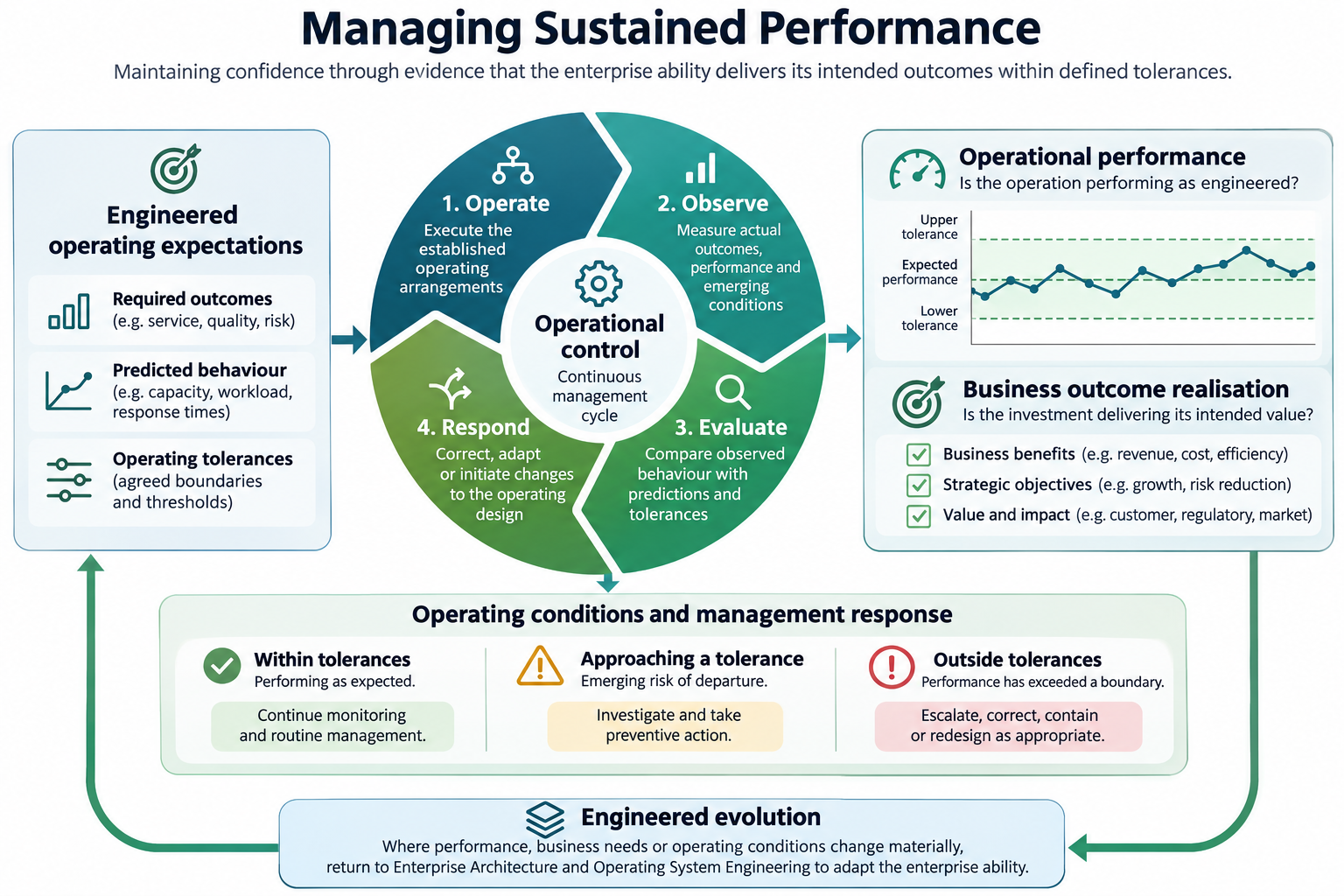
Sustained confidence depends on more than monitoring performance indicators. Management must understand the relationship between operating conditions, system behaviour and business outcomes, with clear accountability for intervention when tolerances are threatened or exceeded.
Routine adjustments maintain performance within the established design. Material changes in business needs, operating conditions or required outcomes may trigger renewed EAA and OSE activity, ensuring the enterprise ability continues to evolve deliberately rather than through unmanaged complexity.
Confidence Through Evidence
Building and sustaining executive confidence through connected evidence, clear accountability and informed decisions throughout the enterprise change lifecycle.
Confidence in enterprise change is not established by a single approval, project status report or operational acceptance decision. It develops through evidence that the proposed ability is appropriate, the engineered design is credible, the necessary changes are achievable and the resulting operation performs as intended.
Different disciplines produce different forms of evidence. Connecting them allows decision-makers to understand what has been demonstrated, which assumptions remain unproven and where uncertainty requires further investigation, mitigation or explicit acceptance.
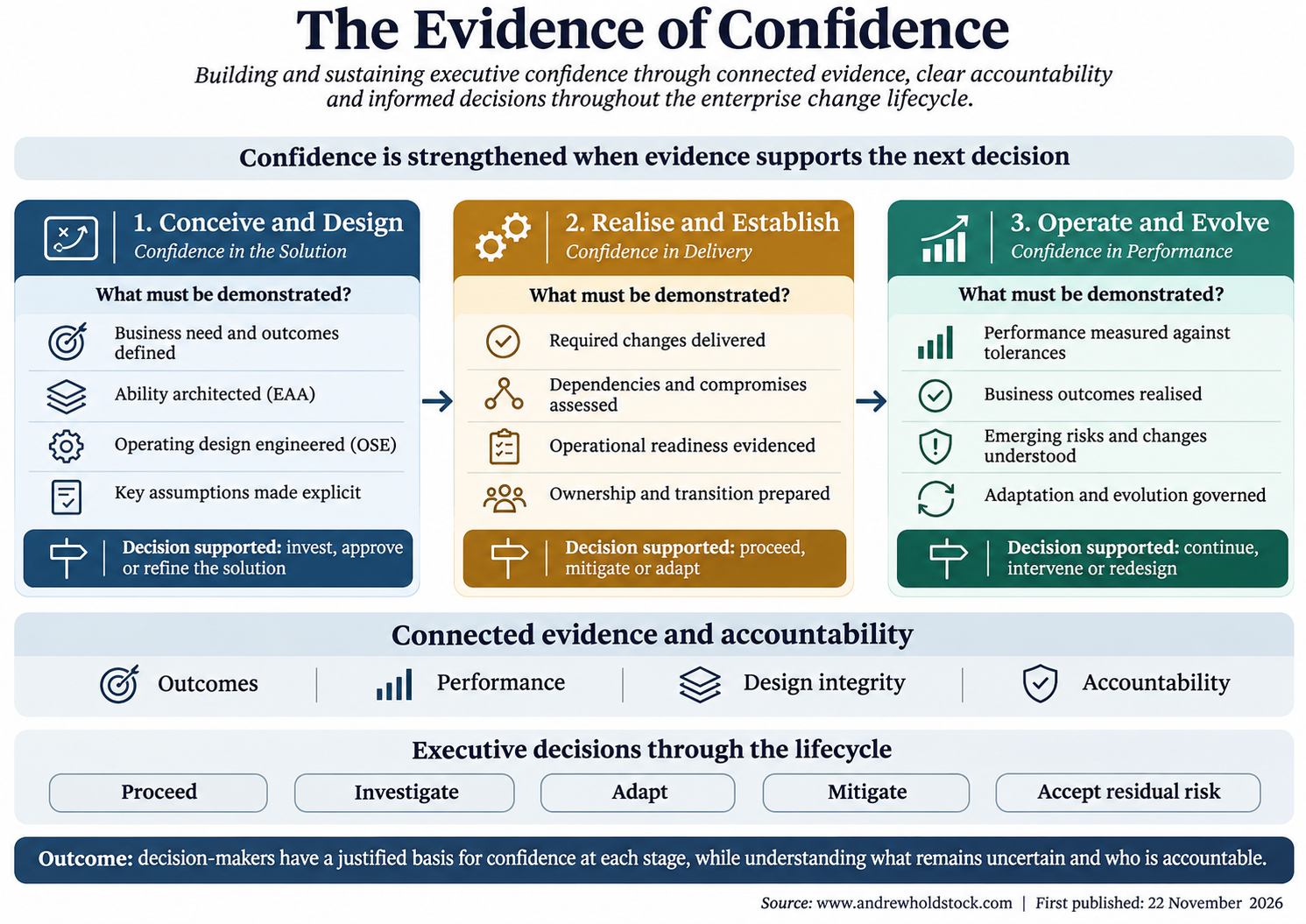
Evidence provides the basis for decisions, but cannot eliminate uncertainty. Executive confidence depends on understanding both what has been demonstrated and what remains at risk, with accountability extending beyond project completion.
The reference model connects business outcomes, engineered performance, delivery integrity and operational accountability. It supports informed decisions from initial investment through to sustained operation, while allowing established disciplines to provide the methods and assurance appropriate to each stage.
From Design to Achievement
Bringing together enterprise architecture, operational engineering, transformation and operational leadership to achieve lasting business outcomes.
Engineering provides a disciplined foundation for enterprise change, but achieving the intended outcomes requires the combined expertise of business leaders, architects, engineers, transformation specialists and operational teams.
Enterprise Ability Architecture (EAA) establishes what the organisation needs to be able to do. Operational Systems Engineering (OSE) designs how the operation should perform. Established delivery disciplines realise and integrate the necessary changes, while operational management sustains the resulting ability throughout its useful life.
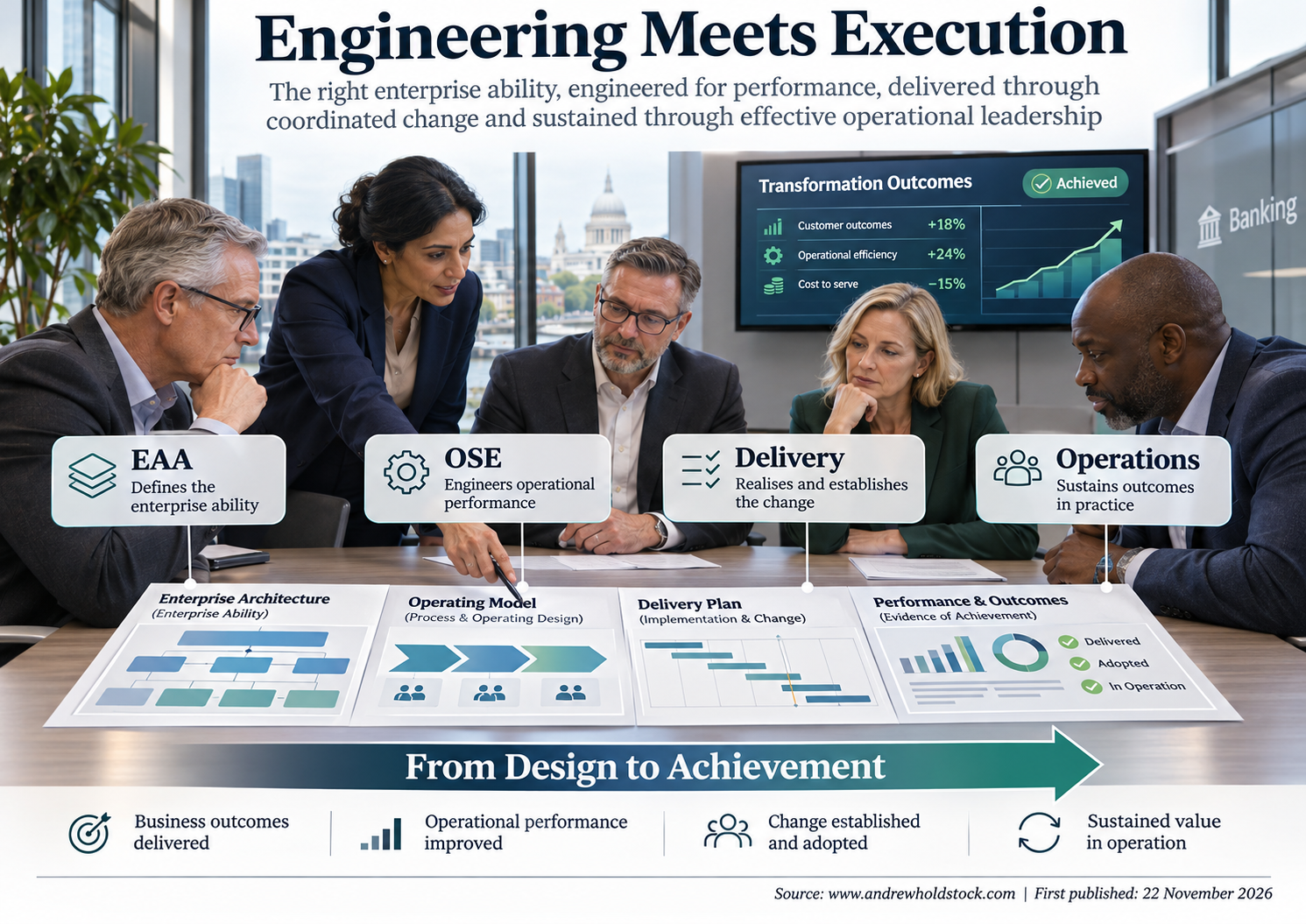
Confidence comes from knowing that the right enterprise ability has been identified, its operating model has been engineered, and the organisation has the means to establish and sustain it.
The achievement is not simply an approved architecture, a completed transformation or a functioning operation. It is an enterprise ability that continues to deliver the intended business outcomes within defined tolerances, adapting as business needs and operating conditions evolve.
First Published: 22-Nov-2026