Identity


Wrong Entity. Real Loss.
Getting legal identity wrong can undermine risk, control and recourse.
Before KYC, Credit or exposure management, the Bank must establish which legal person it is dealing with.
If identity is wrong, the Bank may screen the wrong party, assess the wrong financials, misstate exposure, misunderstand guarantees or fail to aggregate risk correctly.
The entities involved may look similar, sit within the same group, or share related names — while remaining legally distinct.

Identity is therefore not just a data issue. It is the foundation for knowing who the Bank is dealing with and what obligations, risks and exposures attach to them.
What Is the Bank Identifying?
Legal identity has a basis in law.
For a natural person, legal identity begins with the person’s existence and is recorded and evidenced through civil registration and official identity documents.
For a legal entity, identity is grounded in the law of the jurisdiction under which it is created or recognised — through its legal form, incorporation or other constituting act, official registration and authoritative identifiers.
The Bank does not create that legal identity. It must establish which legally recognised person it is dealing with, and then represent that identity consistently within the Bank.
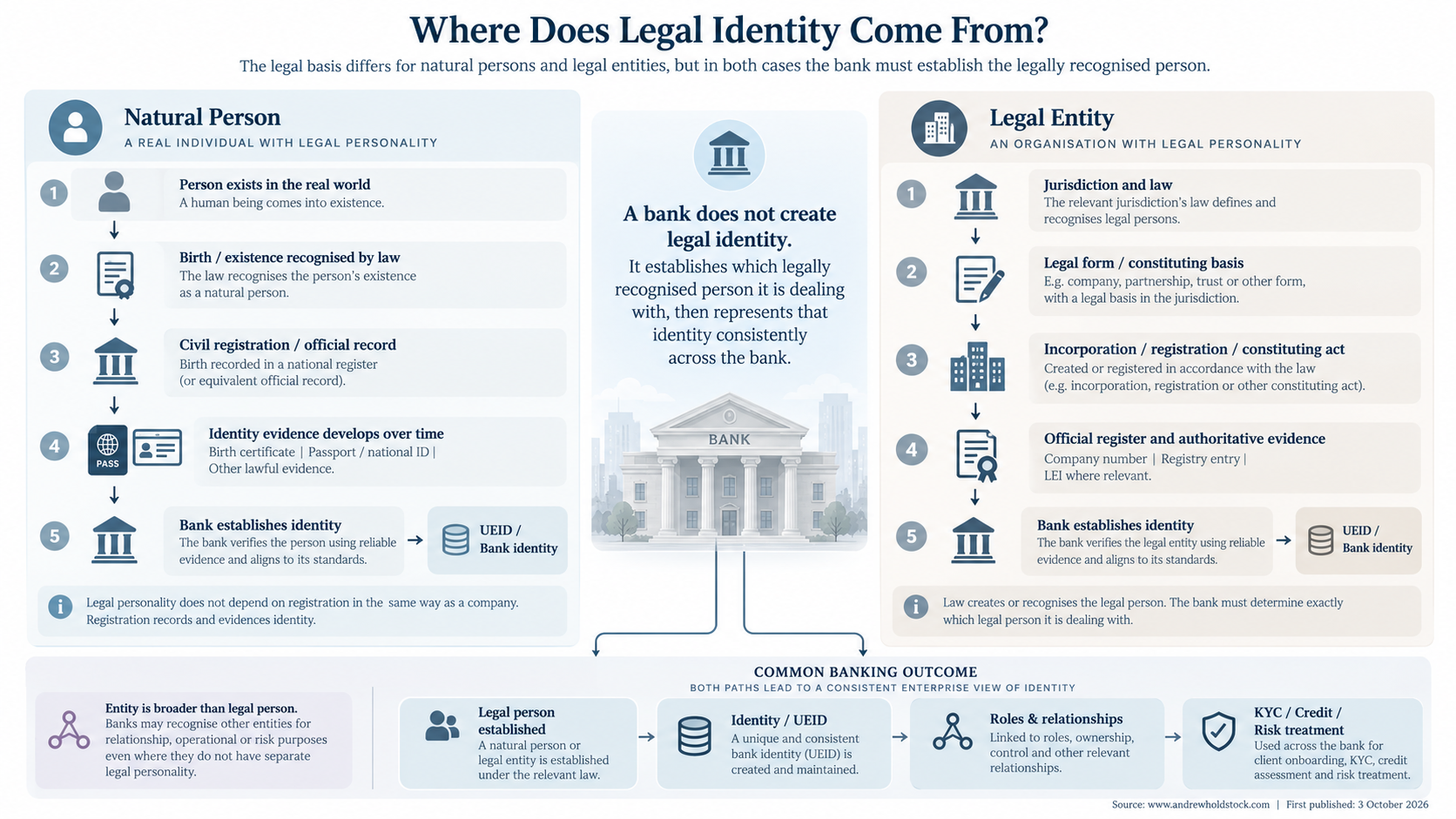
Identity is therefore more than a name. It is the legal basis for recognising the person to which rights, obligations, relationships and exposures attach.
The Bank must create one persistent internal identity for the person it has established.
From Legal Person to Bank Entity
Once the Bank has established which natural person or legal entity it is dealing with, it needs to represent that person consistently within its own systems.
That means creating or resolving a single Bank entity record, assigning a persistent Unique Entity Identifier, and linking the entity to the relevant legal-entity hierarchies, roles and relationships.
The internal entity record is not the legal identity itself. It is the Bank’s authoritative representation of that legally recognised person.
The same person may subsequently appear as a client, borrower, issuer, guarantor, counterparty, beneficial owner or in several roles at once. Those roles should attach to the same underlying entity identity, not create new versions of it.
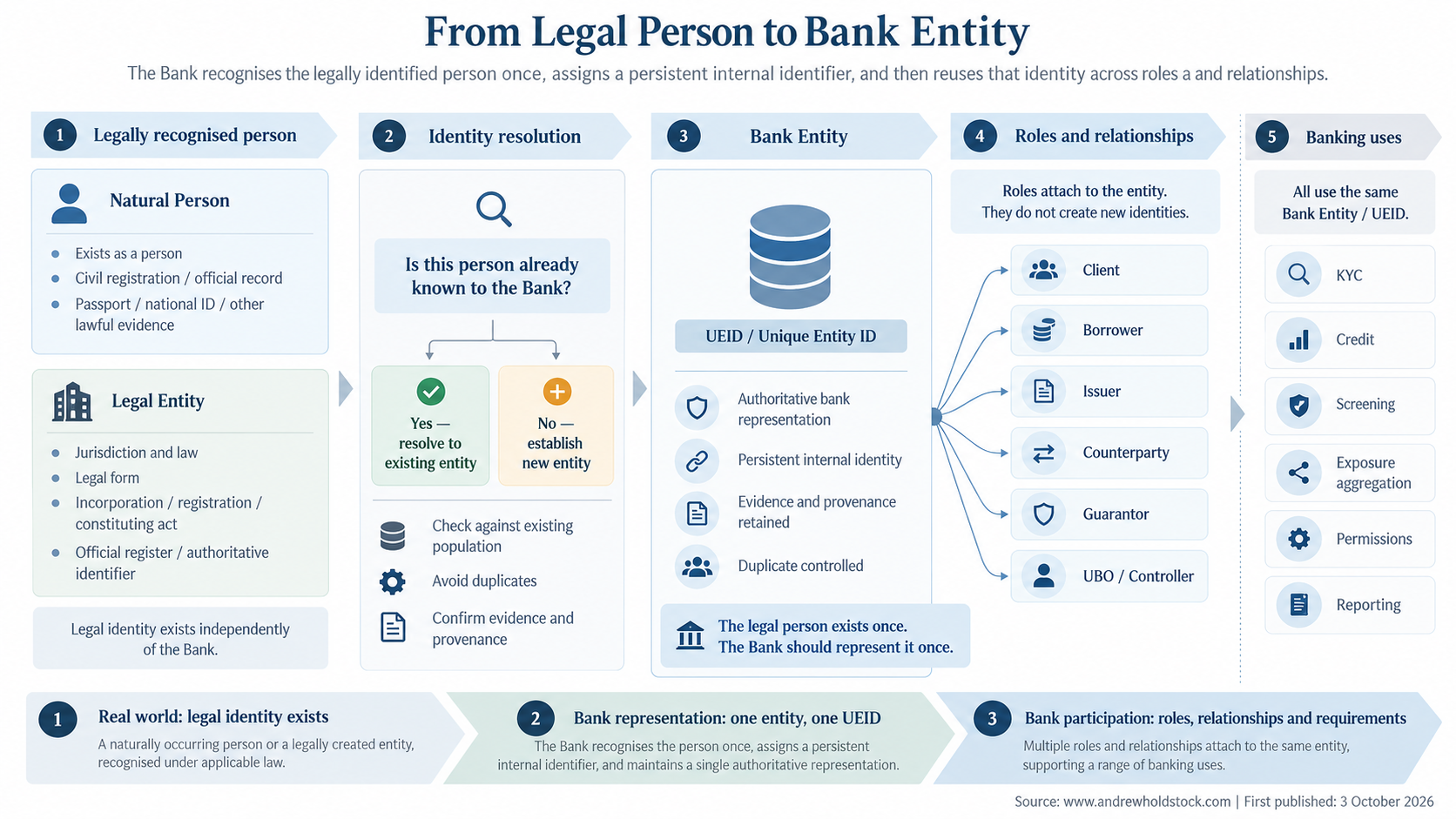
The legal person exists once. The Bank should represent it once.
Identity Comes Before KYC
KYC may be required on an established identity but it is not the source of that identity.
A borrower, issuer, guarantor, counterparty, beneficial owner or customer may all need to be identified by the Bank.
But they do not all require the same KYC treatment.
The Bank should first establish the person’s authoritative identity and UEID. Role and relationship then determine whether KYC, Credit, Screening, Tax, Legal or other requirements apply.
One identity can therefore support many different banking purposes.
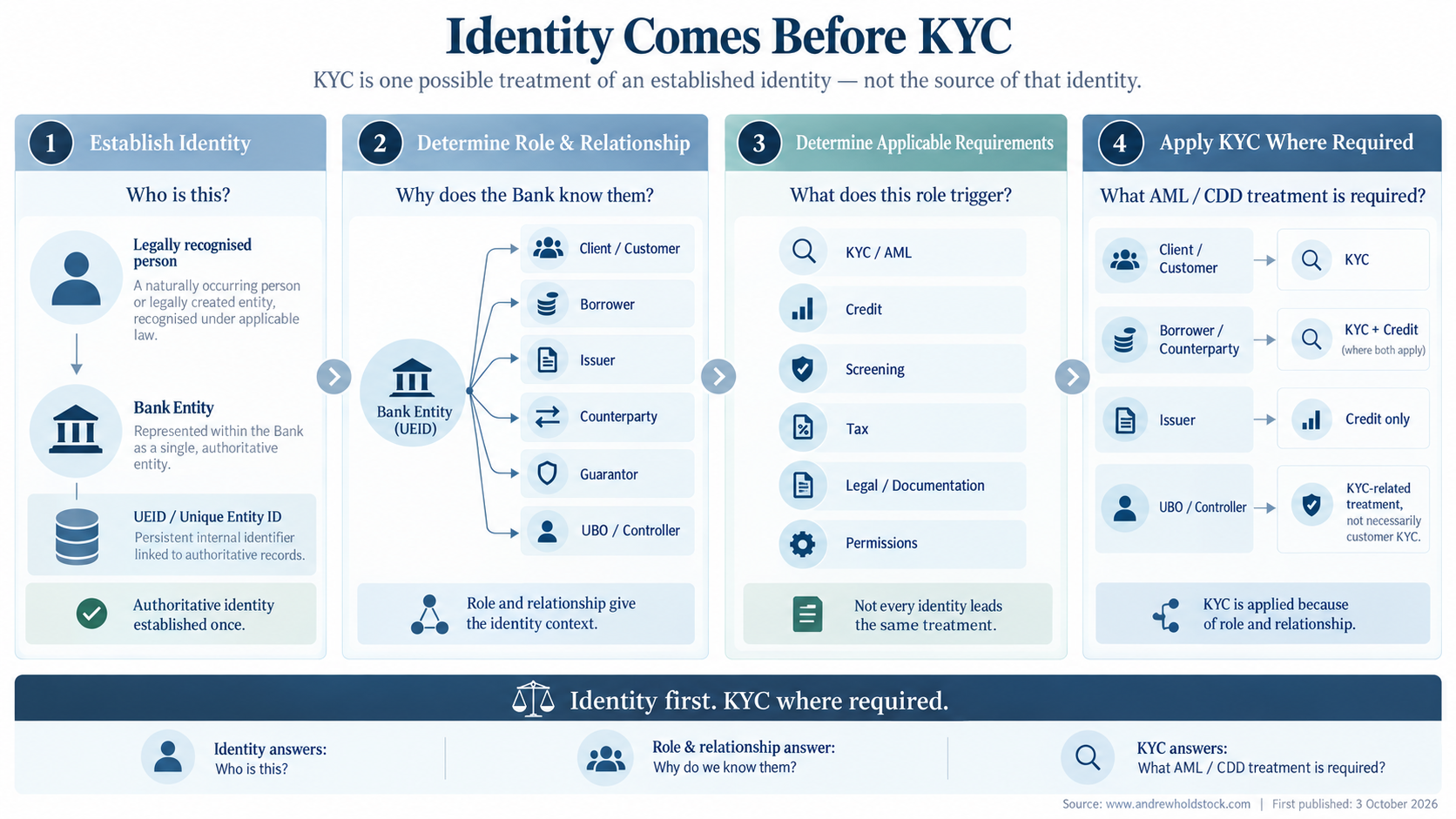
Identity answers “who is this?” Role and relationship answer “why do we know them?” KYC answers “what AML/CDD treatment is required?”
Role and Relationship Determine What Happens Next
Identity tells the Bank who the person is.
Role and relationship determine why they matter.
Once identity has been established, the next question is not automatically what KYC is required.
The Bank first needs to understand the person’s role and the relationship through which they participate.
The same entity may be a client, borrower, issuer, counterparty, guarantor, beneficial owner, controller, agent or another relevant participant. Different roles and relationships can trigger different combinations of KYC, Credit, Legal, Tax, Screening, Permissions and other requirements.
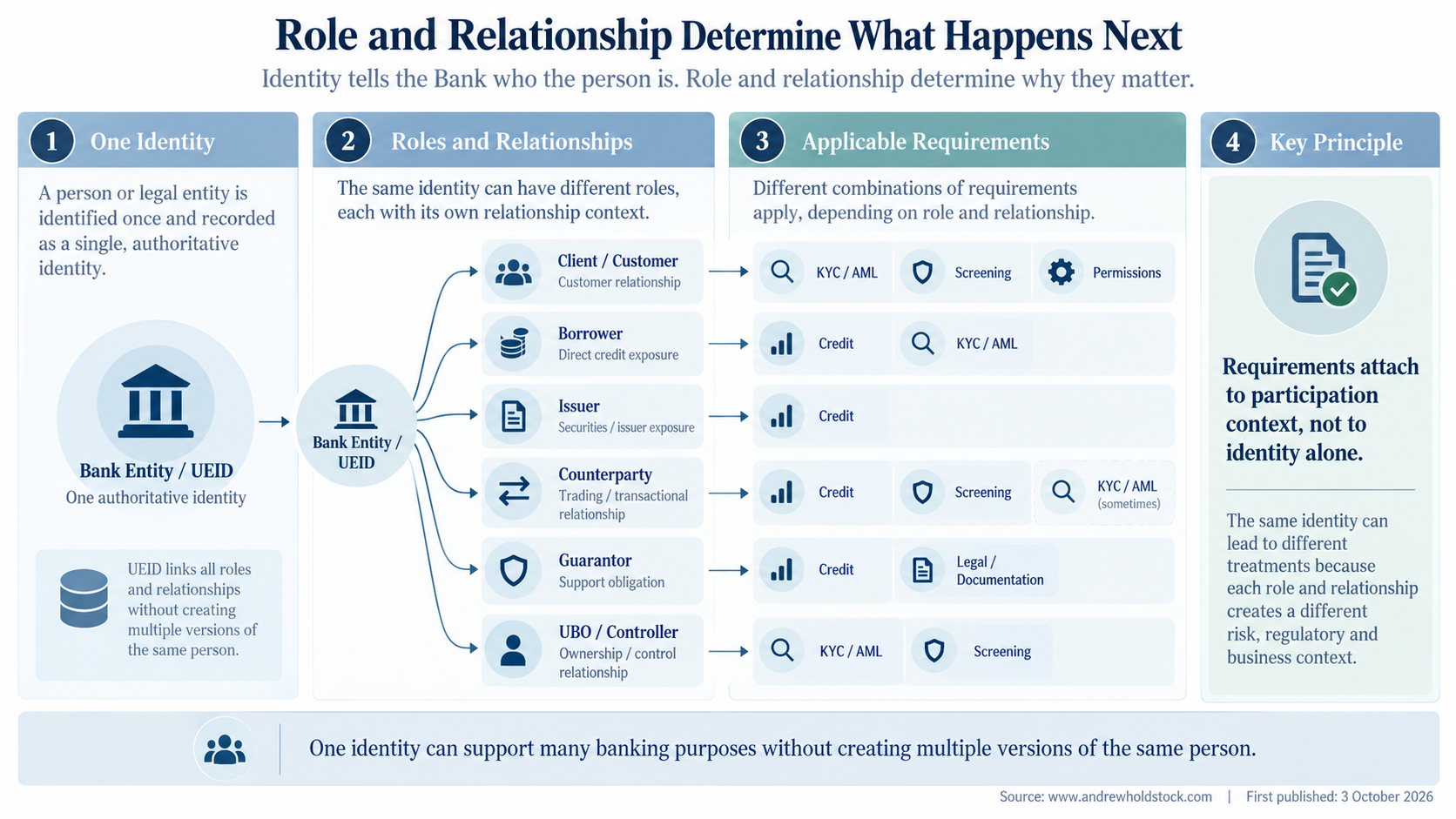
Requirements attach to participation context and not to identity alone.

One Identity, Multiple Risk Views
Different risk disciplines may see the same entity differently, but they should start from the same authoritative identity.
Once a legal person has been established and assigned a UEID, different parts of the Bank can apply the risk view they need.
AML may focus on ownership, control, beneficial ownership and sanctions. Credit may focus on obligors, guarantors and connected counterparties. Market Risk may focus on issuers and trading exposures. Regulatory and operational functions may need yet another view.
Those views do not need to use the same hierarchy.
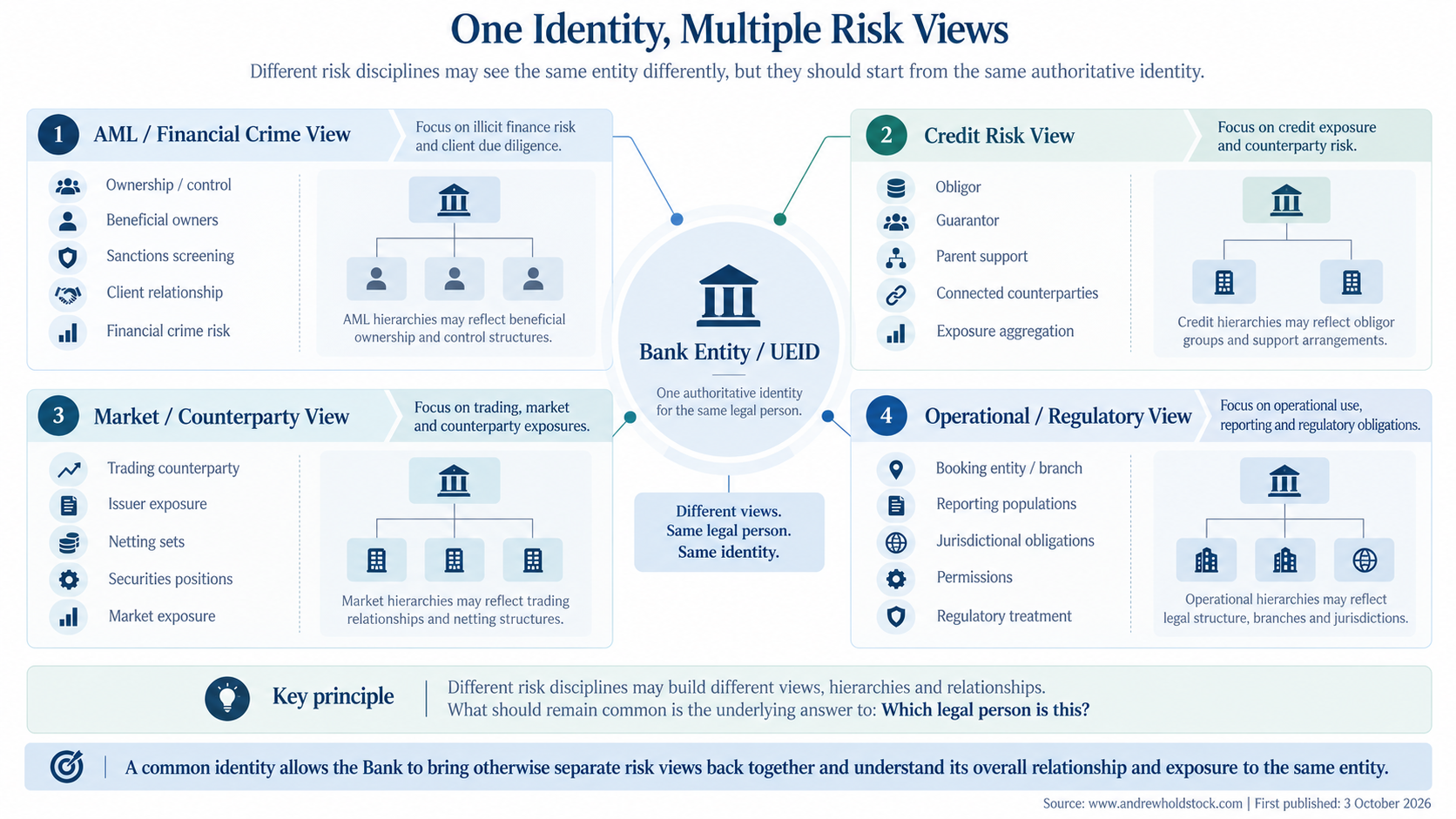
What should remain common is the underlying answer to:
Which legal person is this?
Different views. Same legal person. Same identity.
That common identity allows the Bank to bring otherwise separate risk views back together and understand its overall relationship and exposure to the same entity.
Entity Management Maintains Identity Through the Lifecycle
The identity established once must remain authoritative as the entity moves through different processes and relationships.
Establishing identity is not a one-time data-entry event.
The same entity may later be maintained, reviewed, re-onboarded, assigned new roles, linked to new relationships or used by different risk and business processes.
Entity Management provides the continuity.
It ensures that changes are made to the same underlying entity, using the same UEID, evidence, provenance and identity standards.
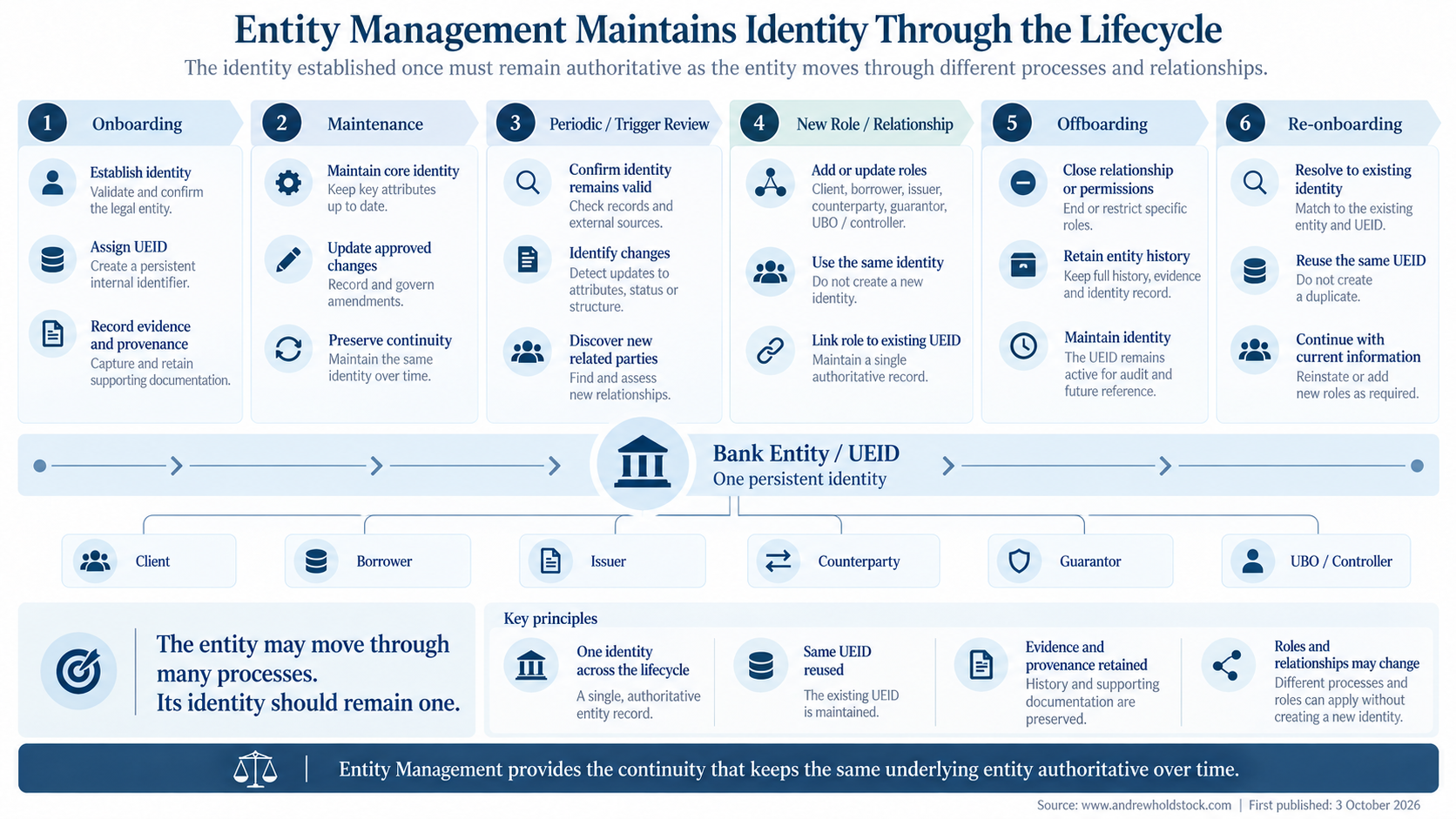
The entity may move through many processes. Its identity should remain only one.
Identity as a Banking Capability
Identity is not a KYC data point. It is a foundation used across the Bank.
A strong identity model allows the Bank to answer three questions consistently:
Who is this?
Why do we know them?
What must we do?
One authoritative identity can support KYC, Credit, Screening, Legal, Tax, Permissions, Reporting and exposure management without creating multiple versions of the same person.
It also allows new roles and relationships to be added over time while preserving continuity through the same Bank Entity and UEID.
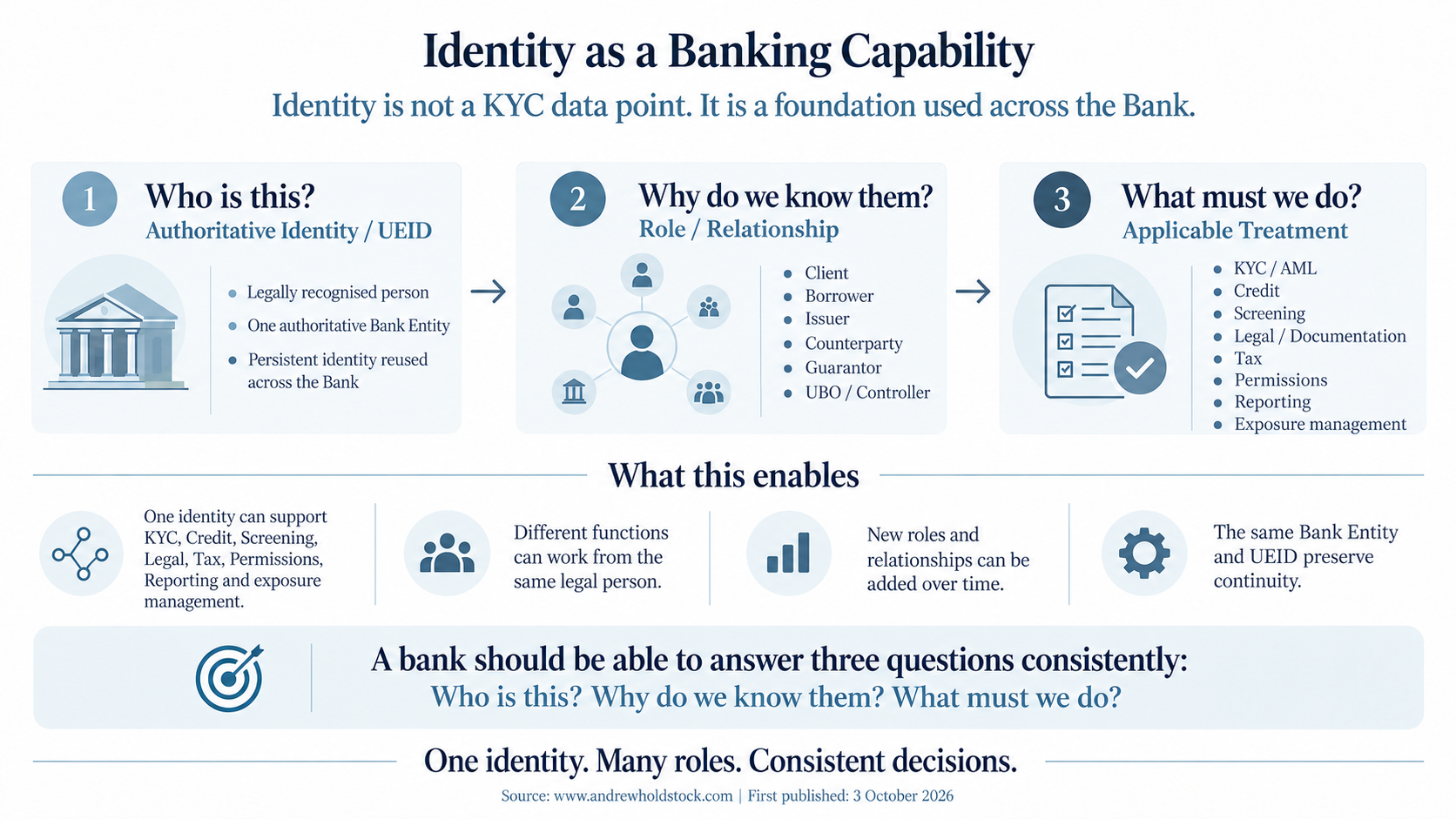
One identity. Many roles. Consistent decisions.