Operational Systems Engineering

Engineering How Operations Perform
A systematic approach to designing operating systems whose behaviour can be predicted and tested before implementation.
Banks invest heavily in processes, technology, organisational structures and controls, yet the performance of the resulting operation can remain uncertain.
Operational Systems Engineering (OSE) brings these elements together as an integrated system. It applies established scientific and engineering principles to understand how the system will behave, design the mechanisms needed to achieve the required outcomes, and establish confidence in its performance before implementation.
The OSE Framework provides a structured, practical methodology for doing this.
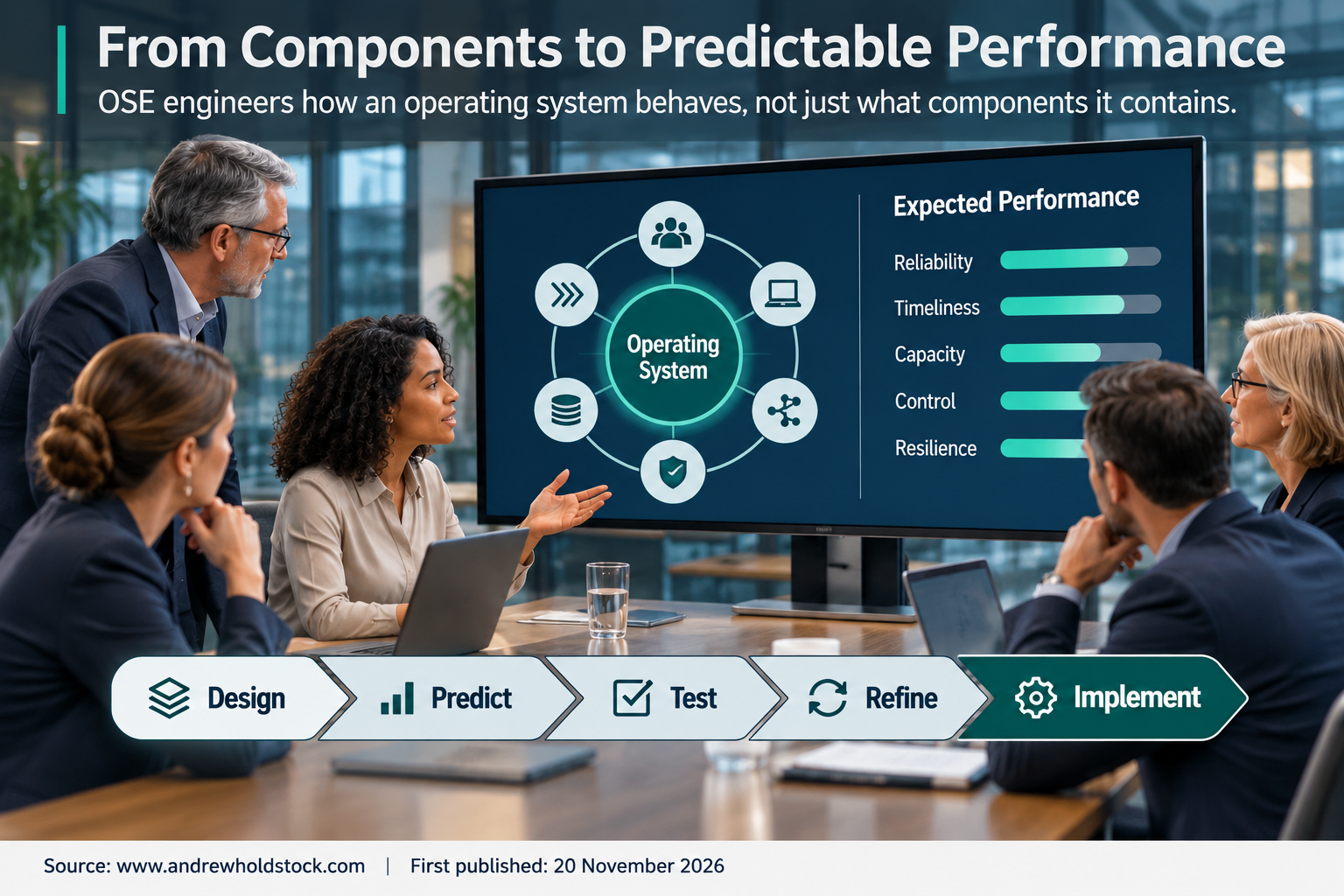
The objective is not simply to design how work gets done, but to engineer an operating system that can reliably achieve its intended outcomes.
Why Operations Need Engineering
Operational performance depends on how the complete system behaves under the changing conditions of the real world.
Banks invest heavily in processes, technology, organisational structures and controls. Yet even a logically designed operation may not perform as intended when confronted with operational reality.
Demand fluctuates, information is imperfect, people exercise judgement, resources become constrained and unexpected events occur. These conditions interact with the operating system itself, sometimes creating delays, failures and unintended consequences.
Operational Systems Engineering (OSE) addresses this challenge by examining the complete system, the environment in which it operates and the mechanisms that determine its behaviour.
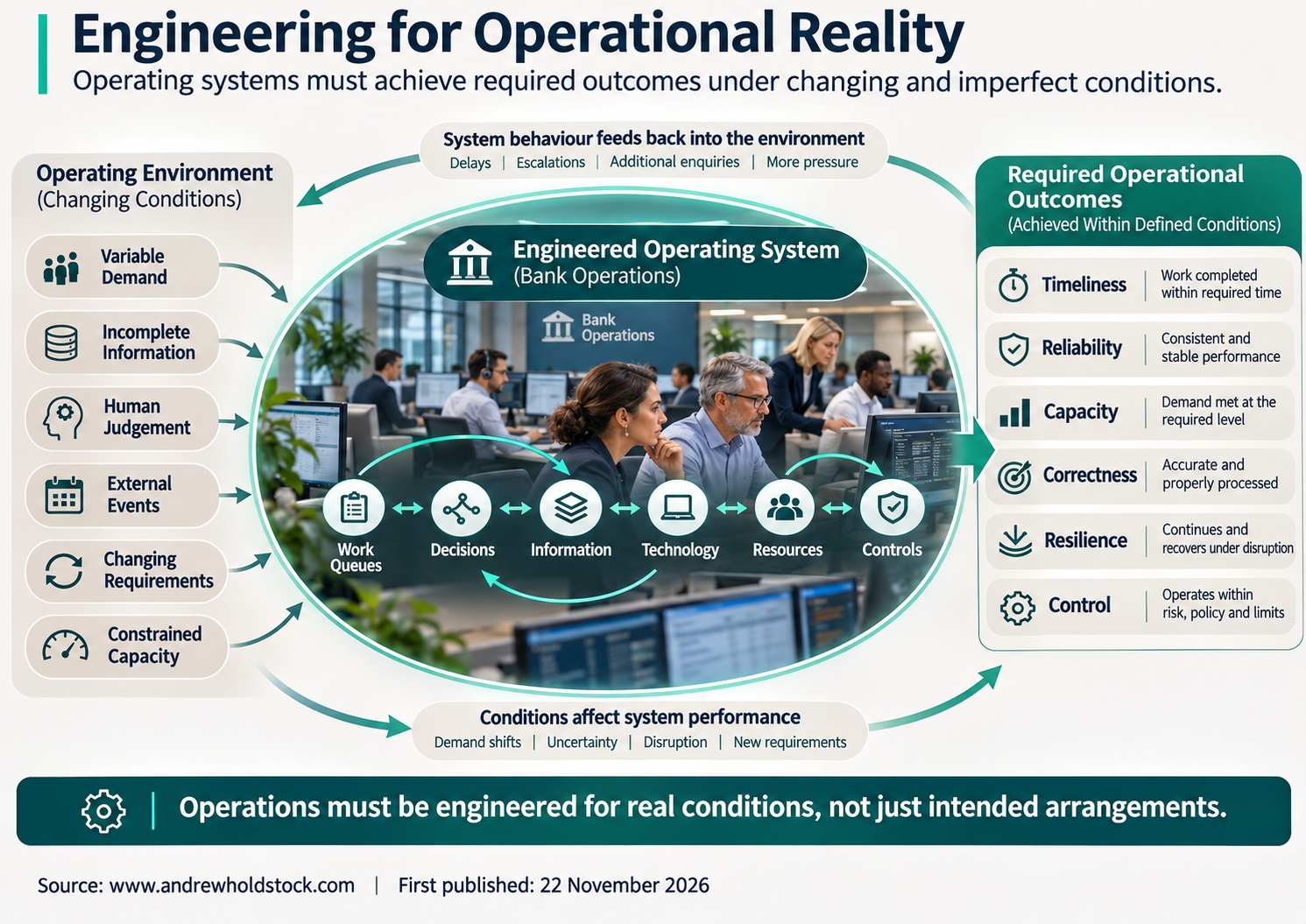
Engineering requires more than ensuring that individual components function correctly. It requires understanding how the system responds to variation, constraints, disruptions and the consequences of its own behaviour.
OSE applies established scientific and engineering principles to identify these relationships, determine the operating properties required and design mechanisms capable of delivering the intended outcomes.
The objective is to establish justified confidence in how an operation will perform under defined conditions, before it is implemented.
The OSE methodology provides a structured approach to understanding, designing and validating how an operating system will behave.
Engineering Predictable Performance
Understanding the challenges of operational reality is only the starting point. The next question is how to translate required business outcomes into an operating system capable of delivering them.
OSE uses a six-stage engineering methodology. It begins by establishing the purpose and required outcomes, then defines the system's boundaries and the properties its operation must exhibit.
The methodology then investigates the system's governing characteristics, develops an integrated operating design and tests its expected behaviour before implementation. Actual performance is subsequently measured against predictions to support continued improvement.
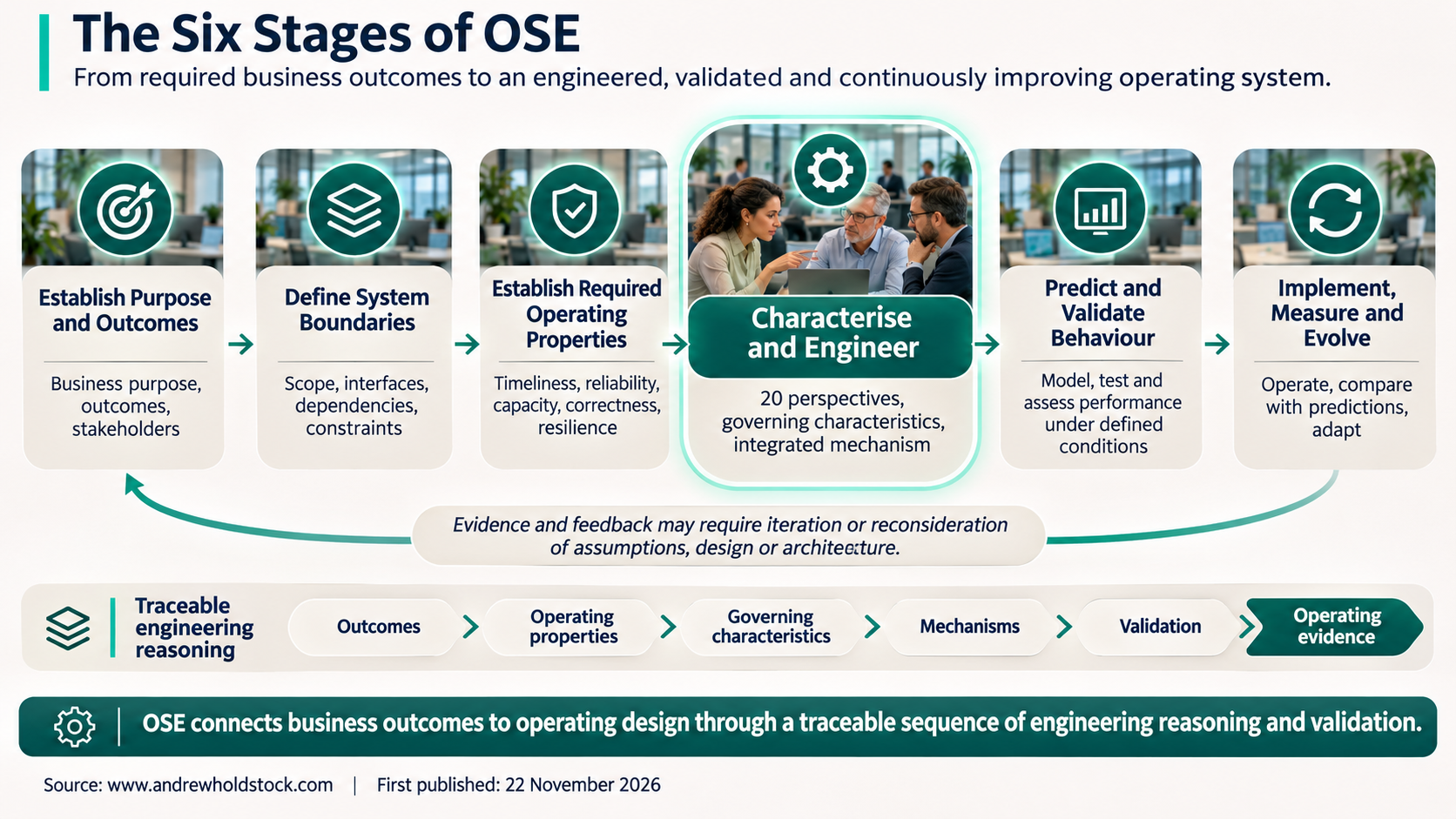
The stages establish a disciplined progression from business intent to engineering evidence. Each produces defined outputs and review criteria, making the reasoning behind the proposed design visible and challengeable.
The methodology is iterative rather than a one-way sequence. New evidence may reveal weaknesses in assumptions, requirements or design choices, requiring earlier stages to be revisited.
Importantly, the aim is not simply to complete six stages, but to establish a defensible relationship between required outcomes, the selected operating mechanisms and their expected performance.
OSE connects business outcomes to operating design through a traceable sequence of engineering reasoning and validation.
Twenty engineering perspectives provide a systematic way to investigate the characteristics and interactions that determine operational behaviour.
Understanding the Whole System
Before designing an operating system, we need to understand what governs its behaviour. The causes of poor performance are not always apparent from examining processes, organisational structures or technology independently.
OSE uses 20 perspectives, organised into six domains, to investigate the complete system. These examine how work enters and flows, how people and decisions influence outcomes, how constraints and controls operate, and how the system interacts with its environment.
The objective is not simply to collect observations, but to identify the characteristics and relationships that matter most to the design.
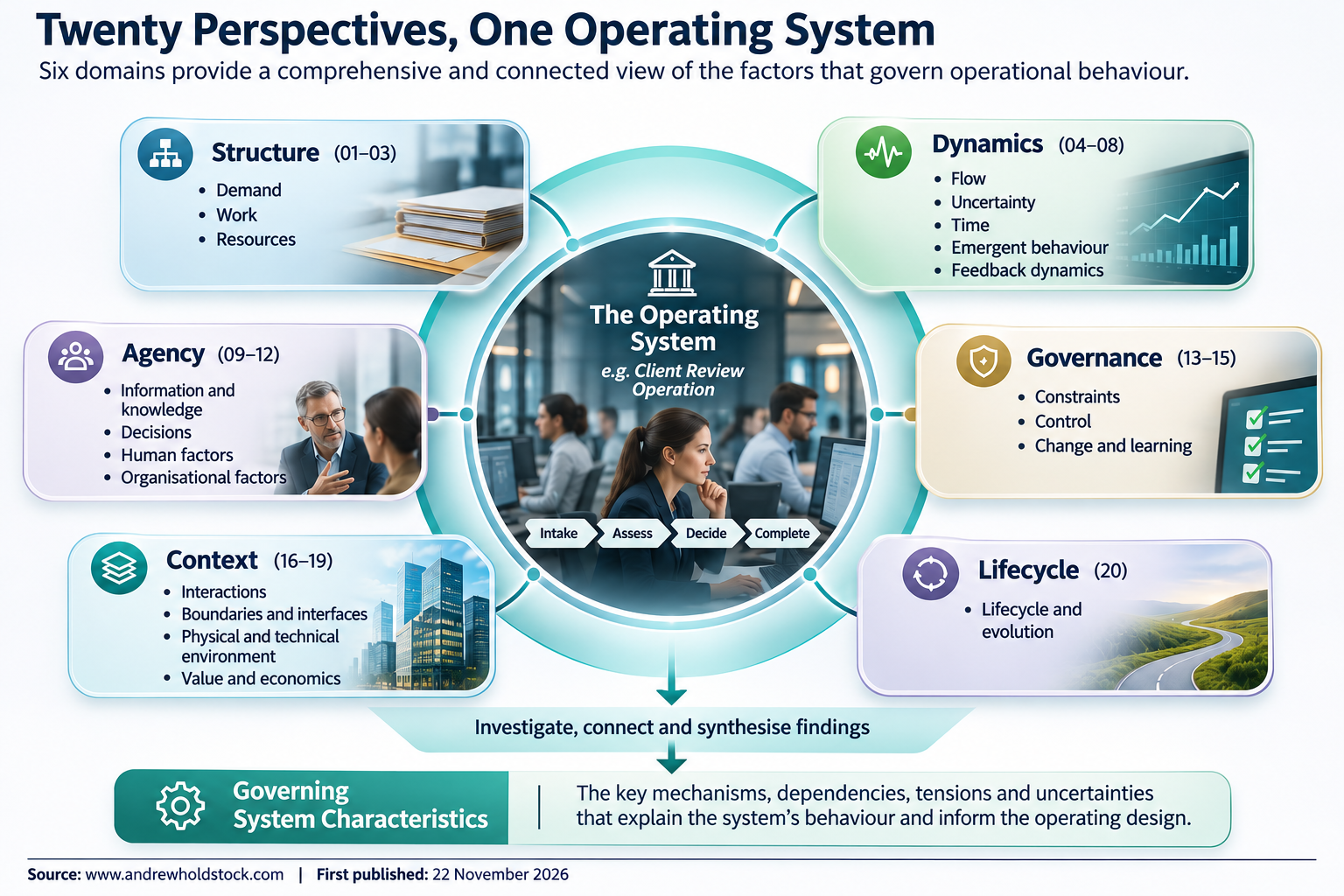
Each perspective is investigated using evidence, with its significance and relationships to other perspectives recorded. Some characteristics will be central to the engineering problem; others may have limited influence.
The findings are then synthesised to distinguish symptoms from underlying causes, identify important dependencies and establish the fundamental engineering problem.
This provides the basis for selecting relevant scientific principles and deriving an operating design, rather than relying on familiar solutions or assumptions about what should work.
Understanding the individual parts is not enough. Engineering begins by identifying the relationships and characteristics that govern the behaviour of the whole system.
From Understanding to Design
OSE translates an understanding of system behaviour into integrated operating mechanisms grounded in scientific and engineering principles.
Understanding the characteristics of an operating system does not, by itself, tell us how it should be designed. The next challenge is to determine which arrangements will produce the required behaviour.
OSE uses established scientific and engineering knowledge to explain the governing characteristics identified during investigation. These explanations inform engineering requirements and possible operating mechanisms.
The mechanisms are then brought together into an integrated design, considering how people, processes, decisions, information, technology and controls must interact to achieve the intended outcomes.
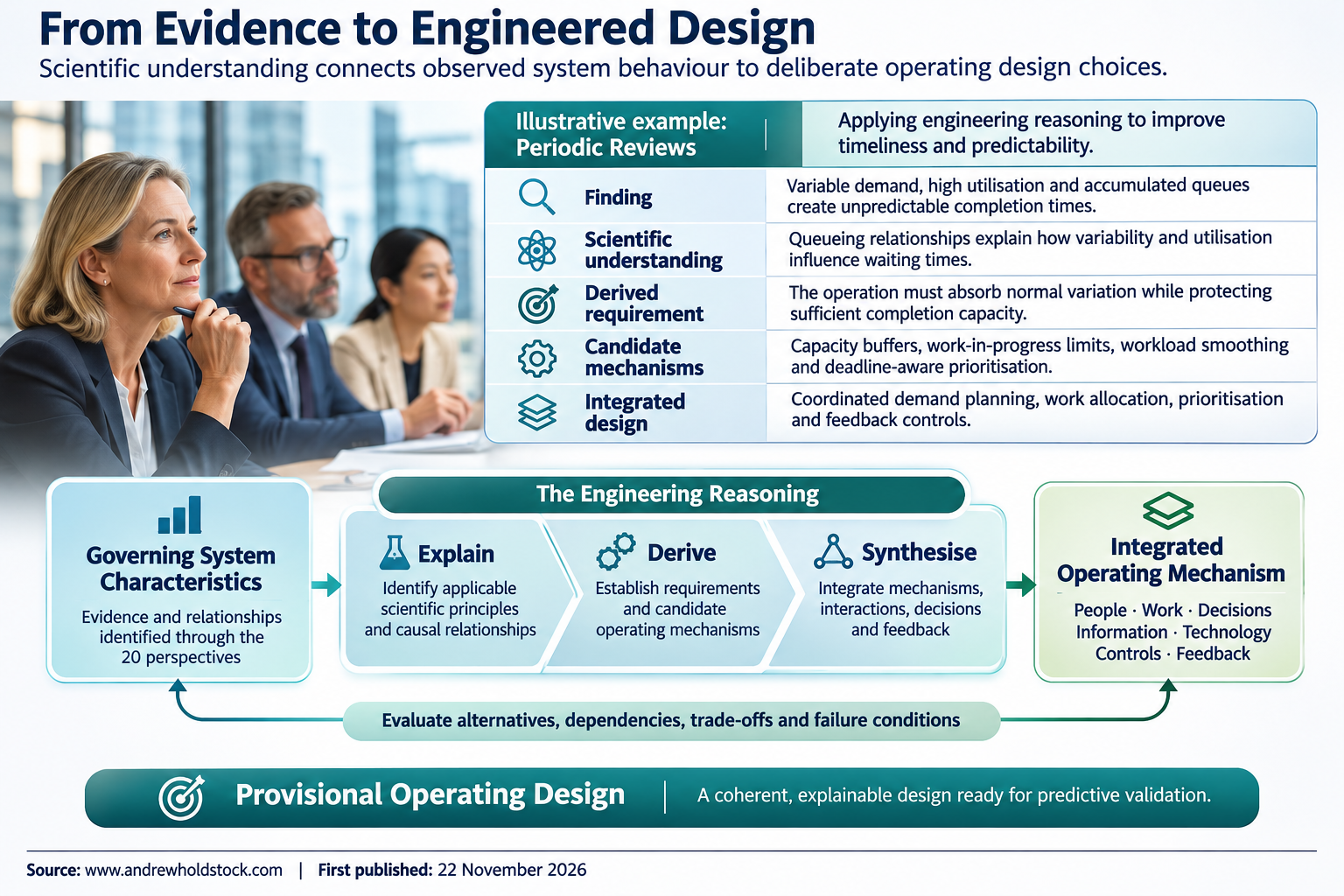
The design must explain how the complete operation will work, including its normal activities, decisions, interfaces, controls, feedback and responses to failure.
Alternative arrangements are evaluated against the required operating properties, practical constraints and relevant trade-offs. The preferred design remains provisional until its expected behaviour has been tested.
This creates a traceable connection between the business outcomes required, the engineering principles applied and the operating arrangements selected.
A sound operating design is derived from an understanding of system behaviour, not simply assembled from familiar processes and solutions.
Predicting and Validating Performance
Engineering confidence comes from testing how a proposed operating system is expected to behave under defined conditions.
An operating design may be logically sound and grounded in established engineering principles, but that does not establish how reliably it will perform in practice.
OSE seeks to predict system behaviour before implementation, using analytical models, simulations, experiments and other appropriate testing methods. The design is examined against the required operating properties under normal, peak, stressed and failure conditions.
The objective is to establish evidence-based confidence in expected performance, identify limitations and refine the design before committing to implementation.
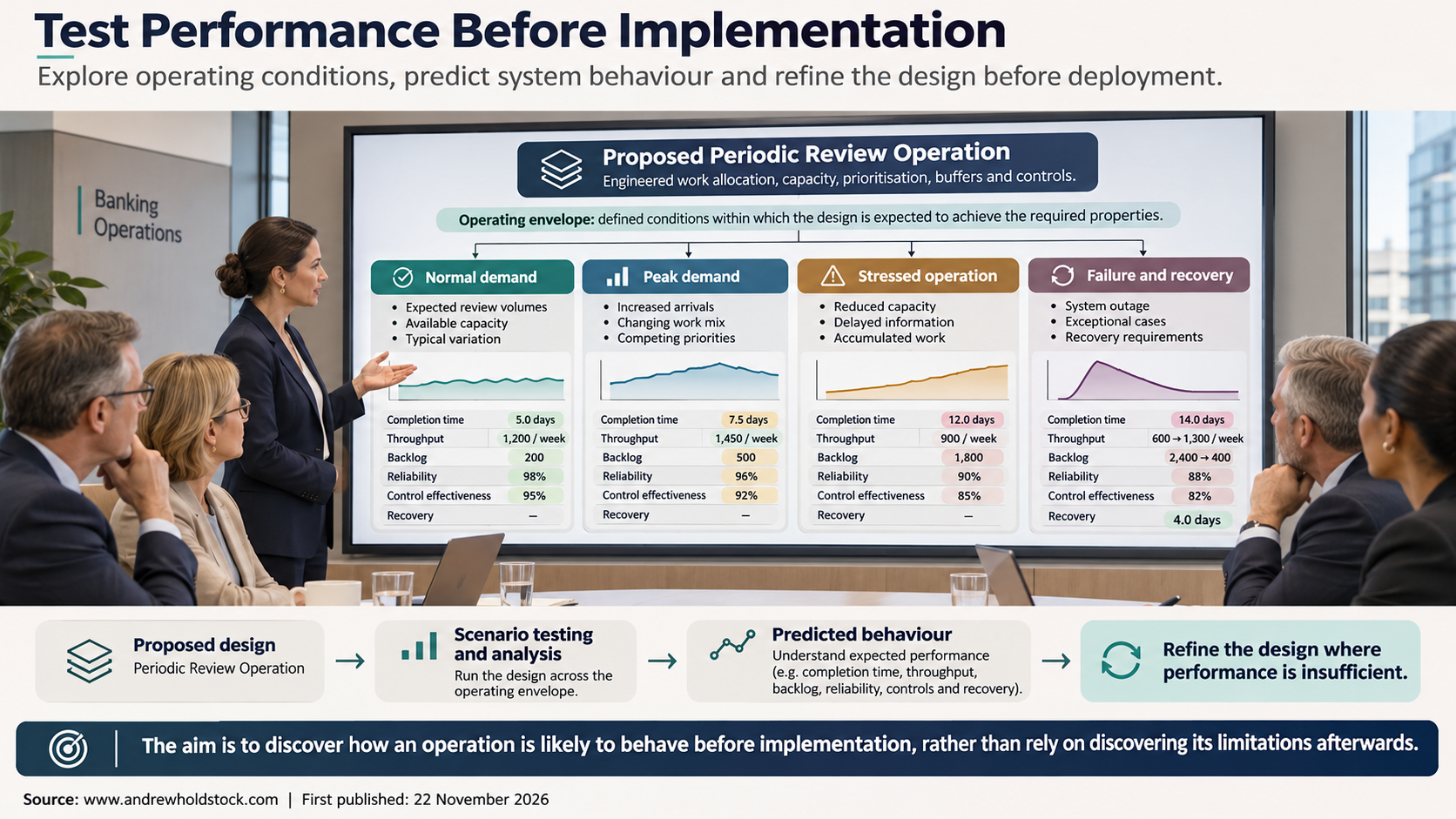
Prediction is meaningful only when its assumptions, operating conditions and uncertainties are explicit. OSE defines an operating envelope within which the proposed design is expected to achieve its required properties.
Where analysis reveals unacceptable performance or vulnerability, the design is revised and tested again. After implementation, actual behaviour is compared with predictions to identify deviations and support continued improvement.
The result is not a guarantee of performance, but a more defensible basis for operational investment and design decisions.
Making Engineering Practical
OSE makes established engineering knowledge accessible and usable by the business leaders responsible for operational decisions.
Engineering analysis has limited value if the people responsible for an operation cannot understand, challenge or implement the proposed design.
OSE therefore combines technical engineering evidence with a clear business explanation. The design must establish what will be put in place, how it will work, what will change, how reliability will be maintained and which outcomes can reasonably be expected.
This allows business leaders, operational specialists and engineers to make informed decisions together, without requiring everyone to become an expert in the underlying scientific disciplines.
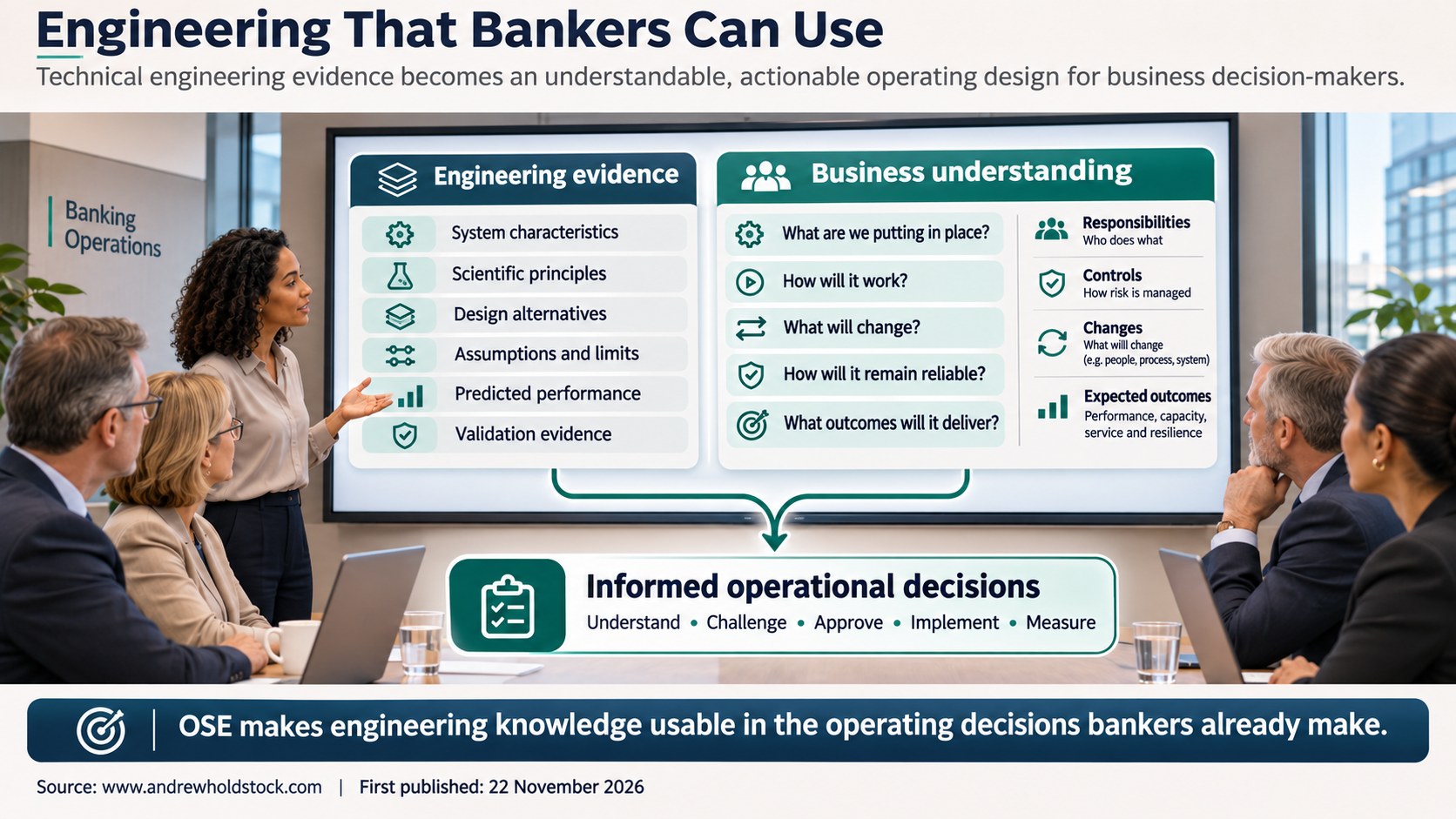
OSE uses a Business Comprehensibility Test to ensure that proposed operating arrangements can be explained in practical terms. This is a requirement of the design process, not simply a final communication exercise.
The technical evidence remains available to support scrutiny, while the business explanation makes the operational implications understandable.
Together, they support decisions about implementation, responsibilities, risks and expected performance, creating a connection between engineering analysis and the realities of running a banking operation.
The value of operational engineering lies not in the sophistication of its analysis, but in the ability to use that knowledge to make better operating decisions.
The OSE Methodology
A structured engineering framework bringing together established scientific knowledge, whole-system design and predictive validation.
The OSE methodology brings together six stages of engineering, supported by 20 investigative perspectives, to establish a systematic approach to operational design.
It connects required business outcomes to the characteristics governing system behaviour, applies relevant scientific and engineering principles, and develops integrated operating mechanisms that can be tested before implementation.
The framework provides a consistent basis for engineering operations while allowing the methods and techniques used to be appropriate to the business problem.
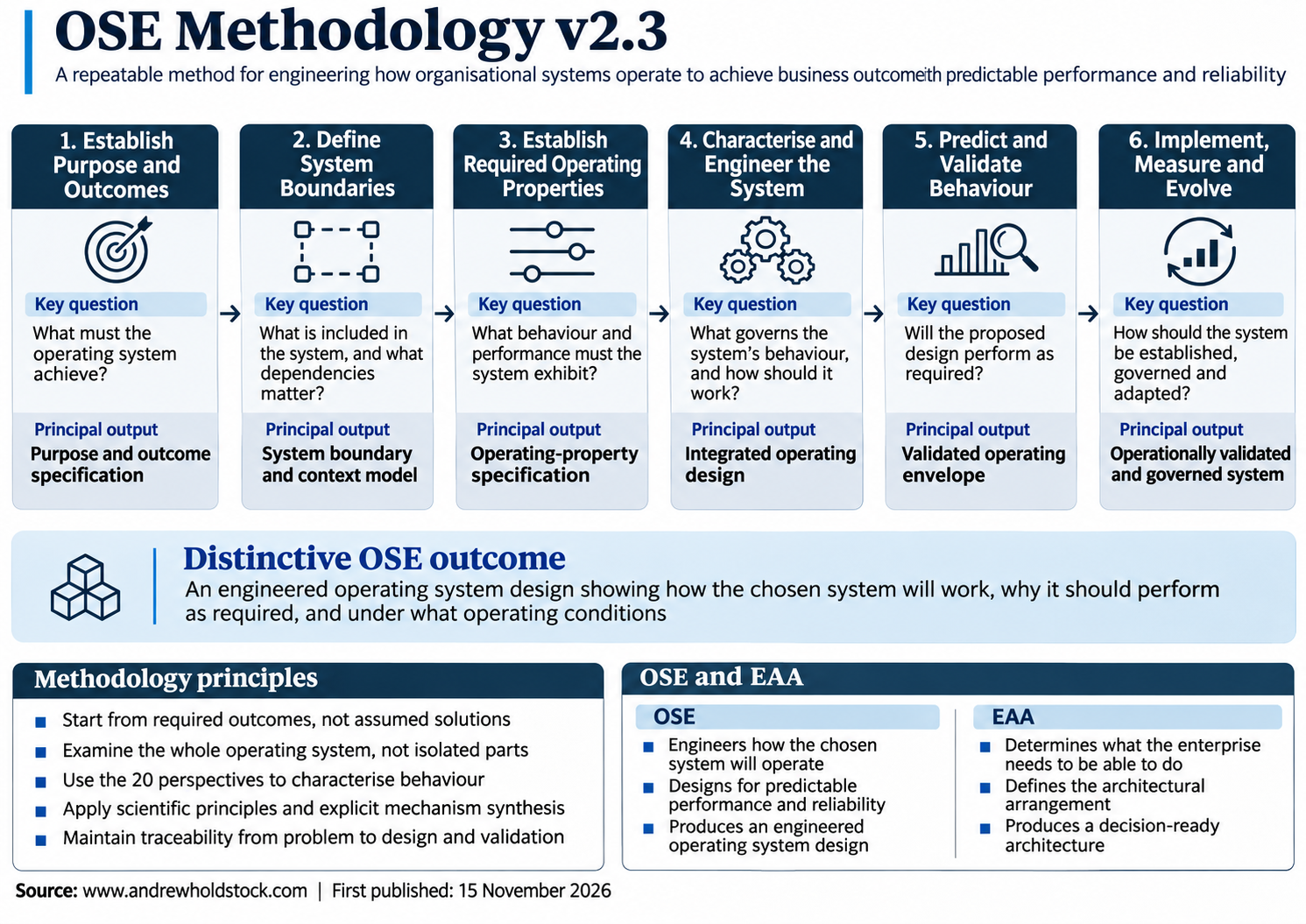
OSE is a developing methodology, informed by established engineering disciplines and refined through practical investigation and application.
Its value lies not simply in the framework itself, but in the judgement, analysis and engineering expertise needed to apply it effectively to complex banking operations.
The methodology continues to evolve as applications provide new evidence, reveal limitations and identify opportunities for improvement.
OSE brings engineering discipline to operational design, making it possible to understand, predict and improve how banking operations perform before and after implementation.
First Published: 22-Nov-2026